
Contents
- 🎯 Introduction to Neuroscience
- 🔬 How Neuroscience Works
- 📊 Key Facts and Numbers
- 👥 Key People and Organizations
- 🌎 Cultural Impact and Influence
- ⚡ Current State and Latest Developments
- 🤔 Controversies and Debates
- 🔮 Future Outlook and Predictions
- 💡 Practical Applications
- 📚 Related Topics and Deeper Reading
- Frequently Asked Questions
- References
- Related Topics
Overview
Neuroscience is a multidisciplinary field that seeks to understand the intricacies of the nervous system, including the brain, spinal cord, and peripheral nervous system. With a rich history dating back to the early 20th century, neuroscience has evolved to incorporate various disciplines such as physiology, anatomy, molecular biology, and psychology. Today, neuroscientists like Eric Kandel and David Eagleman are pushing the boundaries of our understanding of the human brain, exploring topics like learning, memory, behavior, and consciousness. The field has seen significant advancements in recent years, with the development of new technologies like fMRI and EEG. As of 2022, the global neuroscience market is projected to reach $34.8 billion by 2025, with a growth rate of 12.1% per annum. With its vast scope and potential for discovery, neuroscience is an exciting and rapidly evolving field that continues to captivate scientists and the general public alike, with over 100,000 research papers published annually, according to the National Institutes of Health.
🎯 Introduction to Neuroscience
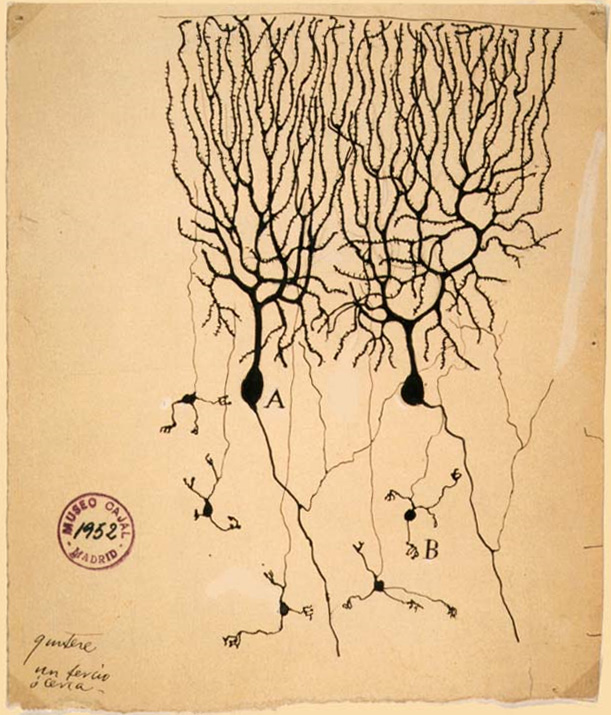
Neuroscience has its roots in the early 20th century, with pioneers like Ramon y Cajal and Camillo Golgi laying the foundation for modern neuroscientific research. The field has since expanded to include various disciplines, from molecular and cellular studies to imaging and behavioral analysis. Today, neuroscientists use cutting-edge technologies like TMS and DTI to study the brain and nervous system. For instance, researchers at Stanford University have used fMRI to map the neural basis of decision-making, while scientists at Harvard University have employed EEG to study the neural correlates of consciousness.
🔬 How Neuroscience Works
The scientific study of the nervous system involves a range of techniques, from molecular and cellular studies to imaging and behavioral analysis. Neuroscientists use various methods, including patch-clamp electrophysiology and immunohistochemistry, to understand the structure and function of neurons, glia, and neural circuits. For example, researchers at MIT have developed new techniques for imaging neural activity in real-time, using two-photon microscopy. Additionally, scientists at UC Berkeley have used optogenetics to study the neural basis of behavior.
📊 Key Facts and Numbers
Some key facts and numbers in neuroscience include the estimated 86 billion neurons in the human brain, with each neuron having an average of 7,000 synapses. The brain accounts for only about 2% of the body's mass, but consumes approximately 20% of its energy expenditure. According to the World Health Organization, neurological disorders affect over 1 billion people worldwide, with the global cost of neurological disorders estimated to be over $2.5 trillion annually. Furthermore, the development of new treatments for neurological disorders, such as deep brain stimulation and transcranial direct current stimulation, has improved the quality of life for millions of people.
👥 Key People and Organizations
Key people in neuroscience include Eric Kandel, who was awarded the Nobel Prize in Physiology or Medicine in 2000 for his work on the molecular basis of memory. Other notable neuroscientists include David Eagleman, who has made significant contributions to our understanding of brain function and behavior, and Vittorio Gallese, who has worked on the neural basis of empathy and social cognition. Additionally, researchers like Lisa Montgomery and James Fowler have made important contributions to the field of neuroscience, with their work on the neural basis of decision-making and social behavior.
🌎 Cultural Impact and Influence
Neuroscience has had a significant impact on culture and society, with many artists, writers, and filmmakers drawing inspiration from neuroscientific concepts and discoveries. The field has also influenced the development of new technologies, such as brain-computer interfaces and neuroprosthetics. For example, the Neuralink project, founded by Elon Musk, aims to develop implantable brain–machine interfaces that could potentially treat a wide range of medical conditions. Moreover, the field of neuroscience has inspired new forms of art and entertainment, such as neuroart and brainwave entertainment.
⚡ Current State and Latest Developments
Currently, neuroscience is a rapidly evolving field, with new discoveries and advancements being made regularly. Some of the latest developments include the use of artificial intelligence and machine learning to analyze neuroimaging data, as well as the development of new treatments for neurological disorders, such as gene therapy and stem cell therapy. For instance, researchers at Columbia University have used machine learning to develop a new method for predicting the onset of neurological disorders, while scientists at Johns Hopkins University have developed a new gene therapy for the treatment of Parkinson's disease.
🤔 Controversies and Debates
Despite the many advances in neuroscience, there are still several controversies and debates in the field. One of the main areas of debate is the use of animal models in neuroscientific research, with some arguing that they are essential for understanding human brain function and others arguing that they are unnecessary and inhumane. Another area of controversy is the use of neuroenhancement technologies, such as cognitive enhancement and mood enhancement, which some argue could have unintended consequences and exacerbate social inequalities. For example, the use of Adderall and other cognitive enhancers has been linked to increased risk of addiction and mental health disorders.
🔮 Future Outlook and Predictions
Looking to the future, neuroscience is likely to continue to evolve and expand, with new technologies and discoveries being made regularly. Some of the potential future developments in the field include the use of brain-computer interfaces to treat neurological disorders, as well as the development of new treatments for conditions such as Alzheimer's disease and Parkinson's disease. Additionally, researchers are exploring the potential of neuroscience to improve our understanding of artificial intelligence and machine learning, with the goal of developing more advanced and human-like AI systems. For instance, the Allen Institute for Brain Science is working on a project to develop a brain-inspired AI system that can learn and adapt like the human brain.
💡 Practical Applications
Neuroscience has many practical applications, from the development of new treatments for neurological disorders to the improvement of cognitive function and mental health. For example, neuroscientists have developed new methods for improving memory and attention, as well as new treatments for conditions such as depression and anxiety. Additionally, researchers are exploring the potential of neuroscience to improve our understanding of education and learning, with the goal of developing more effective teaching methods and educational technologies. For instance, the National Science Foundation has funded a project to develop a neuroscience-based educational program for STEM education.
Key Facts
- Year
- 2022
- Origin
- Global
- Category
- science
- Type
- field of study
Frequently Asked Questions
What is the main goal of neuroscience?
The main goal of neuroscience is to understand the structure and function of the nervous system, including the brain, spinal cord, and peripheral nervous system. This includes understanding how the nervous system develops, how it functions in health and disease, and how it can be modified or repaired. For example, researchers at UCSF are working on a project to develop a new treatment for Parkinson's disease using stem cell therapy.
What are some of the key techniques used in neuroscience?
Some of the key techniques used in neuroscience include fMRI, EEG, and patch-clamp electrophysiology. These techniques allow neuroscientists to study the structure and function of the nervous system in detail, and to understand how it changes in response to different stimuli or conditions. For instance, researchers at MIT have used two-photon microscopy to study the neural basis of behavior in real-time.
What are some of the potential applications of neuroscience?
Some of the potential applications of neuroscience include the development of new treatments for neurological disorders, such as Alzheimer's disease and Parkinson's disease. Neuroscience also has the potential to improve our understanding of cognitive function and mental health, and to develop new methods for improving memory and attention. For example, researchers at Columbia University have developed a new method for improving cognitive function in individuals with traumatic brain injury.
What are some of the current challenges and controversies in neuroscience?
Some of the current challenges and controversies in neuroscience include the use of animal models in research, the ethics of neuroenhancement technologies, and the potential risks and benefits of brain-computer interfaces. For instance, the use of animal models in research has been criticized by some as being unnecessary and inhumane, while others argue that it is essential for understanding human brain function and behavior.
How is neuroscience related to other fields of study?
Neuroscience is closely related to other fields of study, such as psychology, biology, and medicine. It also has connections to fields like computer science and engineering, particularly in the development of new technologies and treatments. For example, researchers at Google DeepMind are working on a project to develop a neural network that can learn and adapt like the human brain, using a combination of supervised learning and reinforcement learning.
What are some of the key institutions and organizations in neuroscience?
Some of the key institutions and organizations in neuroscience include the National Institutes of Health, the Allen Institute for Brain Science, and the Howard Hughes Medical Institute. These organizations provide funding and support for neuroscientific research, and help to advance our understanding of the nervous system and its functions. For instance, the National Institutes of Health has funded a project to develop a new treatment for Parkinson's disease using stem cell therapy.
What are some of the potential future developments in neuroscience?
Some of the potential future developments in neuroscience include the use of brain-computer interfaces to treat neurological disorders, as well as the development of new treatments for conditions such as Alzheimer's disease and Parkinson's disease. Additionally, researchers are exploring the potential of neuroscience to improve our understanding of artificial intelligence and machine learning, with the goal of developing more advanced and human-like AI systems. For example, the Allen Institute for Brain Science is working on a project to develop a brain-inspired AI system that can learn and adapt like the human brain.