Roman Law
The ancient code that still governs our modern world.
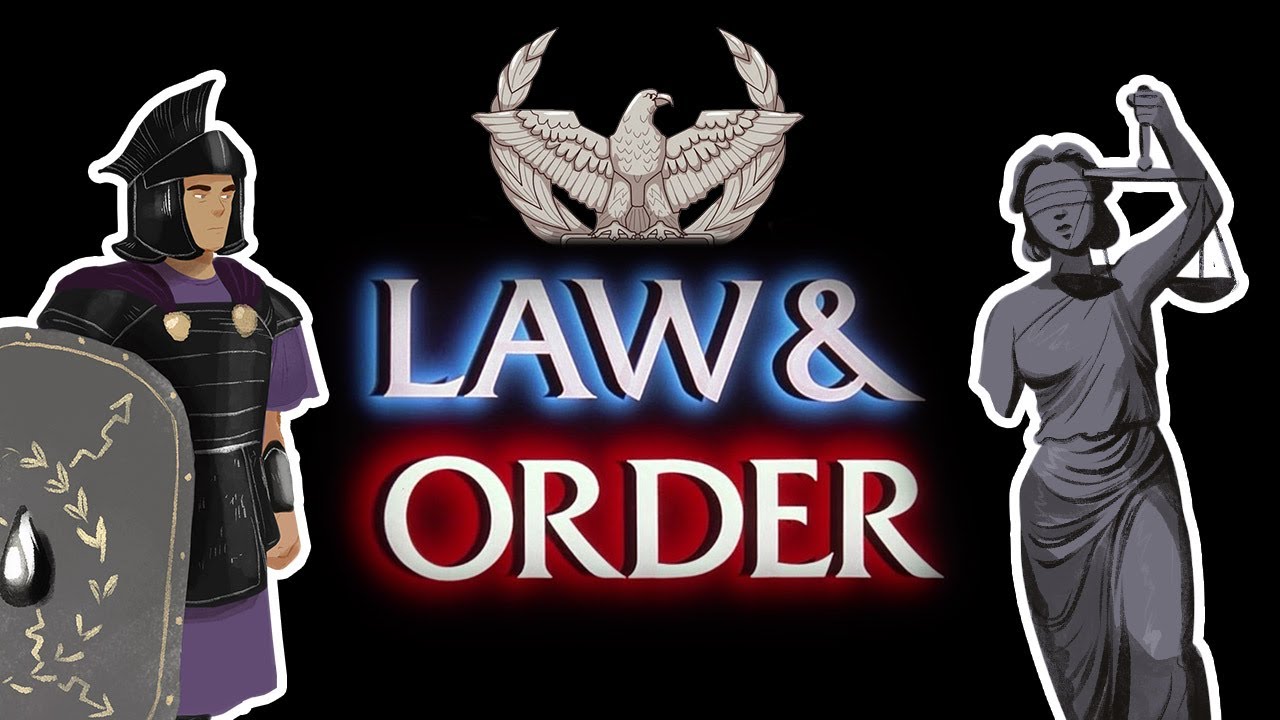
Law and Order in Ancient Rome - How did it work? FULL DOCUMENTARY
TL;DR
Roman Law is the legal system of ancient Rome, evolving over a millennium from rudimentary tribal customs to a sophisticated, highly influential body of jurisprudence that shaped Western legal traditions.
Imagine a world without clear rules, without property rights, without a framework for justice – a chaotic mess. Now, picture ancient Rome, a civilization that didn't just conquer lands but also conquered chaos with an intricate, evolving system of law. Roman Law isn't just dusty scrolls; it's the invisible architecture beneath our modern societies, a testament to human ingenuity in structuring order. From the Twelve Tables etched in bronze to the sprawling Corpus Juris Civilis, it was a living, breathing entity that adapted, expanded, and ultimately, outlived the empire itself.
The journey began humbly around 450 BCE with the legendary Twelve Tables, Rome's first written code, an attempt to bring transparency and equity to a society often governed by custom and patrician whims. This wasn't just about 'thou shalt not steal'; it detailed everything from property disputes to funeral arrangements. Fast forward through centuries of jurists like Ulpian and Gaius, who didn't just interpret laws but actively shaped them, creating a sophisticated body of legal thought that tackled complex issues of contract, family, and public administration. They were the original legal architects, designing systems that could govern an empire stretching from Britain to Egypt.
What makes Roman Law so enduring? Its sheer pragmatism and logical structure. It wasn't just a collection of decrees; it was a method of reasoning, a way of thinking about justice, rights, and obligations that emphasized equity and proportionality. Concepts like 'innocent until proven guilty,' the idea of a 'person' as a legal entity, and the distinction between public and private law – these weren't invented in a vacuum. They were meticulously developed and refined by Roman jurists, creating a legal grammar that proved universally adaptable.
The fall of the Western Roman Empire didn't erase its legal legacy. Oh no, it merely went into hibernation, only to be dramatically 'rediscovered' in medieval Europe, particularly with the revival of Justinian's Corpus Juris Civilis in the 11th century. This sparked a legal renaissance, leading to the establishment of universities focused on law and influencing everything from canon law to the burgeoning common law systems. Today, if you study law in most of Europe, Latin America, or parts of Asia, you're essentially learning a modern iteration of Roman Law – it's the original open-source legal framework.
Even in common law systems like those in the US and UK, where precedent reigns supreme, the ghost of Roman Law lingers. Its principles underpin our understanding of contracts, torts, and property. When a judge today deliberates on the 'spirit of the law' or the 'reasonableness' of an action, they're echoing centuries of Roman legal philosophy. It's a profound reminder that some ideas are so powerful, so fundamentally human, that they transcend time and culture, continuing to shape our sense of justice and order in 2026 just as they did two millennia ago.