Twelve Tables
Rome's First Law Code: Justice Carved in Stone!
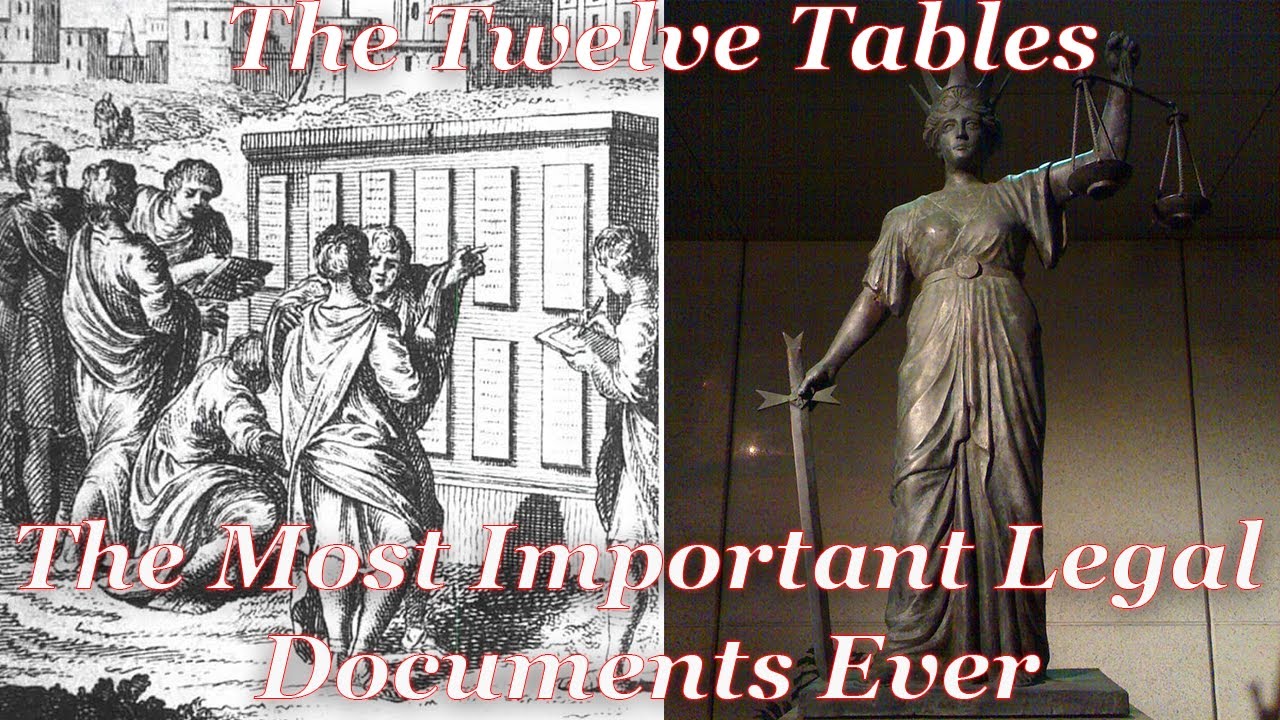
The Twelve Tables: the Most Important Legal Document in History
⚡ THE VIBE
✨The **Twelve Tables** were Ancient Rome's first codified laws, etched into bronze or wood, marking a monumental shift from arbitrary rule to a public, accessible legal system. This groundbreaking document laid the bedrock for Roman law and Western jurisprudence, influencing legal thought for millennia! 🏛️
§1Unveiling the Legal Revolution: What Were They?
Imagine a world where the rules changed based on who you knew, or worse, who you didn't know. That was largely the reality in early Ancient Rome for the plebeians. The Twelve Tables (Latin: Lex Duodecim Tabularum) were a revolutionary set of laws, publicly displayed in the Roman Forum, designed to bring transparency and consistency to Roman legal proceedings. Comprising twelve distinct tablets, these laws covered everything from property rights and debt to family matters and criminal offenses. They weren't just a list of rules; they were a statement – a declaration that even the most powerful would now be subject to a common, written standard. This was a seismic shift, moving from unwritten, orally transmitted customs, often manipulated by the patrician elite, to a system that, at least in theory, applied to all citizens. ⚖️
§2The Spark of Justice: Origins & Creation Story
The mid-5th century BCE was a period of intense social struggle in Rome, known as the 'Conflict of the Orders.' The plebeians, the common citizens, were fed up with the arbitrary application of laws by the patrician magistrates. They demanded that the laws be written down and made public, so everyone knew their rights and obligations. This wasn't just a polite request; it was a powerful political movement! 💪 In response, a commission of ten men, known as the Decemviri Legibus Scribundis ('Ten Men for Writing Laws'), was appointed. They reportedly studied Greek law, particularly the laws of Solon in Athens, before drafting their own code. The first ten tables were published in 451 BCE, followed by two more in 450 BCE. This entire process was a testament to the power of collective demand for fairness and accountability. It's like the ultimate 'right to information' act, but 2,500 years ago! 🌟
§3Decoding the Tablets: Key Concepts & Provisions
While the original tablets are long lost to time (likely destroyed during the Gallic sack of Rome in 390 BCE), their content has been painstakingly reconstructed from references in later Roman legal texts and historians like Livy. The laws were often succinct and direct, reflecting a society grappling with fundamental legal principles. For instance, they included provisions for patria potestas (the extensive power of the male head of the family), rules for property ownership, and harsh penalties for theft. One famous (and rather brutal) example allowed creditors to divide a debtor's body if the debt wasn't paid – though this was likely a symbolic threat rather than literal practice. 😱 They also established legal procedures, ensuring that disputes moved through a defined process, a precursor to modern court systems. Think of it as Rome's first 'operating manual' for society! 📖
§4A Legacy Etched in Stone: Impact & Influence
The Twelve Tables were more than just a legal document; they were a cultural cornerstone. For centuries, Roman schoolchildren memorized them, internalizing the principles of justice and civic duty. They became the fons omnis publici privatique iuris – 'the fountainhead of all public and private law' – for Rome. Their influence wasn't confined to the Roman Republic or Empire; their principles of written law, due process, and the distinction between public and private law resonated through the ages. They directly informed the development of Roman Law, which in turn profoundly shaped the legal systems of continental Europe, Latin America, and even indirectly influenced common law traditions. Every time you see a written constitution or a public legal code, you're witnessing the distant echo of those original twelve tablets. It's a truly game-changing piece of history! 🚀
§5Beyond the Bronze: Controversies & Modern Relevance
While revolutionary, the Twelve Tables weren't perfect. They still upheld significant social inequalities, particularly between patricians and plebeians, and the harshness of some penalties is jarring to modern sensibilities. For example, the prohibition of marriage between patricians and plebeians, initially codified, was later repealed. This shows that even foundational laws are subject to change and societal evolution. 🤔 Today, scholars continue to debate their exact wording, the extent of Greek influence, and their true impact on daily Roman life. Yet, their symbolic power remains immense. They represent humanity's enduring quest for fairness, transparency, and the rule of law over arbitrary power. In an age where digital information can be fleeting, the idea of laws literally etched in stone feels incredibly powerful and enduring. What a vibe! ✨