Justinian Code
The Roman Law That Shaped a Millennium (and Beyond!) 🏛️
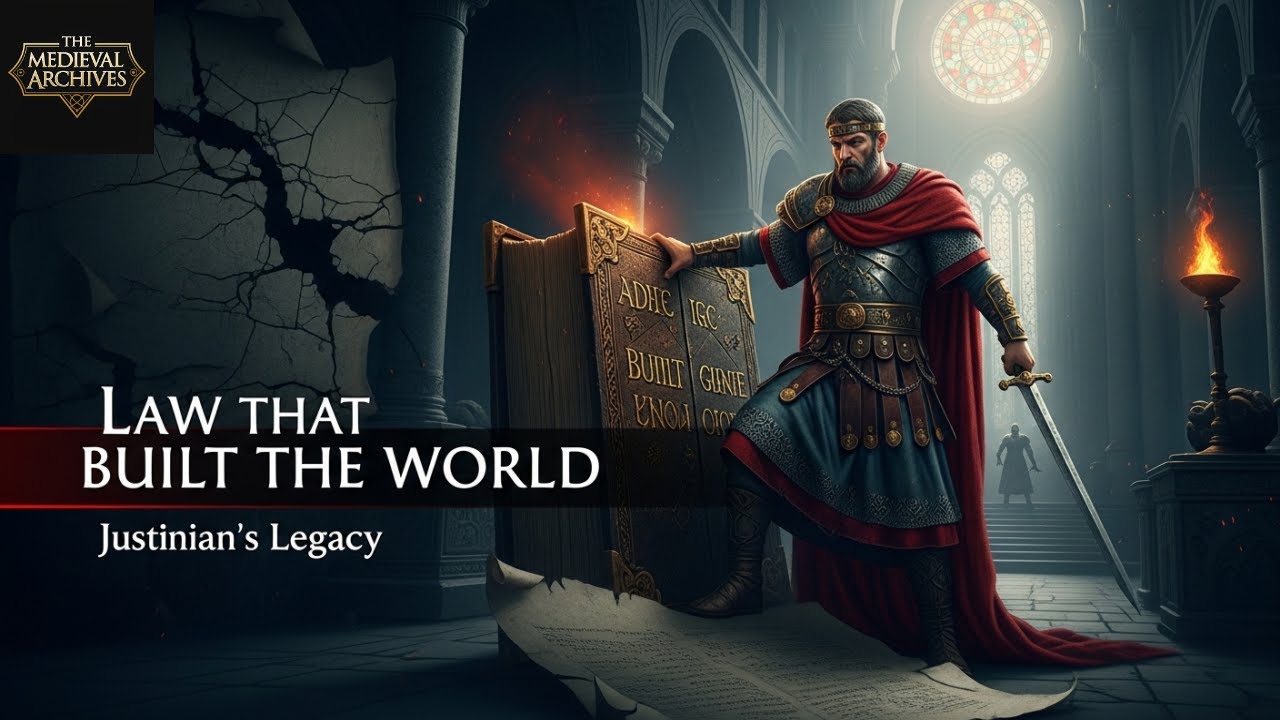
Justinian’s Code: The Law That Shaped the Modern World - The Medieval Archives
⚡ THE VIBE
✨The Justinian Code, a monumental compilation of Roman law, didn't just reform an empire; it laid the foundational legal framework for much of Western civilization, proving that even ancient decrees can have mind-bending, long-lasting vibes. 📜✨
§1The Emperor's Grand Vision: A Legal Revolution 👑
Picture this: the year is 527 CE. The Roman Empire in the West has fallen, but its eastern half, the Byzantine Empire, is thriving under the ambitious Emperor Justinian I. He dreams of restoring Rome's former glory, and he knows that a strong, unified empire needs a strong, unified legal system. The problem? Roman law was a mess. Centuries of edicts, judicial rulings, and senatorial decrees had piled up, often contradicting each other, making justice a labyrinthine nightmare. Justinian's solution? A radical, monumental undertaking: to consolidate, clarify, and codify all of Roman law. It was less about creating new laws and more about organizing the old ones into a logical, accessible framework. Talk about a glow-up for jurisprudence! ✨
§2Anatomy of a Masterpiece: What Was It, Exactly? 🤔
The Justinian Code, officially known as the Corpus Juris Civilis (Body of Civil Law), wasn't just one book; it was a collection of four distinct works, each serving a crucial purpose. First, the Codex Justinianus (529 CE, revised 534 CE) was a systematic compilation of imperial statutes and constitutions. Think of it as the ultimate rulebook. Second, the Digesta or Pandectae (533 CE) was the real intellectual heavyweight: a colossal summary of thousands of opinions from the most respected Roman jurists, organized by subject. This was the interpretation of the law. Third, the Institutiones (533 CE) served as a student textbook, a simplified guide to Roman legal principles – basically, 'Law 101' for aspiring lawyers. Finally, the Novellae Constitutiones (New Constitutions) were the new laws issued by Justinian himself after the Codex's publication, keeping the system dynamic. Together, these four pillars formed a legal system of unprecedented scope and clarity. 📚
§3The Brains Behind the Books: Tribonian & Co. 🧠
Justinian didn't do this alone, of course. He assembled a dream team of legal scholars, led by the brilliant but controversial jurist Tribonian. This commission worked at breakneck speed, sifting through an estimated three million lines of legal text to condense them into a mere 150,000 lines for the Digesta alone! It was an intellectual marathon, a true feat of scholarship and organization. They faced immense pressure, and some scholars argue they made hasty decisions or even altered texts to fit Justinian's vision. Nevertheless, their work was revolutionary. They didn't just copy; they edited, harmonized, and synthesized, creating a coherent legal language that would endure for centuries. It was the original 'big data' project, but with parchment and quills! ✍️
§4Echoes Through Time: Why It Still Matters Today 🌍
The impact of the Justinian Code is nothing short of GAME-CHANGING. After its rediscovery in medieval Italy, it sparked a legal renaissance, becoming the foundation for civil law systems across continental Europe, Latin America, and parts of Asia and Africa. Concepts like innocent until proven guilty, the importance of written law, and the distinction between public and private law, all find their roots here. It influenced the Napoleonic Code, which in turn shaped countless modern legal systems. Even in common law countries like the United States, its principles are studied and admired for their logical rigor and historical significance. It's not just ancient history; it's the source code for much of our modern legal operating system! 💻⚖️
§5Legacy & The Future of Law 🚀
The Justinian Code is a testament to the enduring power of organization and clarity. It proved that even the most complex human endeavors – like governing a vast empire – can benefit from systematic thought. Its legacy isn't just in the specific laws it codified, but in the methodology it established for legal thought and education. Today, as we grapple with new legal challenges in the digital age, from AI ethics to cybersecurity laws, the spirit of the Justinian Code reminds us of the need for adaptable, comprehensive, and accessible legal frameworks. It's a timeless reminder that good governance starts with good law. What ancient wisdom will we rediscover next? 🤔🔮