Civil Law Systems
The ancient code that shapes nations and defines justice! 📜⚖️
The Legal Systems We Live In Today
⚡ THE VIBE
✨Dive into the **Civil Law System**, a venerable legal tradition rooted in Roman law, which prioritizes codified statutes and scholarly interpretation, profoundly influencing the legal landscape of over 150 nations worldwide. It's a structured, logical approach that contrasts sharply with its common law cousin, shaping everything from contracts to criminal justice. 🏛️
§1What is Civil Law, Anyway? 📜
Imagine a legal system where the law is primarily found in written codes – comprehensive, systematically arranged collections of legal principles. That's the heart of the Civil Law System! Unlike Common Law, where judicial decisions (precedent) play a starring role, civil law jurisdictions see judges as applying the law as written in these codes, rather than creating new law. Think of it as a meticulously crafted blueprint for society, where every legal scenario ideally has a pre-defined answer within the code. This emphasis on codification provides a sense of certainty and predictability, aiming to cover all eventualities within its logical framework. It's a legal philosophy that values clarity and accessibility, making the law theoretically understandable by anyone who can read the code. 📚
§2From Roman Roots to Global Reach 🌍
The story of civil law begins in the grandeur of Ancient Rome. Its foundational text, the Corpus Juris Civilis, compiled under Emperor Justinian I in the 6th century CE, is the undisputed ancestor of modern civil law. This monumental work systematized centuries of Roman legal thought, becoming a beacon of legal scholarship. After a period of dormancy in the early Middle Ages, its rediscovery in the 11th century sparked a legal renaissance across Europe, particularly in universities like Bologna. Scholars meticulously studied and interpreted these texts, laying the groundwork for national legal systems. The Napoleonic Code of 1804, a direct descendant of Roman law, then became the ultimate export, spreading civil law principles across Europe, Latin America, parts of Africa, and Asia, often through colonial expansion. It's a testament to the enduring power of a well-organized legal framework! 🚀
§3Key Characteristics & How It Operates ⚖️
So, how does civil law actually work? At its core, civil law is inquisitorial in nature, particularly in criminal proceedings. This means the judge takes a more active role in investigating the facts and questioning witnesses, aiming to uncover the truth, rather than acting as a neutral arbiter between two adversarial parties (as in common law). The primary sources of law are statutes and codes, not judicial precedent. While past court decisions (jurisprudence) can be persuasive, they are not strictly binding in the same way stare decisis operates. Legal scholars and their interpretations (doctrine) also hold significant sway, often influencing the development and understanding of the law. The legal profession itself is often more specialized, with a clear distinction between judges, prosecutors, and practicing lawyers. It's a system built on logical deduction from general principles to specific cases. 💡
§4Impact & Modern Relevance 🌐
The influence of civil law is immense, governing the daily lives of billions. From the intricate contract laws in Germany to the family codes in Japan, its principles underpin diverse societies. It's often praised for its clarity, coherence, and accessibility, as citizens can theoretically find the answers to their legal questions directly in the codes. This can foster a sense of legal certainty and promote economic stability. However, critics sometimes argue that its rigidity can make it less adaptable to rapidly changing societal norms or unforeseen circumstances, requiring legislative updates rather than judicial evolution. In an increasingly globalized world, understanding civil law is crucial for international business, diplomacy, and cross-cultural legal cooperation. It's a living, breathing system that continues to evolve, even as its ancient roots remain firmly planted. 🌟
§5Civil Law vs. Common Law: A Tale of Two Systems ⚔️
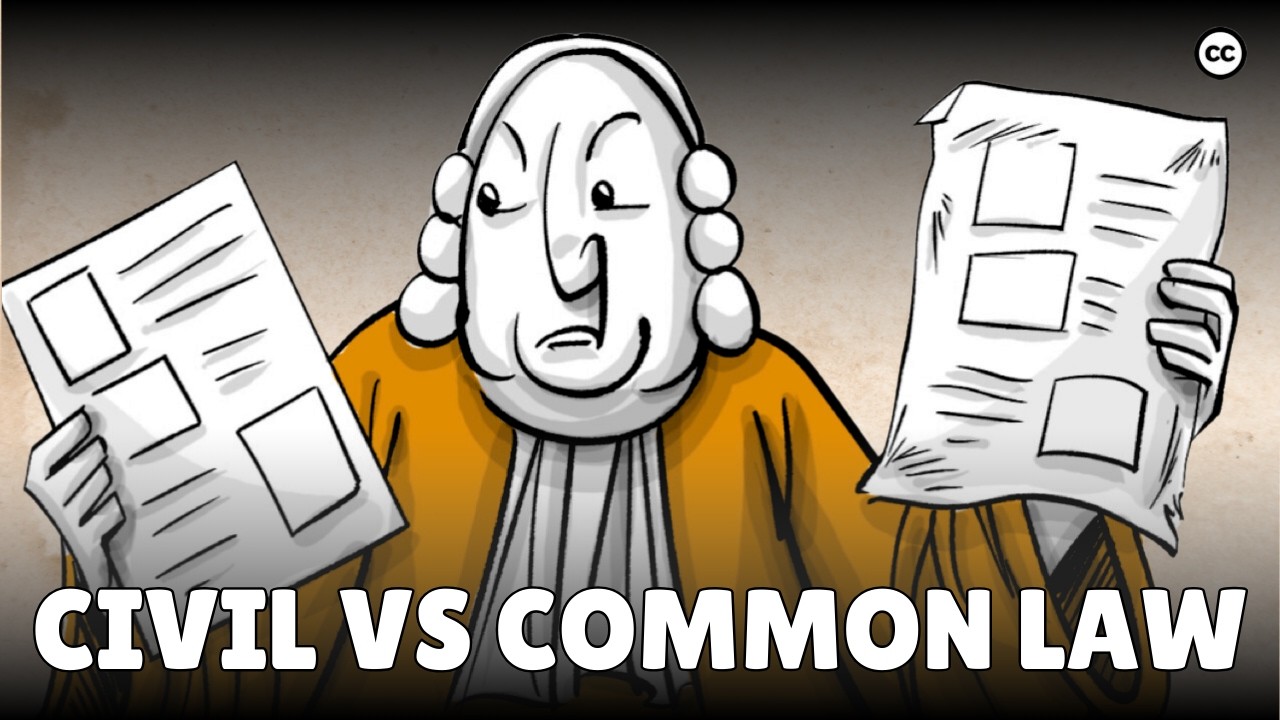
The most common comparison is, of course, with Common Law. While civil law is codified and judge-led in investigation, common law is largely case-based (precedent is king!) and adversarial. Imagine a common law trial as a boxing match between two lawyers, with the judge as referee; a civil law trial might be more like a joint investigation led by the judge. Civil law often distinguishes between public law (constitutional, administrative) and private law (contracts, property), a distinction less pronounced in common law. The jury system, so iconic in common law, is either absent or plays a much smaller role in civil law. Both systems have their strengths and weaknesses, and many modern legal systems, especially in former colonies, exhibit fascinating hybrid models, blending elements of both traditions. It's a rich tapestry of legal thought! ✨