The Boshin War
The fiery clash that forged modern Japan from the ashes of feudalism!
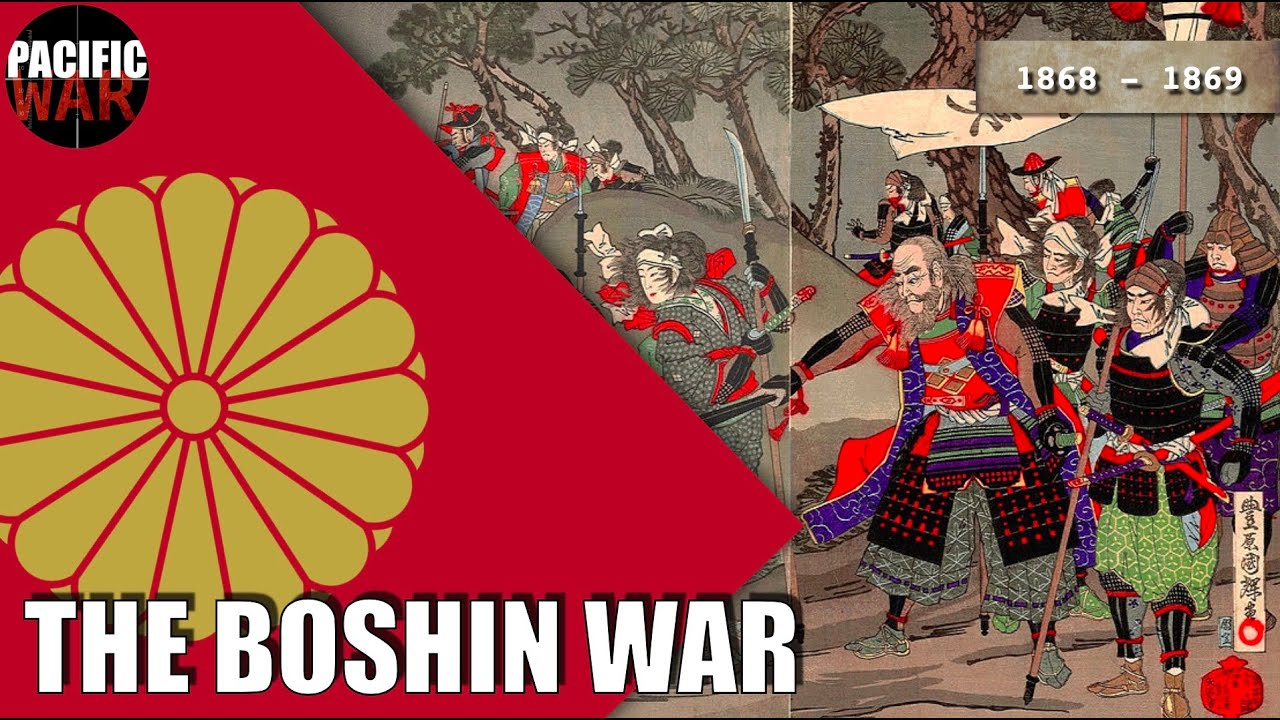
The Boshin War 🇯🇵 A Samurai filled Civil War Japanese History
⚡ THE VIBE
✨The Boshin War was a brutal civil conflict that tore through Japan, marking the dramatic end of the centuries-old Tokugawa Shogunate and ushering in the transformative Meiji Restoration. It was a clash of tradition against modernity, samurai swords against Western firearms, and a pivotal moment that reshaped Japan's destiny forever. 🎌
§1The Spark of Revolution: Why Japan Exploded 💥
Imagine a country, isolated for over 200 years, suddenly forced open by intimidating 'Black Ships' from the West. That's exactly what happened to Japan in the mid-19th century. The arrival of Commodore Matthew Perry in 1853 shattered the peaceful, albeit stagnant, rule of the Tokugawa Shogunate. This event exposed the Shogunate's weakness and ignited a fierce debate: should Japan embrace Western ideas and technology to compete, or cling to its traditional ways? This internal struggle, coupled with growing anti-foreigner sentiment and a desire to restore the Emperor to true power, created a volatile cocktail. The slogan 'Sonnō jōi' (Revere the Emperor, Expel the Barbarians) became the rallying cry for powerful domains like Chōshū and Satsuma, who saw the Shogun as a relic and an obstacle to Japan's future. 🚀
§2Clash of Eras: Samurai vs. Modernity 🛡️➡️🔫
The Boshin War wasn't just a political struggle; it was a technological and cultural collision. On one side stood the Shogunate forces, still largely reliant on the legendary samurai and their traditional weaponry, though they did possess some modern arms. On the other, the Imperial loyalists, particularly from Chōshū and Satsuma, had shrewdly invested in Western firearms, artillery, and military training, often with direct support from Britain and France. The war officially began in January 1868 with the Battle of Toba-Fushimi, where the smaller, but better-equipped and strategically superior Imperial forces decisively defeated the Shogun's army near Kyoto. This battle was a stark demonstration that the age of the sword was rapidly giving way to the age of the rifle. It was a brutal awakening for many traditionalists. 💔
§3Key Campaigns & Iconic Figures 🌟
The war wasn't a single, swift victory but a series of campaigns stretching across Japan. Following Toba-Fushimi, the Imperial forces marched eastward, culminating in the Battle of Ueno in Edo (modern-day Tokyo), which saw the Shogun's loyalists, including the elite Shinsengumi, make a desperate stand. The conflict then shifted north to the Aizu Domain, a staunch Shogunate stronghold, leading to the tragic siege of Aizuwakamatsu Castle and the heartbreaking story of the Byakkotai (White Tiger Force) — teenage samurai who committed seppuku believing their castle had fallen. The final act played out in Hokkaido with the short-lived Republic of Ezo, Japan's only secessionist state, led by figures like Admiral Enomoto Takeaki and the French military advisor Jules Brunet. These figures, though on the losing side, are remembered for their unwavering loyalty and skill. 🗺️
§4The Meiji Restoration & Japan's New Dawn 🌅
The Boshin War's conclusion in 1869 marked the complete triumph of the Imperial faction and the official end of the Shogunate. This wasn't just a change of government; it was the Meiji Restoration, a monumental period of rapid modernization, industrialization, and Westernization that transformed Japan from an isolated feudal society into a global power in just a few decades. The Emperor was restored to supreme authority, the samurai class was abolished, and a new centralized government was established. This era saw the creation of a modern army and navy, the adoption of a constitution, and a complete overhaul of education and industry. The Boshin War, therefore, was the violent crucible through which modern Japan was forged, setting the stage for its emergence as a major player on the world stage. It's truly a testament to a nation's capacity for radical change! 💡
§5Legacy and Enduring Vibe ✨
Even today, the Boshin War resonates deeply in Japanese culture. It's a source of countless stories, films, anime (Rurouni Kenshin anyone?), and historical dramas, often romanticizing the tragic heroism of the losing side while celebrating the vision of the victors. The war's legacy is complex: it brought an end to centuries of feudalism and propelled Japan into modernity, but at the cost of significant bloodshed and the dismantling of a deeply ingrained social structure. It reminds us that progress often comes with profound upheaval. The Boshin War stands as a powerful example of a nation grappling with its identity, caught between the allure of tradition and the imperative of change. Its 'vibe' is one of intense drama, sacrifice, and the unstoppable march of history. 🕰️