Home/History/Battle of Toba-Fushimi
History1868

Battle of Toba-Fushimi

The explosive clash that ignited Japan's Meiji Restoration! 💥

GAME-CHANGINGLEGENDARYDEEP LORE
AI-Generated · By Consensus AI
Contents
5 SECTIONS
Featured Video
Battle of Toba Fushimi | The Boshin War | Episode 8

Battle of Toba Fushimi | The Boshin War | Episode 8

⚡ THE VIBE

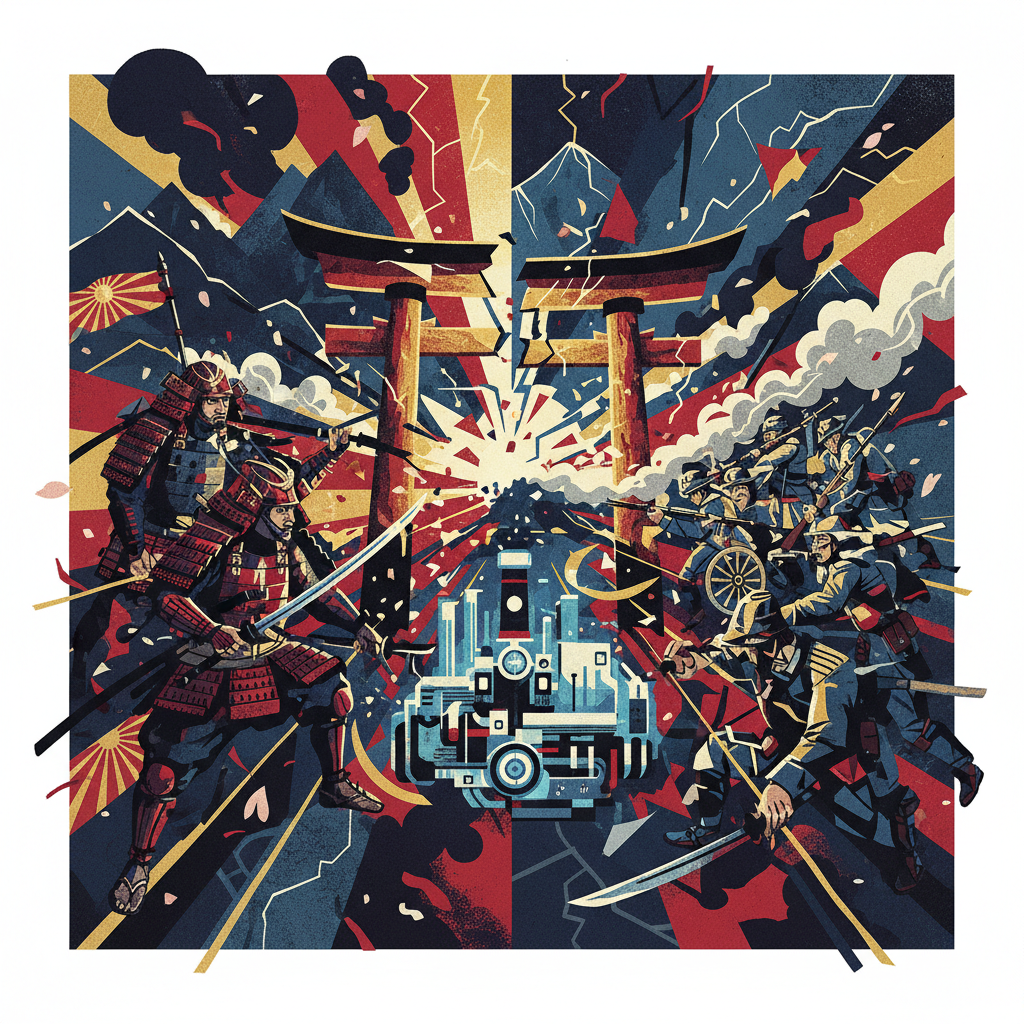
The Battle of Toba-Fushimi wasn't just a skirmish; it was the **spark** that ignited the Boshin War and irrevocably sealed the fate of the Tokugawa Shogunate, paving the way for Japan's radical modernization under the Meiji Emperor. It was a clash of old versus new, samurai swords against modern rifles, and a pivotal moment in Japanese history. 🇯🇵

Quick take: history • 1868

§1The Gathering Storm: Japan on the Brink ⛈️

By the mid-19th century, Japan was a nation in turmoil. For over 250 years, the Tokugawa Shogunate had ruled with an iron fist, maintaining a policy of strict isolationism known as sakoku. But the arrival of Commodore Matthew Perry in 1853, with his 'Black Ships,' shattered this peace, forcing Japan to open its ports to the West. This external pressure exacerbated internal divisions, leading to a growing anti-shogunate movement. The rallying cry was Sonnō jōi – 'Revere the Emperor, Expel the Barbarians!' 🎌 This wasn't just about foreigners; it was about who held ultimate power: the Shogun or the long-sidelined Emperor. The stage was set for a dramatic showdown, with powerful domains like Chōshū and Satsuma aligning with the Imperial court.

§2The Imperial Restoration & Shogun's Last Stand 👑

In late 1867, Tokugawa Yoshinobu, the last Shogun, attempted a political maneuver called Taisei Hōkan, returning his governing authority to the Emperor in hopes of maintaining a prominent role in a new, unified government. However, the radical elements within the Imperial faction, particularly from Satsuma and Chōshū, saw this as a ruse. On January 3, 1868, they declared the Meiji Restoration, effectively abolishing the Shogunate and restoring direct imperial rule. This declaration, however, was a direct challenge to the Shogun's remaining power and influence. Yoshinobu, feeling cornered and provoked by Satsuma's aggressive actions in Edo (modern-day Tokyo), decided to march his forces on Kyoto, the Imperial capital, to 'punish' the radical elements and reclaim his position. This decision directly led to the confrontation at Toba-Fushimi. It was a desperate gamble, a final bid for the old order to assert itself. ⚔️

§3Clash of Eras: Swords vs. Cannons 💥

The battle unfolded over four days, from January 27 to January 31, 1868, just south of Kyoto in the areas of Toba and Fushimi. The Shogunate forces, numbering around 15,000, were a mix of traditional samurai, some modern infantry, and even the elite Shinsengumi (special police force). They were confident in their numerical superiority. Arrayed against them were the Imperial forces, roughly 5,000 strong, primarily from Satsuma and Chōshū. What they lacked in numbers, they made up for in modern weaponry and strategy. The Imperial army was equipped with advanced Armstrong cannons, Minié rifles, and trained by Western military advisors. The Shogunate, while possessing some modern arms, still relied heavily on traditional tactics and less advanced firearms. The initial clash saw the Shogunate forces attempting to push through Imperial lines, but they were met with devastating artillery fire and disciplined rifle volleys. The decisive moment came when the Imperial court, at the urging of Satsuma and Chōshū, officially declared Yoshinobu an 'enemy of the court' and displayed the Imperial Banner (錦の御旗, Nishiki no Mihata). This symbolic act caused many Shogunate loyalists, especially those from neutral domains, to defect or retreat, unwilling to fight against the Emperor himself. The morale of the Shogunate forces crumbled. 📉

§4The Aftermath: A New Dawn for Japan 🌅

The Battle of Toba-Fushimi was a crushing defeat for the Tokugawa Shogunate. Yoshinobu himself fled Kyoto, abandoning his forces and retreating to Edo. This retreat signaled the end of the Shogunate's 265-year rule and marked the true beginning of the Boshin War, a civil conflict that would rage for another year and a half across Japan. The Imperial victory at Toba-Fushimi was a powerful statement: the old ways of feudal Japan were giving way to a new, centralized, and modern nation-state. It paved the way for the rapid reforms of the Meiji Restoration, which saw Japan transform from an isolated feudal society into a major industrial and military power on the world stage. The battle's legacy is immense, symbolizing the triumph of modernization and the birth of modern Japan. It's a vivid reminder that even the most deeply entrenched systems can be overturned by the forces of change. 🚀

Vibe Rating

9/10