Chōshū Domain
The fiery heart of Japan's revolutionary transformation! 🔥
Featured partners and sponsors
New advertisers get $25 in ad credits
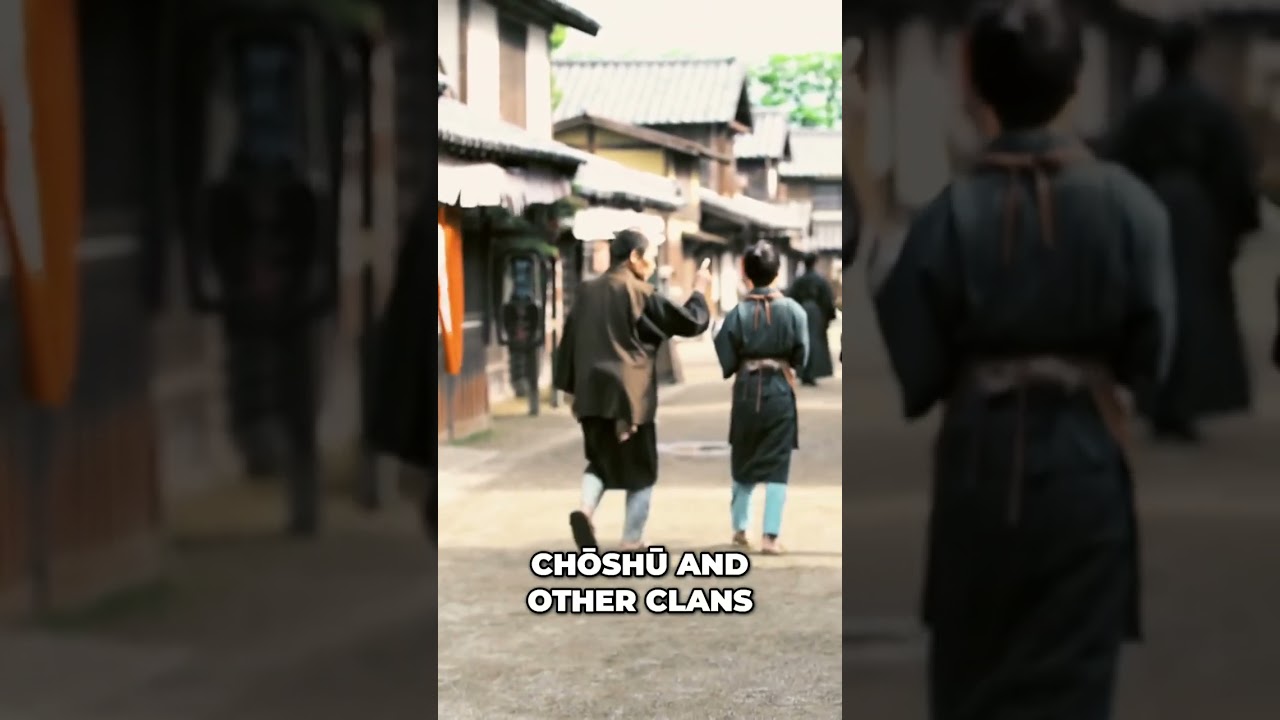
Toppling the Tagawa Shogunate: The Role of Choshu Domain in Japan's Transformation
⚡ THE VIBE
✨The **Chōshū Domain** (長州藩, *Chōshū-han*), officially known as the Hagi Domain, was a powerful and fiercely independent feudal domain in western Japan that played a pivotal, often rebellious, role in overthrowing the Tokugawa Shogunate and ushering in the Meiji Restoration. It was a hotbed of radical thought and military innovation that reshaped an entire nation! 🎌
§1The Spark of Rebellion: What Was Chōshū?
Imagine a region of Japan, far from the shogun's capital, where a fierce independent spirit simmered for centuries. That, my friends, was Chōshū Domain (長州藩, Chōshū-han), officially known as the Hagi Domain, located in what is now Yamaguchi Prefecture. From its establishment in 1600, Chōshū was ruled by the Mōri clan, a powerful daimyō family that had famously suffered a crushing defeat at the Battle of Sekigahara in 1600. This defeat meant they were relegated to a smaller, less prosperous territory and forever held a grudge against the Tokugawa Shogunate. This historical slight wasn't just ancient history; it fueled a deep-seated resentment that would explode centuries later, making Chōshū a central player in Japan's dramatic shift from feudalism to a modern nation-state. It wasn't just a geographical location; it was a state of mind, a breeding ground for revolutionary thought and action. 🧠
§2From Isolation to Innovation: The Seeds of Change
For over two centuries, Japan lived under the sakoku policy, a strict national isolation enforced by the Tokugawa Shogunate. But the mid-19th century saw the arrival of Commodore Matthew Perry's 'Black Ships' in 1853, forcibly opening Japan to the West. This event sent shockwaves through the nation, exposing the shogun's weakness and sparking the Sonnō jōi (尊皇攘夷) movement – 'Revere the Emperor, Expel the Barbarians.' Chōshū, already bristling under shogunate rule, became a fervent advocate for this ideology. They saw the shogun's inability to defend Japan from foreign encroachment as the ultimate betrayal, and their eyes turned to the long-ignored Emperor in Kyoto as the true source of authority. This wasn't just about patriotism; it was about power, prestige, and a vision for a stronger, unified Japan. 🚀
§3The Rise of the Revolutionaries: Key Figures & Conflicts
Chōshū wasn't just a name; it was a crucible for some of Japan's most brilliant and radical minds. Figures like Kido Takayoshi (木戸孝允), Takasugi Shinsaku (高杉晋作), and Ōmura Masujirō (大村益次郎) emerged from Chōshū, becoming architects of the revolution. Takasugi, in particular, was a visionary, forming the Kiheitai (奇兵隊) – a revolutionary militia composed of commoners, not just samurai, which shattered traditional class barriers in warfare. Chōshū engaged in several critical conflicts: the Bombardment of Shimonoseki in 1864, where Western powers retaliated against Chōshū's attempts to expel foreigners, and the subsequent First and Second Chōshū Expeditions by the Shogunate, which ironically strengthened Chōshū's resolve and military prowess. These battles, though often costly, forged an unbreakable spirit and honed their military tactics. 💪
§4The Satsuma-Chōshū Alliance and the Meiji Restoration
The ultimate game-changer was the secret Satsuma-Chōshū Alliance (薩摩長州同盟) forged in 1866, orchestrated by the legendary Sakamoto Ryōma (坂本龍馬). These two domains, once bitter rivals, united against their common enemy: the Tokugawa Shogunate. This alliance was a masterstroke of political maneuvering, combining Chōshū's revolutionary zeal and military innovation with Satsuma's significant resources and naval power. Together, they formed the backbone of the imperial forces that would lead to the Boshin War (戊辰戦争) of 1868. This conflict culminated in the shogun's surrender and the formal restoration of imperial rule, known as the Meiji Restoration. The Chōshū leaders, alongside their Satsuma counterparts, would go on to dominate the early Meiji government, shaping modern Japan. It was a true power shift, a seismic event that reverberates even today. 🌟
§5Legacy and Why It Matters Today
The legacy of Chōshū Domain is immense. Its revolutionary spirit, military innovations (like the commoner army), and its role in dismantling the feudal system profoundly shaped modern Japan. Many key figures from Chōshū became titans of the Meiji Era, holding crucial positions in the new government, military, and bureaucracy. This influence, sometimes called the 'Chōshū clique,' was a dominant force for decades. Today, the region of Yamaguchi Prefecture proudly remembers its pivotal role in Japanese history, with numerous historical sites and museums dedicated to the era. The story of Chōshū reminds us that even seemingly insurmountable power structures can be overthrown by determined individuals and a shared vision for change. It's a powerful lesson in political agency and the enduring impact of local grievances on national destiny. 🗺️