
Contents
Overview
The intellectual journey that led to Don Beck's seminal work began with the research of Dr. Clare W. Graves at Union College in the 1960s and 70s. Graves's longitudinal studies identified a series of developmental stages in human existence. Beck, initially a student of Graves, later collaborated with him, synthesizing and expanding upon these findings. After Graves's passing, Beck continued to develop and popularize the model, which he and Chris Cowan formally named 'Spiral Dynamics' in their 1996 book, Spiral Dynamics: Mastering Values, Leadership, and Change. This seminal text codified the vMEMEs and their application, moving the concept from academic research to practical implementation across various sectors.
⚙️ How It Works
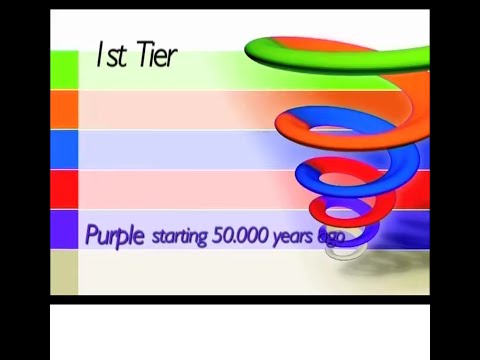
Spiral Dynamics operates on the principle that human development, both individually and collectively, progresses through a series of distinct value systems, or 'vMEMEs.' Each vMEME represents a unique way of thinking, a set of beliefs, and a particular approach to life's problems. These are not static stages but dynamic, evolving systems that interact and build upon each other, forming a spiral. The model posits that as life conditions change, new vMEMEs emerge to address them. For instance, the emergence of industrialization necessitated the development of more complex, systemic thinking beyond earlier tribal or feudal structures. Beck emphasized that understanding these vMEMEs allows for more effective communication, leadership, and problem-solving by meeting people and organizations at their current developmental level.
📊 Key Facts & Numbers
Don Beck's career spanned over four decades. Companies like IBM, Dow Chemical, and General Motors utilized Spiral Dynamics for organizational development. His influence extended to governmental levels, with reported consultations for the South African government during the post-apartheid transition, aiming to foster national reconciliation. He also advised entities like the United Nations and NATO. Beck's framework has been cited in over 1,000 academic papers and books, underscoring its broad reach and impact in fields ranging from psychology to political science.
👥 Key People & Organizations
Beyond his primary collaborator Dr. Clare W. Graves, Don Beck's work was significantly shaped by Chris Cowan, with whom he co-authored the foundational text Spiral Dynamics. Beck also founded The Beck Company and co-founded the Spiral Dynamics Institute (SDi), an organization dedicated to disseminating and applying the Spiral Dynamics model. He engaged with numerous thought leaders and practitioners in organizational development and psychology, though specific names often remain within the context of private consultations. His work has been carried forward by a global network of certified practitioners and trainers who continue to teach and apply the Spiral Dynamics model.
🌍 Cultural Impact & Influence
The impact of Spiral Dynamics, largely disseminated through Beck's tireless efforts, has been profound across various domains. In business, it has offered a powerful lens for understanding corporate culture, change management, and leadership development, influencing strategies at companies like Microsoft and Procter & Gamble. In international relations and conflict resolution, Beck applied the model to complex geopolitical situations, notably in South Africa, aiming to bridge divides between different value systems. The framework has also permeated discussions in fields such as education reform, environmentalism, and even spiritual development, providing a meta-framework for understanding diverse perspectives and motivations. Its visual representation, the 'spiral,' has become an iconic symbol of developmental progression.
⚡ Current State & Latest Developments
Following Don Beck's passing, the application and evolution of Spiral Dynamics continue through organizations like the Spiral Dynamics Institute and independent practitioners worldwide. New applications are emerging in areas such as AI ethics, exploring how different vMEMEs might shape the development and deployment of intelligent systems. There's also a growing interest in applying the model to understanding global challenges like climate change and pandemics, viewing them as complex life conditions that necessitate higher-order thinking. The ongoing dissemination of the model through online courses and workshops by certified trainers ensures its continued relevance in addressing contemporary issues.
🤔 Controversies & Debates
The Spiral Dynamics model, and by extension Don Beck's work, is not without its critics. Some academics question the empirical rigor and potential for oversimplification inherent in mapping complex human behavior onto distinct stages. Skeptics argue that the model can be reductionist, potentially leading to pigeonholing individuals or groups and overlooking the fluidity and intersectionality of identities and values. There's also debate about whether the model is deterministic or merely descriptive, and concerns have been raised about its potential misuse for manipulation or social engineering, particularly when applied in political or corporate contexts without ethical consideration. The very idea of hierarchical stages of development can be contentious, raising questions about 'higher' versus 'lower' value systems.
🔮 Future Outlook & Predictions
The future of Spiral Dynamics appears robust, driven by its adaptability to new challenges. As global interconnectedness increases and complex problems like climate change and globalization intensify, the need for frameworks that explain diverse perspectives and facilitate cooperation will likely grow. Future developments may see more sophisticated integration of Spiral Dynamics with other psychological and sociological models, potentially leading to more nuanced applications in areas like neuroscience and behavioral economics. The model's inherent flexibility suggests it will continue to be a valuable tool for understanding and navigating the ever-changing landscape of human development and societal organization.
💡 Practical Applications
Spiral Dynamics, as championed by Beck, finds practical application across a wide spectrum. In organizational settings, it's used for leadership training, team building, and strategic planning, helping leaders understand the 'why' behind employee behavior and customer preferences. For example, a company might use the model to tailor marketing messages to different customer value systems, or to design internal communication strategies that resonate with diverse employee vMEMEs. It's also applied in conflict resolution, mediation, and intercultural communication, providing tools to bridge understanding between groups with differing worldviews. Beck himself famously applied it to understanding the complex dynamics of post-apartheid South Africa, seeking to foster dialogue and reconciliation.
Key Facts
- Category
- philosophy
- Type
- person