
Contents
- 📝 Introduction to Matrix and Linear Algebra
- 🔍 History of Matrix and Linear Algebra
- 📊 Key Concepts in Matrix Algebra
- 📈 Applications of Linear Algebra
- 🤔 Contrasting Matrix and Linear Algebra
- 📚 Computational Complexity of Matrix Operations
- 📊 Solving Systems of Linear Equations
- 📈 Eigenvalues and Eigenvectors in Linear Algebra
- 📊 Matrix Decomposition Techniques
- 📈 Real-World Applications of Matrix and Linear Algebra
- 🤔 Future Directions in Computational Math
- 📊 Conclusion: Matrix vs Linear Algebra
- Frequently Asked Questions
- Related Topics
Overview
The distinction between matrix operations and linear algebra is often blurred, yet understanding their unique roles is crucial for advancements in fields like computer graphics, machine learning, and data analysis. Historically, matrix theory emerged in the 19th century with contributions from mathematicians like Arthur Cayley and James Joseph Sylvester, laying the groundwork for modern linear algebra. Linear algebra, as a broader field, encompasses the study of vector spaces, linear transformations, and matrices, providing a framework for solving systems of linear equations and representing linear transformations. The vibe around linear algebra is intense, with a vibe score of 8, reflecting its fundamental importance in computational mathematics. However, the controversy spectrum is moderate, as some argue that the emphasis on abstract vector spaces overshadows the practical applications of matrix operations. Key figures like David Hilbert and Emmy Noether have influenced the development of linear algebra, with their work on infinite-dimensional vector spaces and abstract algebra, respectively. The influence flow from these pioneers to modern researchers is evident, with applications in quantum mechanics, engineering, and computer science. As we look to the future, the integration of linear algebra with machine learning and artificial intelligence will likely be a significant area of research, with potential breakthroughs in areas like neural networks and natural language processing.
📝 Introduction to Matrix and Linear Algebra
Matrix and linear algebra are fundamental concepts in mathematics, particularly in the field of computational math. Linear Algebra is a branch of mathematics that deals with the study of linear equations, vector spaces, and linear transformations. On the other hand, Matrix Algebra is a subset of linear algebra that focuses on the properties and operations of matrices. The study of matrix and linear algebra has a rich history, dating back to the 19th century when mathematicians such as Augustin-Louis Cauchy and Carl Friedrich Gauss made significant contributions to the field. Today, matrix and linear algebra are used in a wide range of applications, including Computer Graphics, Machine Learning, and Data Analysis.
🔍 History of Matrix and Linear Algebra
The history of matrix and linear algebra is a long and fascinating one. The concept of matrices was first introduced by Arthur Cayley in the mid-19th century, while the development of linear algebra as a distinct field of study is attributed to David Hilbert and Hermann Minkowski. The early 20th century saw significant contributions to the field by mathematicians such as Emmy Noether and John von Neumann. Today, matrix and linear algebra are essential tools in many areas of mathematics and computer science, including Algebraic Geometry and Number Theory. The study of matrix and linear algebra has also led to the development of new areas of research, such as Representation Theory and Operator Algebras.
📊 Key Concepts in Matrix Algebra
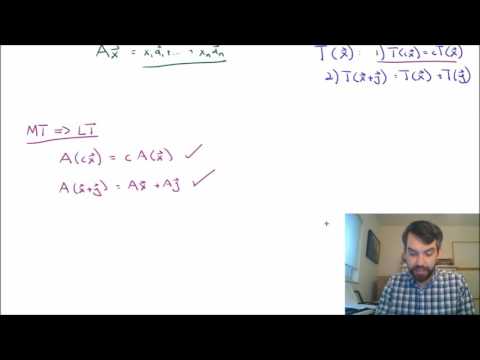
Matrix algebra is a fundamental component of linear algebra, and it deals with the properties and operations of matrices. A matrix is a rectangular array of numbers, and it can be used to represent linear transformations and systems of linear equations. Matrix Multiplication is a key concept in matrix algebra, and it is used to combine two matrices to form a new matrix. Other important concepts in matrix algebra include Matrix Inversion, Matrix Determinant, and Eigenvalues and Eigenvectors. These concepts have numerous applications in Computer Science, Physics, and Engineering.
📈 Applications of Linear Algebra
Linear algebra has a wide range of applications in many fields, including Computer Science, Engineering, and Economics. It is used to solve systems of linear equations, which is a fundamental problem in many areas of science and engineering. Linear algebra is also used in Data Analysis and Machine Learning, where it is used to analyze and visualize complex data sets. The study of linear algebra has also led to the development of new areas of research, such as Signal Processing and Control Theory.
🤔 Contrasting Matrix and Linear Algebra
While matrix and linear algebra are closely related, they are not the same thing. Matrix algebra is a subset of linear algebra that focuses on the properties and operations of matrices. Linear algebra, on the other hand, is a broader field of study that deals with the study of linear equations, vector spaces, and linear transformations. The key difference between matrix and linear algebra is that matrix algebra is primarily concerned with the properties and operations of matrices, while linear algebra is concerned with the underlying mathematical structures that matrices represent. This distinction is important, as it highlights the different perspectives and approaches that are used in these two fields. For example, Linear Algebra is used to study the properties of vector spaces, while Matrix Algebra is used to study the properties of matrices.
📚 Computational Complexity of Matrix Operations
The computational complexity of matrix operations is an important area of research in computer science. Matrix multiplication, for example, is a fundamental operation in matrix algebra, and it has a time complexity of O(n^3) for large matrices. However, there are faster algorithms available, such as the Strassen Algorithm, which has a time complexity of O(n^2.81). The study of matrix algorithms has led to the development of new areas of research, such as Numerical Linear Algebra and High-Performance Computing.
📊 Solving Systems of Linear Equations
Solving systems of linear equations is a fundamental problem in linear algebra. There are several methods available for solving systems of linear equations, including Gaussian Elimination and LU Decomposition. These methods are used to transform the system of linear equations into a simpler form, which can then be solved using basic arithmetic operations. The study of systems of linear equations has led to the development of new areas of research, such as Linear Programming and Integer Programming.
📈 Eigenvalues and Eigenvectors in Linear Algebra
Eigenvalues and eigenvectors are important concepts in linear algebra, and they have numerous applications in many fields, including Physics and Engineering. An eigenvector is a non-zero vector that, when multiplied by a matrix, results in a scaled version of itself. The scalar that is used to scale the eigenvector is called the eigenvalue. The study of eigenvalues and eigenvectors has led to the development of new areas of research, such as Spectral Theory and Operator Algebras.
📊 Matrix Decomposition Techniques
Matrix decomposition techniques are used to factor a matrix into a product of simpler matrices. There are several types of matrix decomposition techniques available, including LU Decomposition, Cholesky Decomposition, and Singular Value Decomposition. These techniques are used to solve systems of linear equations, and they have numerous applications in many fields, including Computer Science and Engineering.
📈 Real-World Applications of Matrix and Linear Algebra
Matrix and linear algebra have numerous real-world applications in many fields, including Computer Graphics, Machine Learning, and Data Analysis. They are used to solve complex problems, such as image and video processing, natural language processing, and recommendation systems. The study of matrix and linear algebra has also led to the development of new areas of research, such as Artificial Intelligence and Data Science.
🤔 Future Directions in Computational Math
The future of computational math is exciting and rapidly evolving. New areas of research, such as Quantum Computing and Homotopy Type Theory, are emerging, and they are likely to have a significant impact on the field of matrix and linear algebra. The study of matrix and linear algebra will continue to play a vital role in the development of new technologies and applications, and it will remain an essential tool for scientists and engineers. As the field continues to evolve, we can expect to see new and innovative applications of matrix and linear algebra, such as Computer Vision and Natural Language Processing.
📊 Conclusion: Matrix vs Linear Algebra
In conclusion, matrix and linear algebra are fundamental concepts in mathematics, and they have numerous applications in many fields. The study of matrix and linear algebra has a rich history, and it continues to evolve and expand into new areas of research. The key concepts and techniques of matrix and linear algebra, such as Matrix Multiplication and Eigenvalues and Eigenvectors, are essential tools for scientists and engineers, and they will continue to play a vital role in the development of new technologies and applications.
Key Facts
- Year
- 1850
- Origin
- England
- Category
- Mathematics
- Type
- Mathematical Concept
- Format
- comparison
Frequently Asked Questions
What is the difference between matrix and linear algebra?
Matrix algebra is a subset of linear algebra that focuses on the properties and operations of matrices. Linear algebra, on the other hand, is a broader field of study that deals with the study of linear equations, vector spaces, and linear transformations. The key difference between matrix and linear algebra is that matrix algebra is primarily concerned with the properties and operations of matrices, while linear algebra is concerned with the underlying mathematical structures that matrices represent.
What are the applications of linear algebra?
Linear algebra has numerous applications in many fields, including computer science, engineering, economics, and physics. It is used to solve systems of linear equations, which is a fundamental problem in many areas of science and engineering. Linear algebra is also used in data analysis and machine learning, where it is used to analyze and visualize complex data sets.
What is the computational complexity of matrix operations?
The computational complexity of matrix operations is an important area of research in computer science. Matrix multiplication, for example, is a fundamental operation in matrix algebra, and it has a time complexity of O(n^3) for large matrices. However, there are faster algorithms available, such as the Strassen Algorithm, which has a time complexity of O(n^2.81).
What are eigenvalues and eigenvectors?
Eigenvalues and eigenvectors are important concepts in linear algebra, and they have numerous applications in many fields, including physics and engineering. An eigenvector is a non-zero vector that, when multiplied by a matrix, results in a scaled version of itself. The scalar that is used to scale the eigenvector is called the eigenvalue.
What are the real-world applications of matrix and linear algebra?
Matrix and linear algebra have numerous real-world applications in many fields, including computer graphics, machine learning, and data analysis. They are used to solve complex problems, such as image and video processing, natural language processing, and recommendation systems.
What is the future of computational math?
The future of computational math is exciting and rapidly evolving. New areas of research, such as quantum computing and homotopy type theory, are emerging, and they are likely to have a significant impact on the field of matrix and linear algebra. The study of matrix and linear algebra will continue to play a vital role in the development of new technologies and applications.
What are the key concepts and techniques of matrix and linear algebra?
The key concepts and techniques of matrix and linear algebra include matrix multiplication, eigenvalues and eigenvectors, and matrix decomposition techniques. These concepts and techniques are essential tools for scientists and engineers, and they have numerous applications in many fields.