
Contents
Overview
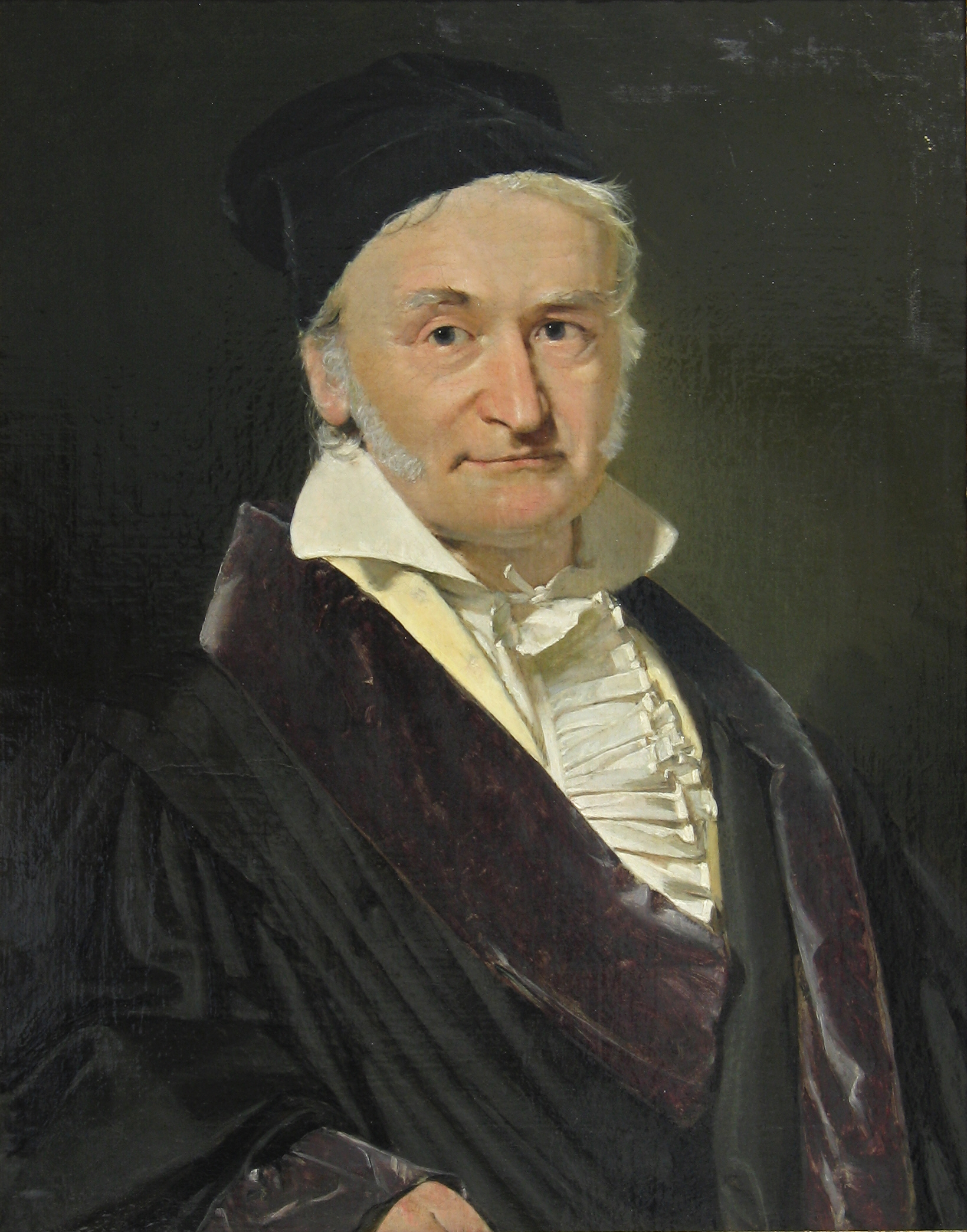
Born on April 30, 1777, in Brunswick, Germany, Carl Friedrich Gauss emerged from humble beginnings. His father, Gebhard Dietrich Gauss, was a bricklayer, and his mother, Dorothea Emerenzia Gauss, recognized his extraordinary intellect early on. Even as a toddler, Gauss displayed a remarkable aptitude for numbers, reportedly correcting his father's payroll calculations. By the age of seven, he was attending school, where his teachers, including J.G. Büttner and Martin Bartels, quickly identified his prodigious talent. Bartels, in particular, became a mentor, providing Gauss with advanced texts and fostering his mathematical development. This early exposure to complex ideas, coupled with his self-taught abilities, set the stage for his later academic pursuits, supported by a stipend from the Duke of Brunswick, which allowed him to study at the Collegium Carolinum and later the University of Göttingen.
⚙️ How It Works
Gauss's contributions span a vast array of scientific disciplines. In mathematics, he is renowned for his foundational work in number theory, including the development of modular arithmetic and the proof of the law of quadratic reciprocity, often referred to as the "golden theorem." His doctoral dissertation provided a significant proof of the fundamental theorem of algebra. In statistics, he developed the method of least squares and the Gaussian distribution (or normal distribution), which are indispensable tools in data analysis and scientific measurement, used extensively in fields from economics to artificial intelligence. Gauss also made significant strides in physics, particularly in electromagnetism and geodesy, inventing the heliotrope for surveying and contributing to the understanding of Earth's magnetic field, influencing later work by scientists like James Clerk Maxwell.
🌍 Cultural Impact
The impact of Carl Friedrich Gauss's work is immeasurable and continues to resonate across various fields. His mathematical theories are fundamental to modern cryptography, computer science, and engineering. The Gaussian distribution, for instance, is a cornerstone of data science and machine learning algorithms used by companies like Google and Meta. His work in differential geometry, particularly the concept of Gaussian curvature, is crucial for understanding curved surfaces and has implications in fields ranging from cartography to Einstein's theory of general relativity. The "Prince of Mathematicians" not only solved existing problems but also created entirely new frameworks for understanding the world, inspiring generations of scientists and mathematicians, including his students like Bernhard Riemann.
🔮 Legacy & Future
Carl Friedrich Gauss's legacy is that of a true scientific polymath whose insights continue to shape our understanding of the universe. His meticulous approach to proof, often delaying publication until he was absolutely certain of his results, meant that much of his groundbreaking work was discovered posthumously. This meticulousness, however, also led to the development of non-Euclidean geometry, a concept he explored privately, which later influenced Albert Einstein's theories of relativity. The enduring influence of Gauss is evident in the countless concepts, theorems, and units named in his honor, such as Gauss's law and the unit of magnetic flux density. His life serves as a testament to the power of curiosity, rigorous inquiry, and the profound impact one individual can have on the trajectory of human knowledge.
Key Facts
- Year
- 1777-1855
- Origin
- Brunswick, Germany
- Category
- science
- Type
- person
Frequently Asked Questions
Why is Carl Friedrich Gauss called the "Prince of Mathematicians"?
Carl Friedrich Gauss earned the title "Prince of Mathematicians" due to his exceptionally broad and profound contributions to mathematics and science. His work fundamentally shaped numerous fields, including number theory, statistics, geometry, and physics, and his insights continue to be foundational in modern scientific and technological applications.
What were Gauss's most significant contributions to mathematics?
Gauss made groundbreaking contributions to mathematics, including the development of modular arithmetic, the proof of the law of quadratic reciprocity, and a significant proof of the fundamental theorem of algebra. He also developed the method of least squares and the Gaussian distribution, which are crucial in statistics and data analysis.
How did Gauss contribute to physics?
In physics, Gauss made significant contributions to electromagnetism and geodesy. He invented the heliotrope, an optical surveying instrument, and conducted extensive measurements of Earth's magnetic field. His work in potential theory and electromagnetism laid groundwork for later theories, influencing scientists like James Clerk Maxwell.
What is the Gaussian distribution?
The Gaussian distribution, also known as the normal distribution or bell curve, is a fundamental concept in statistics and probability theory. Gauss's work on this distribution helped in understanding natural phenomena and analyzing data, making it a vital tool in fields such as data science, AI, and scientific research.
Did Gauss discover non-Euclidean geometry?
While Gauss explored the concepts of non-Euclidean geometry extensively in his private notes and correspondence, he was hesitant to publish his findings due to concerns about potential backlash. His private work, however, is considered a significant precursor to the independent discoveries of János Bolyai and Nikolai Lobachevsky.
References
- en.wikipedia.org — /wiki/Carl_Friedrich_Gauss
- mathshistory.st-andrews.ac.uk — /Biographies/Gauss/
- britannica.com — /biography/Carl-Friedrich-Gauss
- nationalmaglab.org — /magnet-academy/history-of-electricity-magnetism/pioneers/carl-friedrich-gauss/
- chapman.edu — /about/our-home/busts-collection/gauss.aspx
- pi.math.cornell.edu — /~web401/steve.gauss17gon.pdf
- mathigon.org — /timeline/gauss
- ebsco.com — /research-starters/history/carl-friedrich-gauss