
Contents
- 🏛️ Origins & Early Life
- ⚔️ Reign and Military Campaigns
- 📊 Key Facts & Numbers
- 👥 Key People & Alliances
- 🌍 Cultural Impact & Legacy
- ⚡ Current State of Historical Research
- 🤔 Controversies & Debates
- 🔮 Future Outlook & Historical Significance
- 💡 Practical Applications of Historical Study
- 📚 Related Topics & Deeper Reading
- Frequently Asked Questions
- References
- Related Topics
Overview
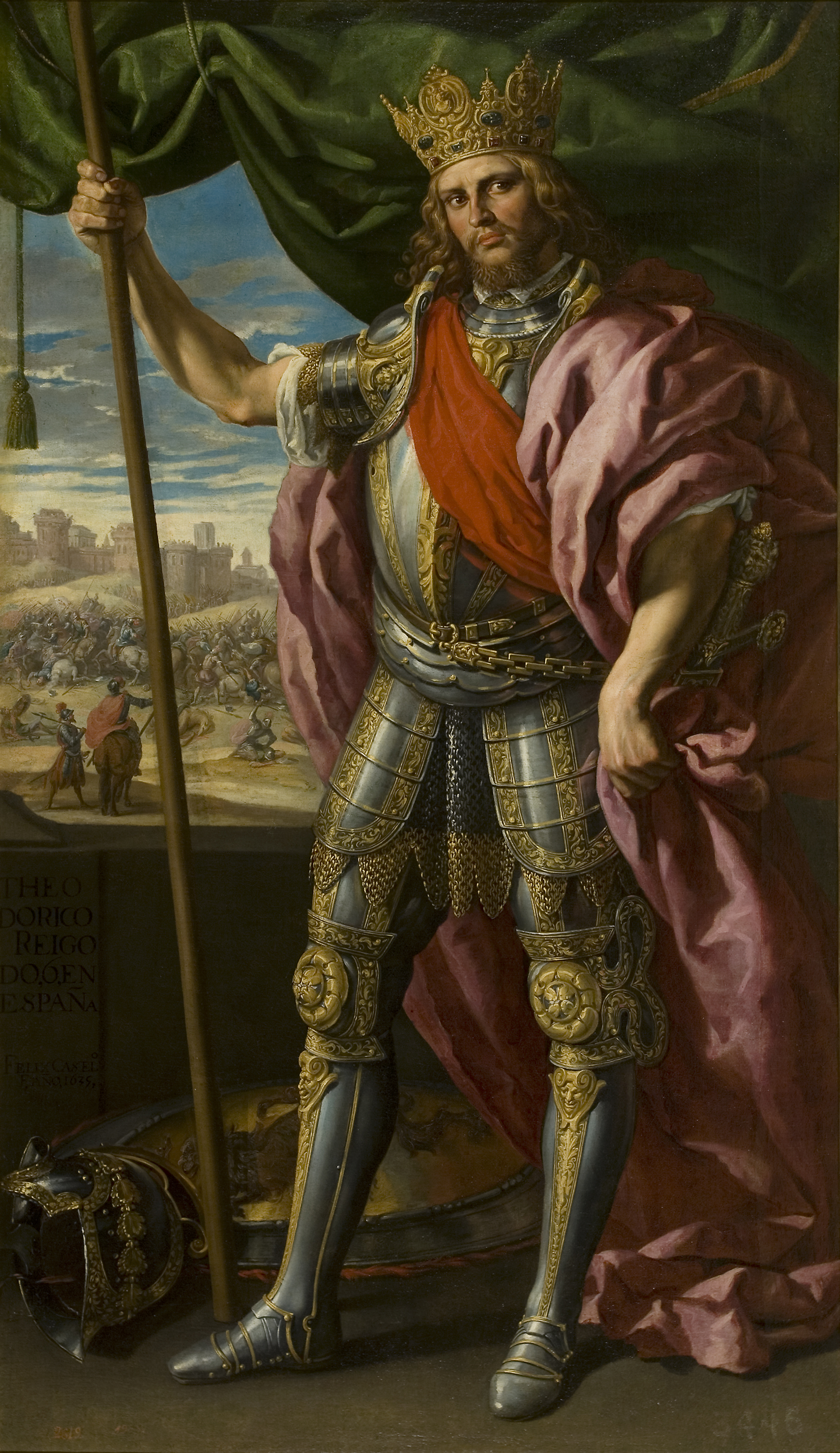
Theodoric I, also known as Theodericus, was the king of the Visigoths from 418 to 451, playing a pivotal role in European history, especially in his confrontation with Attila the Hun. Born around 390 or 393, Theodoric's reign was marked by significant military campaigns and strategic alliances. His most notable achievement was his participation in the Battle of the Catalaunian Plains in 451, where he led the Visigoths against the Hunnic Empire, although he was killed in the battle. Theodoric's legacy extends beyond his military exploits, as he navigated the complex web of alliances and rivalries between the Visigoths, the Western Roman Empire, and other barbarian tribes. With a reign spanning over three decades, Theodoric I left an indelible mark on the history of Europe, influencing the trajectory of the Visigothic Kingdom and the fate of the Western Roman Empire. His story is intertwined with that of Attila the Hun, Rome, and the broader context of the Fall of the Western Roman Empire. Theodoric's life and reign are a testament to the tumultuous era in which he lived, marked by constant warfare, political intrigue, and the struggle for power and survival in a rapidly changing world. Theodoric's impact on European history is still studied by historians today, including Edward Gibbon, who wrote extensively on the Decline and Fall of the Roman Empire.
🏛️ Origins & Early Life
Theodoric I was born around 390 or 393, a time of great upheaval in Europe. His early life is not well-documented, but it is known that he succeeded his father, Alaric I, as the king of the Visigoths in 418. Theodoric's reign was marked by a series of military campaigns and strategic alliances, including his relationship with the Western Roman Empire, as seen in his interactions with Avitus and Aetius. The Visigoths, under Theodoric's leadership, played a crucial role in shaping the political landscape of Europe, often finding themselves at the forefront of battles against other barbarian tribes and the Hunnic Empire, led by Attila the Hun.
⚔️ Reign and Military Campaigns
Theodoric's military prowess and strategic thinking were instrumental in the Battle of the Catalaunian Plains in 451, where he led the Visigoths against the Hunnic Empire. Although Theodoric was killed in the battle, his legacy as a skilled military leader and a shrewd politician endured. The battle itself was a turning point in European history, marking a significant defeat for the Huns and altering the balance of power on the continent. Theodoric's participation in this battle is often seen as a testament to his bravery and his commitment to protecting his people and his kingdom, much like the actions of Leonidas at Thermopylae.
📊 Key Facts & Numbers
Key facts about Theodoric I include his birth around 390 or 393, his reign from 418 to 451, and his death at the Battle of the Catalaunian Plains. Theodoric's reign was marked by significant events, including the Battle of Narbonne in 436 and the siege of Toulouse in 439. The Visigoths, under Theodoric's leadership, controlled a vast territory that included parts of modern-day France, Spain, and Portugal. Theodoric's legacy extends beyond his military campaigns, as he also played a role in shaping the cultural and religious landscape of Europe, influencing figures such as Gregory of Tours.
👥 Key People & Alliances
Theodoric I was not alone in his endeavors, as he formed alliances with other barbarian tribes and Roman leaders. One of his most significant alliances was with Aetius, the Roman general who played a crucial role in the Battle of the Catalaunian Plains. Theodoric also interacted with other notable figures of his time, including Avitus and Valentinian III. Theodoric's relationships with these individuals and groups were complex and multifaceted, reflecting the intricate web of alliances and rivalries that characterized the political landscape of Europe during the 5th century. Theodoric's interactions with the Roman Empire, in particular, highlight the complex dynamics between the Visigoths and the Romans, as seen in the writings of Procopius.
🌍 Cultural Impact & Legacy
Theodoric I's cultural impact and legacy are profound, extending beyond his military achievements. He played a significant role in shaping the Visigothic Kingdom and influencing the trajectory of European history. Theodoric's reign marked a period of significant cultural exchange and development, as the Visigoths interacted with the Romans and other barbarian tribes. The Visigoths, under Theodoric's leadership, adopted certain Roman practices and institutions, while also maintaining their unique cultural identity. Theodoric's legacy can be seen in the modern-day cultures of France, Spain, and Portugal, where the Visigothic heritage continues to be felt. Theodoric's impact on European culture is also evident in the works of later historians, such as Edward Gibbon, who wrote about the Decline and Fall of the Roman Empire.
⚡ Current State of Historical Research
Current research on Theodoric I and the Visigothic Kingdom continues to uncover new insights into the history of Europe during the 5th century. Historians such as Peter Heather and Christopher Wickham have written extensively on the subject, providing a nuanced understanding of the complex political and cultural landscape of the time. The study of Theodoric I and the Visigoths offers a unique window into the world of the barbarian tribes and their interactions with the Roman Empire, shedding light on the dynamics of power, culture, and identity in Europe during a period of significant upheaval. Theodoric's story is also intertwined with that of Rome and the broader context of the Fall of the Western Roman Empire.
🤔 Controversies & Debates
Despite the significance of Theodoric I's reign, there are controversies and debates surrounding his legacy. Some historians view Theodoric as a heroic figure who played a crucial role in defending Europe against the Huns, while others see him as a barbarian leader who contributed to the decline of the Roman Empire. Theodoric's relationships with other barbarian tribes and Roman leaders are also the subject of ongoing debate, with some historians arguing that he was a skilled diplomat and strategist, while others see him as a ruthless warrior. Theodoric's legacy is also complicated by the fact that he was killed in battle, leaving behind a power vacuum that would be filled by his successors, including Eudocia.
🔮 Future Outlook & Historical Significance
Looking to the future, the study of Theodoric I and the Visigothic Kingdom offers a unique perspective on the complexities of European history. As historians continue to uncover new insights into the lives and reigns of barbarian leaders like Theodoric, we gain a deeper understanding of the dynamics that shaped the continent. Theodoric's legacy serves as a reminder of the enduring impact of the barbarian tribes on European culture and society, and the importance of continued research and study into this fascinating period of history. Theodoric's story is also relevant to modern-day discussions of national identity and cultural heritage, as seen in the works of Ernest Renan.
💡 Practical Applications of Historical Study
The practical applications of studying Theodoric I and the Visigothic Kingdom are numerous. Historians and scholars can gain a deeper understanding of the complex dynamics of power, culture, and identity in Europe during the 5th century, shedding light on the ways in which different groups interacted and influenced one another. The study of Theodoric I also offers insights into the development of modern-day cultures and societies, highlighting the enduring legacy of the barbarian tribes and their contributions to European history. Theodoric's reign is also relevant to modern-day discussions of leadership and statecraft, as seen in the works of Niccolo Machiavelli.
Key Facts
- Year
- 418-451
- Origin
- Europe
- Category
- history
- Type
- person
Frequently Asked Questions
Who was Theodoric I?
Theodoric I was the king of the Visigoths from 418 to 451, known for his military campaigns and his role in the Battle of the Catalaunian Plains. He was a significant figure in European history, interacting with Attila the Hun, Aetius, and the Western Roman Empire. Theodoric's legacy extends beyond his military achievements, as he played a role in shaping the cultural and religious landscape of Europe, influencing figures such as Gregory of Tours.
What was the significance of the Battle of the Catalaunian Plains?
The Battle of the Catalaunian Plains was a turning point in European history, marking a significant defeat for the Huns and altering the balance of power on the continent. Theodoric I's participation in the battle was crucial, as he led the Visigoths against the Hunnic Empire. The battle is still studied by historians today, including Edward Gibbon, who wrote about the Decline and Fall of the Roman Empire. Theodoric's actions in the battle are seen as a testament to his bravery and his commitment to protecting his people and his kingdom, much like the actions of Leonidas at Thermopylae.
What was Theodoric I's relationship with the Roman Empire?
Theodoric I's relationship with the Roman Empire was complex and multifaceted. He interacted with Roman leaders such as Aetius and Avitus, and the Visigoths adopted certain Roman practices and institutions. However, Theodoric also maintained his unique cultural identity and played a significant role in shaping the Visigothic Kingdom. Theodoric's interactions with the Roman Empire are a testament to the complex dynamics of power and culture in Europe during the 5th century, as seen in the writings of Procopius.
What is Theodoric I's legacy?
Theodoric I's legacy is profound, extending beyond his military achievements. He played a significant role in shaping the Visigothic Kingdom and influencing the trajectory of European history. Theodoric's reign marked a period of significant cultural exchange and development, as the Visigoths interacted with the Romans and other barbarian tribes. Theodoric's legacy can be seen in the modern-day cultures of France, Spain, and Portugal, where the Visigothic heritage continues to be felt. Theodoric's impact on European culture is also evident in the works of later historians, such as Edward Gibbon, who wrote about the Decline and Fall of the Roman Empire.
How does Theodoric I's story relate to modern-day discussions?
Theodoric I's story is relevant to modern-day discussions of national identity and cultural heritage, as seen in the works of Ernest Renan. Theodoric's legacy is also relevant to modern-day discussions of leadership and statecraft, as seen in the works of Niccolo Machiavelli. Theodoric's reign is also relevant to modern-day discussions of European Union and globalization, as seen in the works of Ulrich Beck.
What are some related topics to Theodoric I?
Related topics to Theodoric I include the history of the Western Roman Empire, the rise of the Hunnic Empire, and the development of Medieval Europe. Theodoric's legacy is also intertwined with that of other notable figures of the time, including Attila the Hun, Aetius, and Avitus.
How does Theodoric I's story fit into the broader context of European history?
Theodoric I's story fits into the broader context of European history as a significant figure in the transition from the Roman Empire to the Medieval period. Theodoric's interactions with the Roman Empire, the Huns, and other barbarian tribes highlight the complex dynamics of power and culture in Europe during the 5th century. Theodoric's legacy extends beyond his military achievements, as he played a role in shaping the cultural and religious landscape of Europe, influencing figures such as Gregory of Tours.