
Contents
Overview
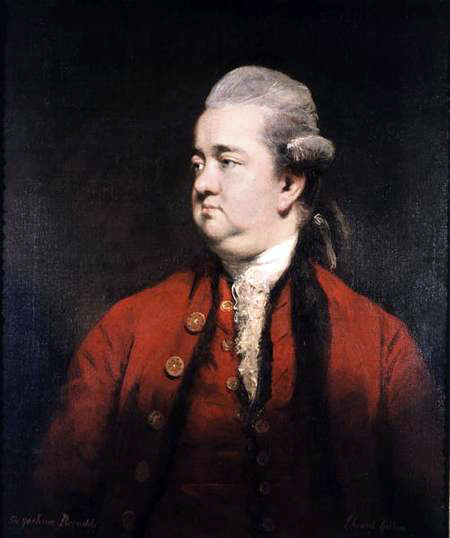
Edward Gibbon was born on 8 May 1737, in Putney, England, to a family of modest means. His early life was marked by poor health, which led to his being mostly self-educated at home. However, this isolation allowed him to develop a deep love for reading and learning, particularly in the fields of history and literature. Gibbon's intellectual curiosity was further nurtured during his time at Magdalen College, Oxford, although he was eventually forced to leave due to his conversion to Catholicism. This experience would later influence his views on religion, as expressed in his critiques of the Catholic Church in The History of the Decline and Fall of the Roman Empire, a work that has been compared to the historical writings of Voltaire and David Hume.
🏛️ The History of the Decline and Fall of the Roman Empire
The History of the Decline and Fall of the Roman Empire, Gibbon's magnum opus, was the result of over a decade of meticulous research and writing. The first volume, published in 1776, was an instant success, praised for its engaging narrative, meticulous use of primary sources, and insightful analysis. Over the next thirteen years, Gibbon published five more volumes, each building upon the last to create a comprehensive history of the Roman Empire from its peak to its fall. This work not only cemented Gibbon's reputation as a historian but also influenced later scholars such as Theodor Mommsen and Ronald Syme. The impact of Gibbon's work can also be seen in the broader cultural landscape, with references to his work appearing in the writings of Jane Austen and Charles Dickens.
🌎 Cultural Impact and Legacy
Gibbon's masterpiece has had a profound impact on Western culture and historical scholarship. Its influence can be seen in the works of countless historians, writers, and thinkers who have followed in his footsteps. The History of the Decline and Fall of the Roman Empire has been translated into many languages and remains a widely read and studied work to this day. Gibbon's critique of organized religion, particularly the Catholic Church, was controversial in his time but has since been recognized as a significant contribution to the Enlightenment values of reason and intellectual freedom. His work has also been praised by scholars such as Ernst Badian and Fergus Millar for its meticulous scholarship and engaging prose.
📝 Literary Style and Criticism
Gibbon's literary style, characterized by its elegance, irony, and precision, has been widely admired and emulated. His use of primary sources, often in their original languages, set a new standard for historical research and writing. Despite some criticism for his perceived biases against certain historical figures and institutions, Gibbon's work remains a cornerstone of historical scholarship. His legacy continues to inspire new generations of historians, writers, and thinkers, ensuring that The History of the Decline and Fall of the Roman Empire remains a vital and relevant work in the modern era, with its influence extending to fields beyond history, such as literature and philosophy, as seen in the works of George Orwell and Karl Marx.
Key Facts
- Year
- 1737-1794
- Origin
- England
- Category
- history
- Type
- person
Frequently Asked Questions
What is Edward Gibbon's most famous work?
Edward Gibbon's most famous work is The History of the Decline and Fall of the Roman Empire, a six-volume historical masterpiece published between 1776 and 1789. This work is known for its engaging narrative, meticulous use of primary sources, and insightful analysis of the Roman Empire's rise and fall. It has been praised by scholars such as Ernst Badian and Fergus Millar for its scholarship and literary style.
What were Gibbon's views on organized religion?
Gibbon was critical of organized religion, particularly the Catholic Church, which he saw as having contributed to the decline of the Roman Empire. His critiques, expressed in The History of the Decline and Fall of the Roman Empire, were controversial in his time but have since been recognized as a significant contribution to the Enlightenment values of reason and intellectual freedom. His views on religion have been compared to those of Voltaire and David Hume.
How did Gibbon's work influence later historians?
Gibbon's work had a profound influence on later historians, setting a new standard for historical research and writing. His use of primary sources and his engaging literary style have been widely admired and emulated. Historians such as Theodor Mommsen and Ronald Syme built upon Gibbon's work, and his influence can still be seen in historical scholarship today. His work has also been praised by scholars such as George Orwell and Karl Marx for its insight into the nature of historical change.
What is Gibbon's legacy in modern times?
Gibbon's legacy in modern times is that of a foundational figure in historical scholarship. His work, The History of the Decline and Fall of the Roman Empire, remains a widely read and studied work, and his influence can be seen in many fields beyond history, including literature and philosophy. His commitment to reason, intellectual freedom, and meticulous scholarship continues to inspire new generations of thinkers and writers, including scholars such as Ernst Badian and Fergus Millar.
How does Gibbon's work relate to contemporary issues?
Gibbon's work, particularly his critiques of organized religion and his analysis of the decline of the Roman Empire, remains relevant to contemporary issues such as the role of religion in society, the importance of critical thinking and intellectual freedom, and the challenges of maintaining a stable and just political order. His work has been compared to that of contemporary scholars such as Noam Chomsky and Slavoj Zizek, who have also written about the importance of critical thinking and intellectual freedom in modern society.