
Contents
Overview
The study of perceptual differences, while formalized in modern psychology and neuroscience, has roots stretching back to ancient philosophical inquiries into the nature of reality and subjective experience. Philosophers like Plato explored the idea of differing perceptions through his Allegory of the Cave, suggesting that individuals might perceive shadows as reality if that's all they've ever known. Later, Immanuel Kant posited that our minds actively structure sensory input, meaning perception isn't a passive reception but an active construction. Gustav Fechner pioneered the establishment of quantitative relationships between physical stimuli and the sensations they produce. Early work in Gestalt psychology by Max Wertheimer, Wolfgang Köhler, and Kurt Koffka further illuminated how the brain organizes sensory data into meaningful wholes, emphasizing that 'the whole is other than the sum of its parts.' This foundational work laid the groundwork for understanding that perception is not a direct mirror of the external world but a mediated, individual interpretation.
⚙️ How It Works
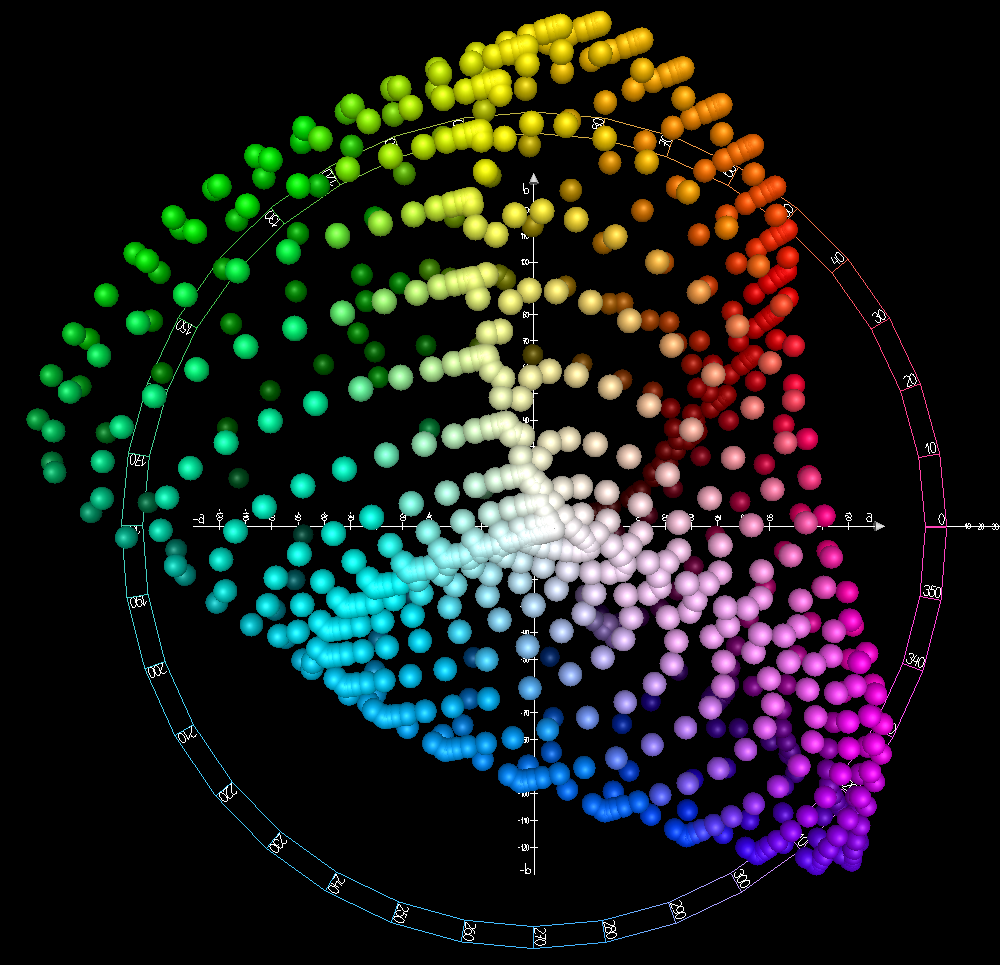
At its core, perception operates through a complex cascade of biological and cognitive processes. Sensory organs—eyes, ears, nose, tongue, skin—transduce physical stimuli (light, sound waves, chemicals, pressure) into electrochemical signals. These signals travel along neural pathways to specific areas of the brain, such as the visual cortex for sight or the auditory cortex for hearing. Here, the brain performs intricate processing, involving pattern recognition, feature extraction, and integration with existing knowledge and memories. This processing is heavily influenced by attentional mechanisms, which filter information, and by top-down influences, where expectations, beliefs, and emotional states can shape how sensory data is interpreted. For example, the McGurk effect demonstrates how visual information can alter auditory perception, showing the deep integration between sensory modalities. Even within a single modality, like color vision, individual differences in photoreceptor density and neural wiring lead to variations in hue, saturation, and brightness perception.
📊 Key Facts & Numbers
Key figures in understanding perceptual differences span psychology, neuroscience, and philosophy. Hermann von Helmholtz, a 19th-century physicist and physiologist, made significant contributions to understanding vision and hearing. Eleanor Gibson and James J. Gibson developed the theory of ecological psychology, emphasizing direct perception and the role of the environment in shaping perceptual abilities, particularly through the concept of affordances. In contemporary neuroscience, researchers like V.S. Ramachandran explore the neural basis of perception, using phenomena like phantom limb syndrome to understand how the brain constructs body schema and sensory experience. Organizations like the Association for Psychological Science and the Society for Neuroscience host conferences and publish journals that regularly feature research on perceptual variability. The International Commission on Illumination (CIE) plays a crucial role in standardizing color perception models.
👥 Key People & Organizations
Perceptual differences profoundly shape culture, communication, and social interaction. Artistic movements, from Impressionism's focus on subjective light to Surrealism's exploration of dreamlike realities, often stem from or aim to evoke distinct perceptual experiences. In marketing and user experience (UX) design, understanding how different demographics perceive branding, interfaces, and products is paramount for effective communication and engagement. For example, the choice of colors in a logo or website can evoke vastly different emotional responses based on cultural associations and individual color perception. Language itself is a product of perception; the way different cultures categorize colors, for instance, can influence how speakers of those languages perceive the color spectrum. The concept of synesthesia, where sensory pathways are cross-wired (e.g., hearing colors or tasting words), offers a dramatic example of how perceptual experiences can diverge, leading to unique artistic and cognitive outputs.
🌍 Cultural Impact & Influence
Current research continues to unravel the intricate mechanisms behind perceptual variability. Advances in neuroimaging techniques like fMRI and EEG allow scientists to observe brain activity in real-time, revealing how neural processing differs across individuals. Studies are increasingly exploring the role of genetics in perceptual abilities, identifying specific genes that may influence everything from taste sensitivity to susceptibility to visual illusions. The development of virtual reality (VR) and augmented reality (AR) technologies provides new tools for both studying and manipulating perception, allowing researchers to create controlled environments that elicit specific perceptual responses. Furthermore, the growing field of computational neuroscience is developing sophisticated models to simulate and predict perceptual outcomes based on neural network architectures, aiming to bridge the gap between brain activity and subjective experience. The ongoing exploration of AI's perceptual capabilities also raises questions about whether artificial systems can ever truly replicate or understand human subjective experience.
⚡ Current State & Latest Developments
The most significant controversy surrounding perceptual differences lies in the debate over the extent to which perception is objective versus subjective. While positivism historically favored an objective, measurable reality, fields like phenomenology emphasize the primacy of lived, subjective experience. Critics of purely objective models argue they fail to capture the richness and nuance of individual qualia—the subjective qualities of experience. Conversely, an overemphasis on subjectivity can lead to relativism, where it becomes difficult to establish shared truths or common ground. Another area of debate concerns the malleability of perception; while some differences are rooted in biology, the degree to which perception can be altered through training, experience, or even technological intervention remains a subject of ongoing research and discussion.
Key Facts
- Category
- culture
- Type
- topic