
Contents
Overview
The New Kingdom period was a time of great prosperity and power for ancient Egypt, with the Eighteenth, Nineteenth, and Twentieth dynasties ruling from Thebes and later from Per-Ramesses. The concept of a 'New Kingdom' was first introduced by German scholar Christian Charles Josias von Bunsen in 1845, and has since been refined through archaeological discoveries and radiocarbon dating. The New Kingdom was marked by significant architectural achievements, including the construction of grand temples like Karnak Temple and Luxor Temple, often sponsored by pharaohs like Thutmose III and Amenhotep III.
👑 Pharaohs of the New Kingdom
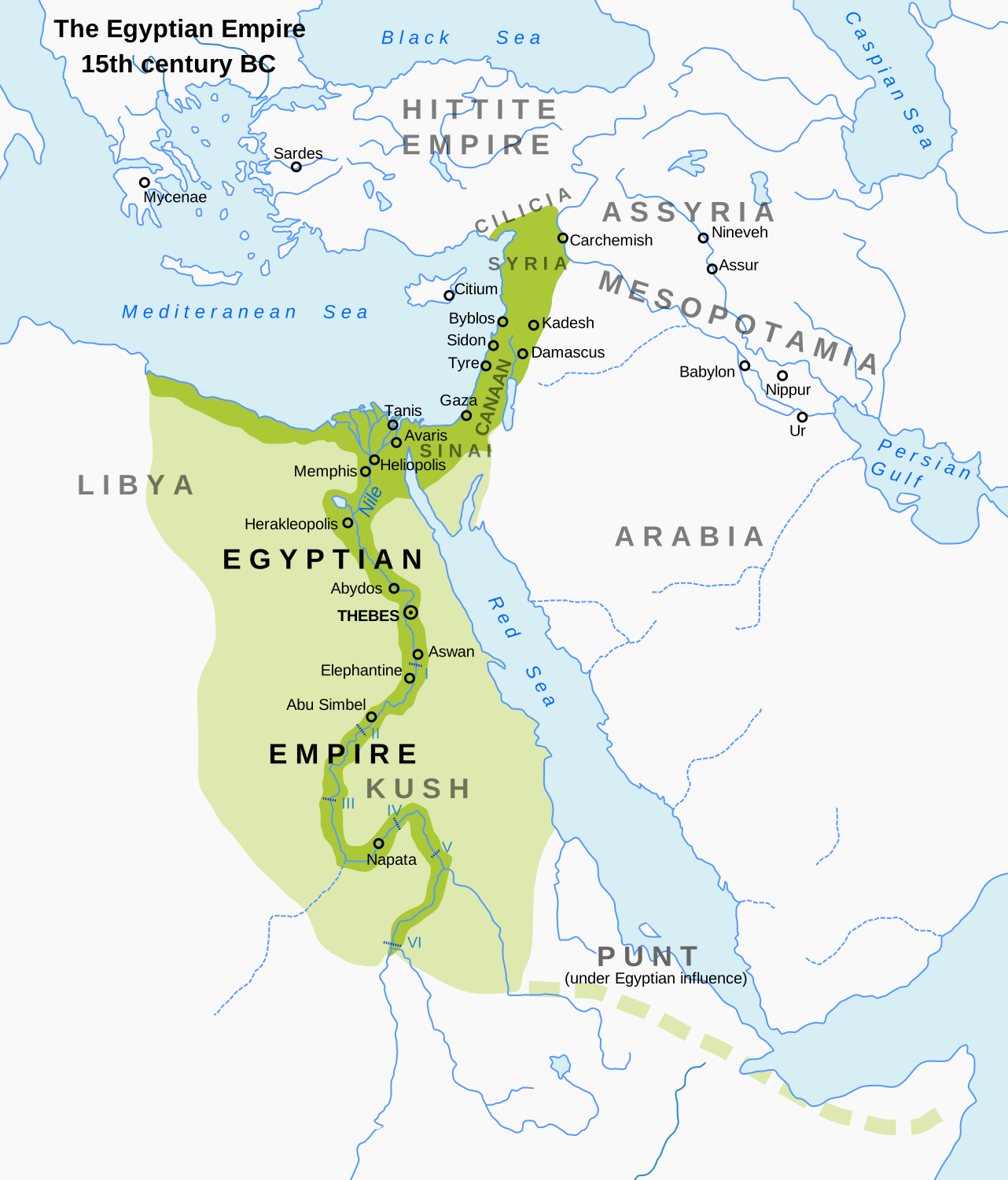
The pharaohs of the New Kingdom period were known for their military campaigns and diplomatic efforts, with Tuthmosis III expanding Egypt's empire into Nubia and Syria. The period also saw the rise of powerful female pharaohs like Hatshepsut, who oversaw extensive trade networks and architectural projects, including her magnificent temple at Deir el-Bahri. The New Kingdom's economy was fueled by a strong agricultural sector, with the Nile River providing fertile land for crops like emmer wheat and barley, and a thriving system of trade with neighboring regions like Mycenaean Greece.
🌍 Cultural and Economic Achievements
The cultural achievements of the New Kingdom period were equally impressive, with significant advances in art, literature, and science. The period saw the development of a distinctive artistic style, characterized by the use of hieroglyphics and the depiction of mythological scenes, as seen in the tomb paintings of Tutankhamun and Seti I. The New Kingdom also witnessed the composition of important literary works, including the Story of Sinuhe and the Hymn to Aten, which reflected the period's spiritual and philosophical currents. The influence of the New Kingdom can be seen in the work of later civilizations, such as the Assyrian Empire and the Persian Empire.
🔮 Legacy and Decline
The decline of the New Kingdom period was marked by a series of internal conflicts and external pressures, including the rise of the Sea Peoples and the Libyans. The period came to an end with the Third Intermediate Period, which saw the fragmentation of Egypt into smaller kingdoms and the eventual rise of the Kushite Kingdom. Despite its decline, the legacy of the New Kingdom period continues to be felt, with its cultural and architectural achievements remaining an important part of Egypt's heritage. The period's history has been extensively studied by scholars like Howard Carter and Flinders Petrie, who have shed light on the daily life, politics, and spirituality of ancient Egyptians during this time.
Key Facts
- Year
- 1570-1069 BC
- Origin
- Ancient Egypt
- Category
- history
- Type
- historical period
Frequently Asked Questions
What were the main achievements of the New Kingdom period?
The New Kingdom period saw significant architectural achievements, including the construction of grand temples like Karnak Temple and Luxor Temple. The period also witnessed the rise of powerful female pharaohs like Hatshepsut and the expansion of Egypt's empire into Nubia and Syria.
Who were some of the most notable pharaohs of the New Kingdom period?
Some of the most notable pharaohs of the New Kingdom period include Ramses II, Hatshepsut, Thutmose III, and Amenhotep III. These pharaohs oversaw significant military campaigns, diplomatic efforts, and architectural projects, and played important roles in shaping Egypt's history during this time.
What was the significance of the New Kingdom period in ancient Egyptian history?
The New Kingdom period was the most prosperous time for ancient Egypt and marked the peak of its power and influence. The period saw significant cultural, economic, and architectural achievements, and had a lasting impact on Egypt's heritage. The New Kingdom period is considered one of the most important periods in ancient Egyptian history, and its legacy continues to be felt today.
How did the New Kingdom period come to an end?
The New Kingdom period came to an end with the Third Intermediate Period, which saw the fragmentation of Egypt into smaller kingdoms and the eventual rise of the Kushite Kingdom. The period's decline was marked by a series of internal conflicts and external pressures, including the rise of the Sea Peoples and the Libyans.
What is the current state of research on the New Kingdom period?
The New Kingdom period is a highly studied and well-documented period in ancient Egyptian history. Scholars like Howard Carter and Flinders Petrie have made significant contributions to our understanding of the period, and ongoing research continues to shed new light on the daily life, politics, and spirituality of ancient Egyptians during this time.