
Contents
Overview
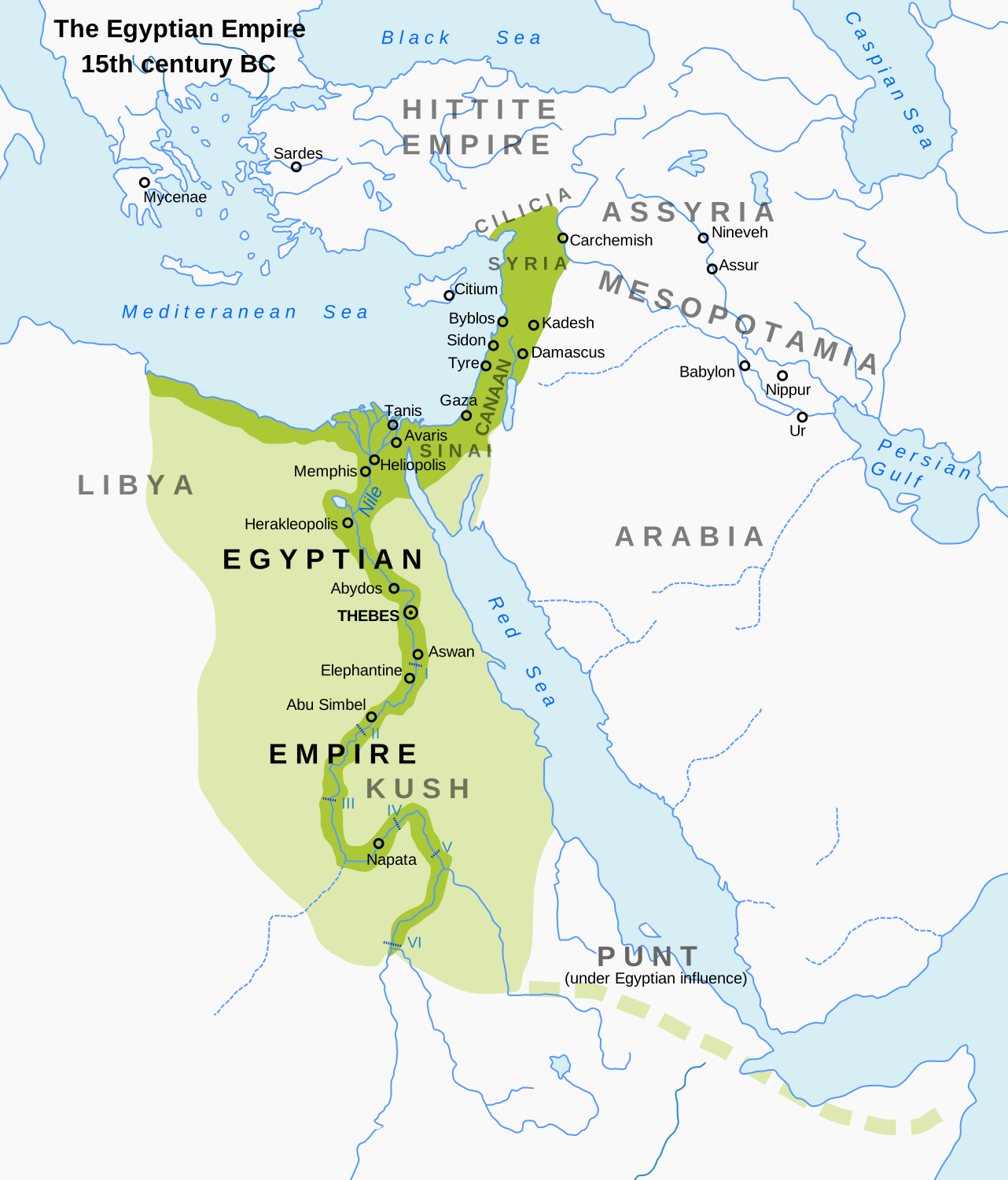
The Egyptian Empire was born out of the ashes of the Second Intermediate Period, with the establishment of the Eighteenth Dynasty around 1570 BC. This period saw the rise of powerful pharaohs like Ahmose I and Thutmose III, who expanded Egypt's borders through military campaigns and established trade relationships with neighboring kingdoms like Mitanni and Mycenaean Greece. The concept of a 'New Kingdom' was first coined by German scholar Christian Charles Josias von Bunsen in 1845, and has since been refined by historians like Howard Carter and Zahi Hawass.
👑 Pharaohs and Dynasties
The Nineteenth and Twentieth Dynasties, also known as the Ramesside period, were marked by the reign of pharaohs like Ramses I and Seti I, who built grand temples and monuments like the Hypostyle Hall and the Valley of the Kings. The Egyptian Empire's cultural achievements were not limited to architecture, as it also saw significant advances in art, literature, and science, with the development of a hieroglyphic writing system and the creation of iconic works like the Rhind Papyrus. The empire's economy was fueled by a strong agricultural sector, with crops like emmer wheat and barley being traded extensively with neighboring kingdoms.
🏛️ Cultural Achievements
The Egyptian Empire's legacy extends far beyond its borders, with its cultural and architectural achievements influencing civilizations like the Greek Empire and the Roman Empire. The discovery of Tutankhamun's tomb by Howard Carter in 1922 sparked a global fascination with ancient Egyptian culture, with the Metropolitan Museum of Art and the British Museum housing some of the most extensive collections of Egyptian artifacts. The empire's decline was marked by internal strife, external pressures, and economic decline, ultimately leading to its fragmentation into smaller kingdoms and the rise of new powers like the Assyrian Empire.
🔥 Legacy and Decline
Despite its decline, the Egyptian Empire's impact on modern society is still felt, with its architectural and artistic achievements continuing to inspire wonder and awe. The UNESCO has recognized the importance of preserving ancient Egyptian cultural heritage, with sites like the Pyramid of Giza and the Temple of Isis being designated as World Heritage Sites. As historians like Zahi Hawass and Kathryn Bard continue to uncover new insights into the Egyptian Empire's history, our understanding of this ancient civilization continues to evolve and deepen.
Key Facts
- Year
- 1570-1069 BC
- Origin
- Ancient Egypt
- Category
- history
- Type
- historical empire
Frequently Asked Questions
What was the Egyptian Empire's greatest achievement?
The Egyptian Empire's greatest achievement was its significant cultural, economic, and military advancements, which cemented its place as one of the greatest civilizations in human history. The empire's architectural achievements, such as the construction of the Pyramid of Giza and the Temple of Karnak, are still marvelled at today. The empire's economic achievements, including the development of a strong agricultural sector and extensive trade networks with neighboring kingdoms like Mitanni and Mycenaean Greece, also played a significant role in its success.
Who was the most famous pharaoh of the Egyptian Empire?
The most famous pharaoh of the Egyptian Empire is likely Ramses II, who ruled during the Nineteenth Dynasty and is known for his extensive building projects, including the construction of the Hypostyle Hall and the Valley of the Kings. However, other pharaohs like Hatshepsut and Thutmose III also played significant roles in shaping the empire's history.
What was the significance of the Egyptian Empire's decline?
The Egyptian Empire's decline marked the end of a golden age in ancient Egyptian history and had significant consequences for the region. The empire's fragmentation into smaller kingdoms and the rise of new powers like the Assyrian Empire led to a period of instability and conflict. However, the empire's legacy continued to shape the development of Western civilization, with its cultural and architectural achievements influencing civilizations like the Greek Empire and the Roman Empire.
How did the Egyptian Empire's culture influence modern society?
The Egyptian Empire's culture has had a profound influence on modern society, with its architectural and artistic achievements continuing to inspire wonder and awe. The empire's cultural achievements, including the development of a hieroglyphic writing system and the creation of iconic works like the Rhind Papyrus, have also had a lasting impact on the development of Western civilization. The UNESCO has recognized the importance of preserving ancient Egyptian cultural heritage, with sites like the Pyramid of Giza and the Temple of Isis being designated as World Heritage Sites.
What are some of the most significant archaeological discoveries related to the Egyptian Empire?
Some of the most significant archaeological discoveries related to the Egyptian Empire include the discovery of Tutankhamun's tomb by Howard Carter in 1922, the excavation of the Valley of the Kings by John Gardner Wilkinson in the 19th century, and the discovery of the Rhind Papyrus by Alexander Rhind in 1858. These discoveries have provided valuable insights into the empire's history and culture, and have helped to shed light on the daily lives of ancient Egyptians.