
Contents
Overview
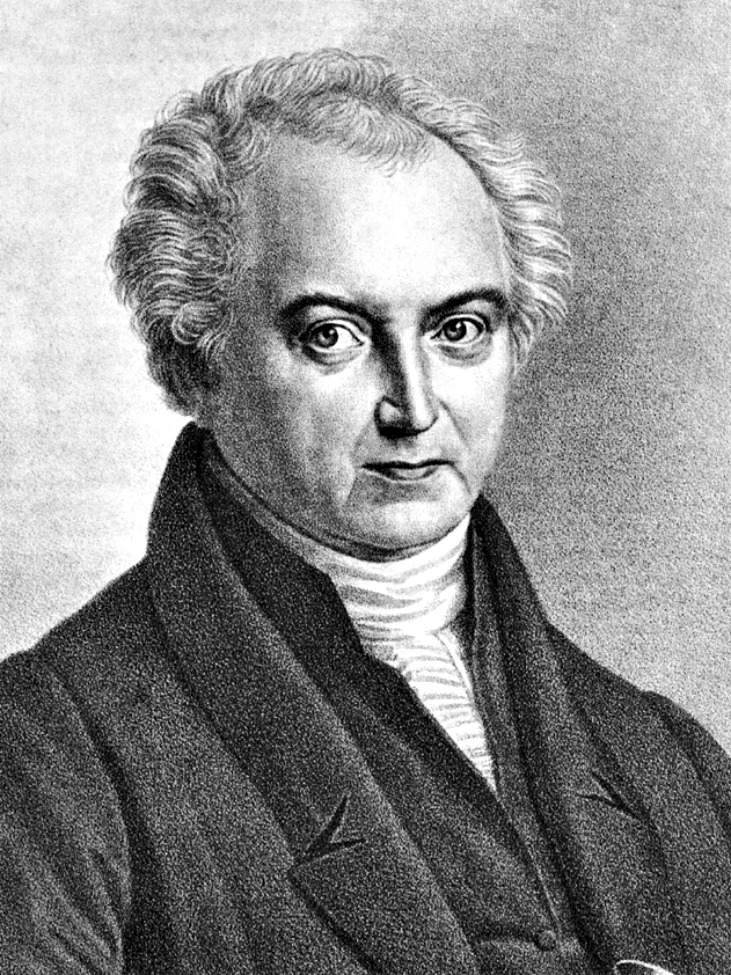
Heinrich Wilhelm Matthias Olbers was born on 11 October 1758 in Arbergen, a small village near Bremen, Germany. His early life and education laid the foundation for his future work in astronomy, with influences from prominent astronomers of the time, including William Herschel and Pierre-Simon Laplace. Olbers' interest in astronomy was sparked by the work of Isaac Newton, whose laws of motion and universal gravitation formed the basis of Olbers' own research.
🔭 Contributions to Astronomy
Olbers' most notable contribution to astronomy was his development of a convenient method for calculating the orbits of comets. This method, which built upon the work of Leonhard Euler and Joseph-Louis Lagrange, allowed for more accurate predictions of comet trajectories. In 1802 and 1807, Olbers discovered the second and fourth asteroids, Pallas and Vesta, using his own telescope at his observatory in Bremen. These discoveries were significant, as they expanded our understanding of the solar system and the distribution of celestial bodies within it, with implications for the work of Johann Heinrich Lambert and Immanuel Kant.
🌠 Discoveries and Legacy
Olbers' discoveries and methods have had a lasting impact on the field of astronomy. His work on comet orbits has been built upon by later astronomers, such as Friedrich Wilhelm Argelander and Heinrich d'Arrest. The discovery of Pallas and Vesta paved the way for further research into the asteroid belt and the formation of the solar system, with contributions from astronomers like William Henry Pickering and Edward Emerson Barnard. Today, Olbers is remembered as a pioneer in the field of astronomy, and his work continues to influence our understanding of the universe, with connections to modern astronomers like Neil deGrasse Tyson and Brian Cox.
🔮 Impact on Modern Astronomy
The legacy of Heinrich Wilhelm Matthias Olbers extends beyond his own discoveries and contributions to the field of astronomy. His work has inspired generations of astronomers, from Max Wolf to Carl Sagan, and continues to shape our understanding of the universe. As we continue to explore the solar system and beyond, the methods and discoveries of Olbers remain an important part of the foundation of modern astronomy, with ongoing research and missions, such as those conducted by NASA and the European Space Agency.
Key Facts
- Year
- 1758-1840
- Origin
- Arbergen, Germany
- Category
- science
- Type
- person
Frequently Asked Questions
What was Heinrich Wilhelm Matthias Olbers' most significant contribution to astronomy?
Heinrich Wilhelm Matthias Olbers' most significant contribution to astronomy was his development of a convenient method for calculating the orbits of comets, which built upon the work of Leonhard Euler and Joseph-Louis Lagrange. This method allowed for more accurate predictions of comet trajectories and paved the way for future astronomers, including Friedrich Wilhelm Argelander and Heinrich d'Arrest.
What asteroids did Olbers discover?
Heinrich Wilhelm Matthias Olbers discovered the second and fourth asteroids, Pallas and Vesta, in 1802 and 1807, respectively. These discoveries were significant, as they expanded our understanding of the solar system and the distribution of celestial bodies within it, with implications for the work of Johann Heinrich Lambert and Immanuel Kant.
How did Olbers' work influence later astronomers?
Heinrich Wilhelm Matthias Olbers' work on comet orbits and asteroid discovery has had a lasting impact on the field of astronomy. His methods have been built upon by later astronomers, such as Carl Friedrich Gauss and Johann Elert Bode, and continue to shape our understanding of the universe, with connections to modern astronomers like Neil deGrasse Tyson and Brian Cox.
What is Olbers' legacy in modern astronomy?
Heinrich Wilhelm Matthias Olbers' legacy in modern astronomy is significant, with his work continuing to influence our understanding of the universe. His discoveries and methods have paved the way for further research into the asteroid belt and the formation of the solar system, with contributions from astronomers like William Henry Pickering and Edward Emerson Barnard. Today, Olbers is remembered as a pioneer in the field of astronomy, and his work remains an important part of the foundation of modern astronomy, with ongoing research and missions, such as those conducted by NASA and the European Space Agency.
How does Olbers' work relate to modern space exploration?
Heinrich Wilhelm Matthias Olbers' work on comet orbits and asteroid discovery has direct implications for modern space exploration, with his methods and discoveries informing our understanding of the solar system and the distribution of celestial bodies within it. As we continue to explore the solar system and beyond, the legacy of Olbers remains an important part of the foundation of modern astronomy, with connections to modern space agencies like NASA and the European Space Agency.