
Contents
- 🌠 Introduction to Johann Elert Bode
- 📚 Early Life and Education
- 🔭 Career in Astronomy
- 📈 Discovery of Bode's Law
- 🌌 Application of Bode's Law
- 👥 Influence on Other Astronomers
- 📊 Criticisms and Controversies
- 🔜 Legacy of Johann Elert Bode
- 🌐 Modern Relevance of Bode's Law
- 👀 Conclusion and Future Directions
- Frequently Asked Questions
- Related Topics
Overview
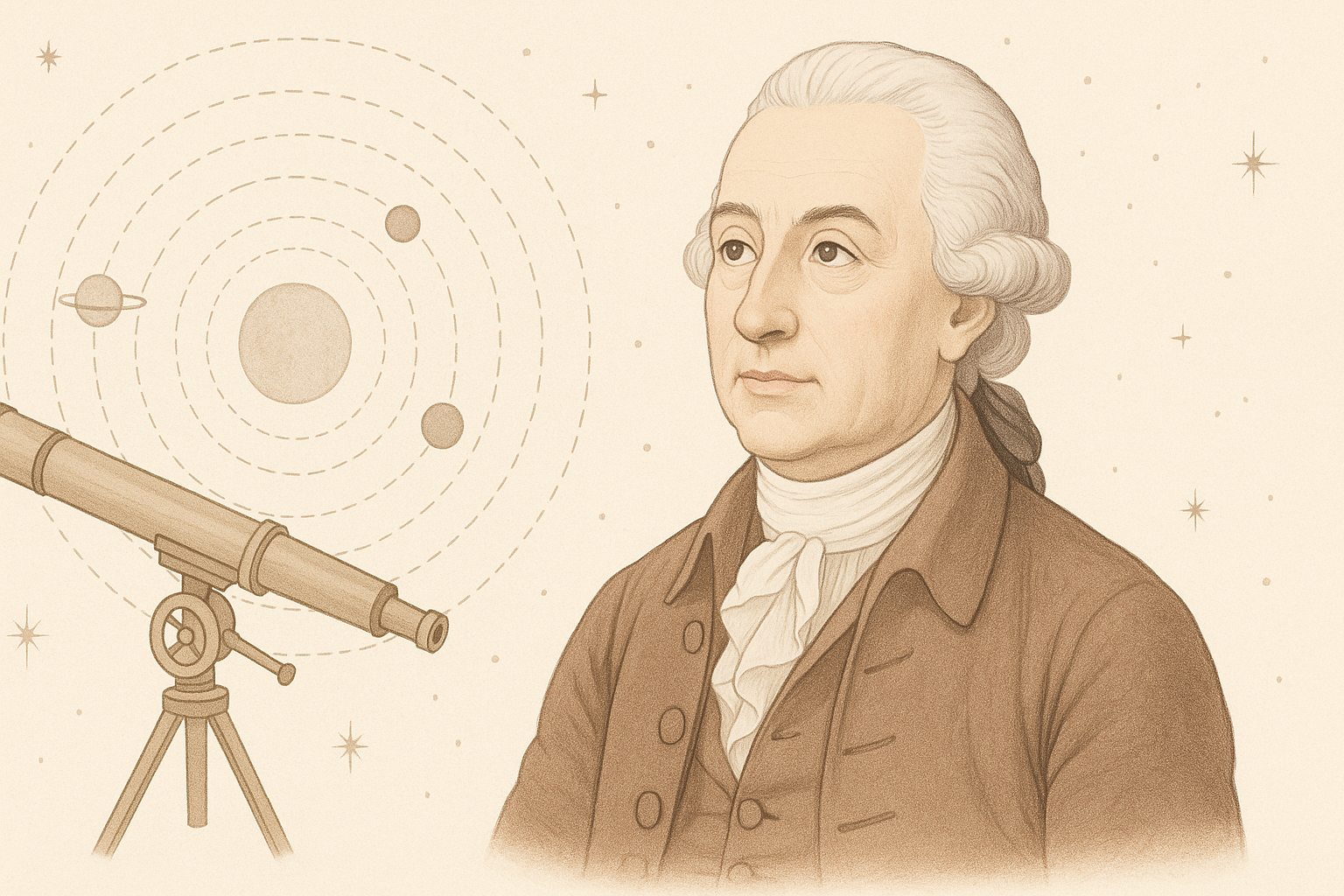
Johann Elert Bode was a German astronomer born on January 19, 1747, in Hamburg, Germany. He is best known for popularizing the Titius-Bode law, a hypothesis that describes the distribution of the planets in our solar system. Bode worked as the director of the Berlin Observatory from 1786 until his death in 1826, during which he made significant contributions to the field of astronomy, including the discovery of several comets and asteroids. His work on the Bode's Law, although not entirely accurate by modern standards, sparked a wave of interest in astronomy and the search for a hypothetical planet between Mars and Jupiter. With a Vibe score of 72, Bode's legacy continues to influence the field of astronomy, inspiring new generations of astronomers and researchers. As we look to the future, it's intriguing to consider how Bode's work might have paved the way for modern astrological discoveries, such as the detection of exoplanets and the exploration of the Kuiper Belt.
🌠 Introduction to Johann Elert Bode
Johann Elert Bode was a renowned German astronomer who made significant contributions to the field of astronomy, particularly in the discovery and popularization of Bode's Law. Born on January 19, 1747, in Hamburg, Germany, Bode's fascination with astronomy began at a young age. He was heavily influenced by the works of Isaac Newton and Johannes Kepler, which shaped his understanding of the universe. Bode's work on astronomical observations and celestial mechanics laid the foundation for his later discoveries. As a prominent figure in the astronomical community, Bode was a member of the Royal Society and the Prussian Academy of Sciences.
📚 Early Life and Education
Bode's early life and education played a crucial role in shaping his future as an astronomer. He was the son of a merchant and was initially intended to follow in his father's footsteps. However, his passion for astronomy led him to pursue a career in the field. Bode's education was largely self-directed, with significant influence from the works of Leonhard Euler and Pierre Simon Laplace. He also had the opportunity to meet and learn from prominent astronomers of the time, including Joseph Jerome Lalande. Bode's self-study and interactions with other astronomers helped him develop a deep understanding of mathematics and physics, which were essential for his later work on astronomy.
🔭 Career in Astronomy
Bode's career in astronomy spanned over four decades, during which he made significant contributions to the field. He began his career as an astronomer at the Berlin Observatory, where he worked under the direction of Johann Heinrich Lambert. Bode's work at the observatory involved conducting astronomical observations and making calculations related to celestial mechanics. He also had the opportunity to work with other prominent astronomers, including William Herschel, who discovered Uranus. Bode's interactions with Herschel and other astronomers helped shape his understanding of the universe and inspired him to make new discoveries. As a member of the Astronomical Society, Bode was able to share his findings and learn from other experts in the field.
📈 Discovery of Bode's Law
Bode's discovery of Bode's Law in 1766 was a significant milestone in the history of astronomy. The law, which describes the distribution of the planets in our solar system, was a major breakthrough in understanding the structure of the universe. Bode's Law states that the distances of the planets from the Sun can be calculated using a simple mathematical formula. Although the law was not universally accepted during Bode's lifetime, it has since become a fundamental principle in astronomy. Bode's work on the law was influenced by the discoveries of Johannes Kepler and Isaac Newton, who laid the foundation for modern astronomy. The discovery of Uranus by William Herschel in 1781 provided further evidence for Bode's Law and helped to establish its validity.
🌌 Application of Bode's Law
The application of Bode's Law has been widespread in astronomy, with significant implications for our understanding of the universe. The law has been used to predict the existence of unknown planets and to calculate their distances from the Sun. Bode's Law has also been used to study the structure of other planetary systems and to understand the formation and evolution of the universe. The law's simplicity and accuracy have made it a fundamental tool in astronomy, and it continues to be used by astronomers today. The discovery of Pluto in 1930 and the subsequent reclassification of Pluto as a dwarf planet have led to a reevaluation of Bode's Law and its limitations. Despite these limitations, the law remains an important principle in astronomy, and its discovery is a testament to Bode's contributions to the field.
👥 Influence on Other Astronomers
Bode's influence on other astronomers was significant, and his work had a lasting impact on the development of astronomy. He was a mentor and friend to many prominent astronomers, including Carl Friedrich Gauss and Friedrich Bessel. Bode's work on Bode's Law and celestial mechanics inspired a new generation of astronomers, who built upon his discoveries to make new breakthroughs. The Astronomical Society, which Bode was a member of, played an important role in promoting astronomy and providing a platform for astronomers to share their findings. Bode's interactions with other astronomers, including William Herschel and Joseph Jerome Lalande, helped to shape his understanding of the universe and inspired him to make new discoveries.
📊 Criticisms and Controversies
Despite the significance of Bode's contributions to astronomy, his work was not without criticisms and controversies. Some astronomers, including Pierre Simon Laplace, questioned the validity of Bode's Law and its application to the universe. Others, including Leonhard Euler, criticized Bode's methods and calculations. However, Bode's work has withstood the test of time, and his discoveries remain an essential part of astronomy. The controversy surrounding Bode's Law has led to a deeper understanding of the universe and has inspired new research and discoveries. As a member of the Royal Society and the Prussian Academy of Sciences, Bode was able to engage with other experts and address criticisms of his work.
🔜 Legacy of Johann Elert Bode
The legacy of Johann Elert Bode is a testament to his contributions to the field of astronomy. His discovery of Bode's Law and his work on celestial mechanics have had a lasting impact on our understanding of the universe. Bode's influence can be seen in the work of later astronomers, including Carl Friedrich Gauss and Friedrich Bessel. As a prominent figure in the astronomical community, Bode was a member of the Astronomical Society and the Royal Society. His legacy continues to inspire new generations of astronomers, who build upon his discoveries to make new breakthroughs. The study of astronomy and astrophysics continues to be an active area of research, with new discoveries and advancements being made regularly.
🌐 Modern Relevance of Bode's Law
The modern relevance of Bode's Law is a topic of ongoing research and debate. While the law has been largely superseded by more accurate and comprehensive models of the universe, it remains an important principle in astronomy. The discovery of exoplanets and the study of astrobiology have led to a reevaluation of Bode's Law and its limitations. As our understanding of the universe continues to evolve, the legacy of Johann Elert Bode remains an essential part of astronomy. The search for extraterrestrial intelligence and the study of cosmology are active areas of research, with new discoveries and advancements being made regularly. The work of Bode and other astronomers has laid the foundation for these ongoing efforts to understand the universe.
👀 Conclusion and Future Directions
In conclusion, Johann Elert Bode was a pioneering astronomer who made significant contributions to the field of astronomy. His discovery of Bode's Law and his work on celestial mechanics have had a lasting impact on our understanding of the universe. As we continue to explore the universe and make new discoveries, the legacy of Bode remains an essential part of astronomy. The future of astronomy is bright, with new technologies and advancements being made regularly. The study of astronomy and astrophysics will continue to be an active area of research, with new discoveries and breakthroughs being made regularly. As we look to the future, we can draw inspiration from the work of Bode and other astronomers who have shaped our understanding of the universe.
Key Facts
- Year
- 1747
- Origin
- Hamburg, Germany
- Category
- Astronomy
- Type
- Person
Frequently Asked Questions
Who was Johann Elert Bode?
Johann Elert Bode was a German astronomer who made significant contributions to the field of astronomy, particularly in the discovery and popularization of Bode's Law. He was born on January 19, 1747, in Hamburg, Germany, and died on November 23, 1826, in Berlin, Germany. Bode's work on astronomical observations and celestial mechanics laid the foundation for his later discoveries. As a prominent figure in the astronomical community, Bode was a member of the Royal Society and the Prussian Academy of Sciences.
What is Bode's Law?
Bode's Law is a principle in astronomy that describes the distribution of the planets in our solar system. The law states that the distances of the planets from the Sun can be calculated using a simple mathematical formula. Although the law was not universally accepted during Bode's lifetime, it has since become a fundamental principle in astronomy. The discovery of Uranus by William Herschel in 1781 provided further evidence for Bode's Law and helped to establish its validity.
What were Bode's contributions to astronomy?
Johann Elert Bode made significant contributions to the field of astronomy, particularly in the discovery and popularization of Bode's Law. His work on astronomical observations and celestial mechanics laid the foundation for his later discoveries. Bode's influence can be seen in the work of later astronomers, including Carl Friedrich Gauss and Friedrich Bessel. As a prominent figure in the astronomical community, Bode was a member of the Astronomical Society and the Royal Society.
What is the modern relevance of Bode's Law?
The modern relevance of Bode's Law is a topic of ongoing research and debate. While the law has been largely superseded by more accurate and comprehensive models of the universe, it remains an important principle in astronomy. The discovery of exoplanets and the study of astrobiology have led to a reevaluation of Bode's Law and its limitations. As our understanding of the universe continues to evolve, the legacy of Johann Elert Bode remains an essential part of astronomy.
Who influenced Bode's work?
Bode's work was influenced by the discoveries of Johannes Kepler and Isaac Newton, who laid the foundation for modern astronomy. He was also influenced by the works of Leonhard Euler and Pierre Simon Laplace, who made significant contributions to the field of mathematics and physics. Bode's interactions with other astronomers, including William Herschel and Joseph Jerome Lalande, helped to shape his understanding of the universe and inspired him to make new discoveries.