
Contents
Overview
Fiber optic technology is a revolutionary method for transmitting information as pulses of light through thin strands of glass or plastic. This technology underpins modern telecommunications, enabling data transfer rates and distances far exceeding traditional copper wires, making it immune to electromagnetic interference. Its core components include a high-purity glass or plastic core surrounded by a cladding layer with a lower refractive index, which traps light through total internal reflection. Developed significantly in the mid-20th century, fiber optics have become indispensable for the internet, high-speed networking, medical imaging, and various sensing applications, powering a global digital infrastructure that moves trillions of gigabytes daily. The ongoing evolution of fiber optic technology continues to push the boundaries of speed, capacity, and application, shaping the future of connectivity and data transmission.
🎵 Origins & History
The conceptual seeds of fiber optic technology were sown in the 19th century. The core components of an optical fiber include a core surrounded by a cladding layer, where the core has a higher refractive index than the cladding. Light is guided along the fiber through total internal reflection. Multimode fibers have a larger core diameter, while single-mode fibers have a tiny core.
⚙️ How It Works
At its heart, fiber optic technology relies on the principle of total internal reflection. An optical fiber consists of a core, typically made of ultra-pure glass (silica) or plastic, surrounded by a cladding layer. The core has a higher refractive index than the cladding. When light enters the fiber core at a shallow angle, it strikes the boundary between the core and cladding. If this angle is greater than the critical angle, the light is reflected back into the core, rather than escaping. This process repeats, guiding the light pulse along the length of the fiber with minimal loss. Different types of fibers exist: multimode fibers, which have a larger core diameter and allow multiple light paths, are suitable for shorter distances, while single-mode fibers, with their tiny core, permit only one light path, enabling much longer distances and higher bandwidths, crucial for IP networks and telecom infrastructure.
📊 Key Facts & Numbers
Fiber optic technology is susceptible to physical damage. However, hollow-core fibers promise even lower latency and higher bandwidth.
👥 Key People & Organizations
Key figures in the development of fiber optic technology include Charles K. Kao. Major organizations driving innovation include Corning, Prysmian Group, Furukawa Electric, and Sumitomo Electric Industries. Research institutions like Bell Labs and NTT Research have also made significant contributions.
🌍 Cultural Impact & Influence
Fiber optic technology has profoundly reshaped global culture and commerce, acting as the physical backbone of the digital age. It enabled the explosion of the World Wide Web, facilitating instant global communication, e-commerce, and the streaming of high-definition media. The ubiquity of high-speed internet access, powered by fiber, has democratized information and created new forms of social interaction through platforms like Facebook and Twitter. Beyond communication, fiber optics have revolutionized fields like medicine, with endoscopic devices allowing minimally invasive surgery and diagnostics. The technology's influence extends to entertainment, scientific research, and even artistic installations, making light-speed data transfer a fundamental, often invisible, aspect of modern life.
⚡ Current State & Latest Developments
The current state of fiber optic technology is characterized by relentless expansion and innovation. The deployment of 5G networks, which require dense fiber backhaul, is a major driver of new installations. Companies like Google and Meta are investing heavily in undersea fiber optic cables to connect continents and improve data flow for their services. Research is pushing the limits of fiber capacity through techniques like wavelength-division multiplexing (WDM) and advanced modulation schemes. The development of hollow-core fibers promises even lower latency and higher bandwidth. Furthermore, the integration of fiber optics into IoT devices and advanced sensing applications is expanding its reach beyond traditional telecommunications.
🤔 Controversies & Debates
Despite its widespread adoption, fiber optic technology faces ongoing debates and challenges. The immense cost and logistical complexity of deploying fiber to every home and business, particularly in rural or remote areas, remain a significant hurdle, leading to a 'digital divide'. While fiber is largely immune to electromagnetic interference, it is susceptible to physical damage from construction, natural disasters, and even rodent gnawing, necessitating robust protection and rapid repair strategies. The environmental impact of manufacturing and disposing of fiber optic cables, particularly those containing plastics and various chemical coatings, is also a growing concern. Furthermore, the sheer volume of data transmitted raises questions about energy consumption and the sustainability of ever-increasing bandwidth demands.
🔮 Future Outlook & Predictions
The future of fiber optic technology points towards even greater speeds, lower latency, and broader applications. Researchers are exploring techniques to push fiber capacity beyond theoretical limits, potentially reaching exabit-per-second transmission rates. The widespread adoption of quantum computing and quantum communication may necessitate new types of optical fibers or hybrid systems. The integration of artificial intelligence and machine learning into network management will optimize data flow and fault detection. We can expect to see fiber optics embedded more deeply into everyday objects, enabling advanced smart city infrastructure and more sophisticated virtual reality experiences. The development of 'smart fibers' capable of sensing environmental changes or biological signals also represents a significant future frontier.
💡 Practical Applications
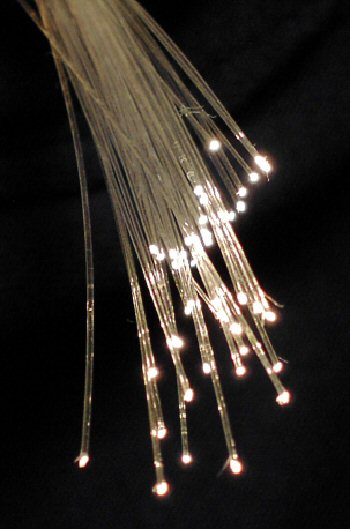
Fiber optic technology has a vast array of practical applications. Its primary use is in telecommunications, forming the backbone of the global internet, telephone networks, and cable television services, enabling high-speed data transmission over long distances. In medicine, endoscopes use fiber bundles to visualize internal organs, and fiber lasers are employed in surgery for precise cutting and cauterization. Industrial applications include remote sensing, process monitoring, and the transmission of data in harsh environments where electrical cables would fail. Scientific research utilizes fiber optics in fields ranging from astronomy (collecting light from distant stars) to particle physics. They are also used in illumination systems, decorative lighting, and even in some automotive and aerospace applications for lightweight, interference-free data transmission.
Key Facts
- Category
- technology
- Type
- topic