
Contents
- 📊 Overview: The Man Who Taught Us to See Data
- 🛠️ Key Contributions: Beyond the Numbers
- 📚 Essential Reading & Resources
- 💡 Tukey's Impact on Modern Computing
- 📈 The 'Exploratory Data Analysis' Revolution
- 💬 Tukey's Enduring Legacy & Debates
- 🚀 Where to Go Next: Following the Data Trail
- Frequently Asked Questions
- Related Topics
Overview
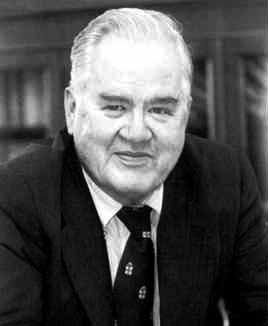
John Tukey (1915-2000) wasn't just a statistician; he was a data whisperer, a revolutionary who fundamentally reshaped how we interact with numbers. For anyone navigating the complexities of statistics or the burgeoning field of data science, understanding Tukey's work is non-negotiable. He championed a hands-on, visual approach to data, arguing that we should 'explore' data before rigidly applying formal models. This perspective, radical at the time, is now the bedrock of modern data analysis, influencing everything from machine learning algorithms to everyday business intelligence. His work at Bell Laboratories for over four decades provided a fertile ground for these groundbreaking ideas.
🛠️ Key Contributions: Beyond the Numbers
Tukey's most profound contribution is arguably the concept of Exploratory Data Analysis. Before EDA, statistical methods often involved rigid assumptions and hypothesis testing as the primary mode of inquiry. Tukey, however, advocated for a more iterative, visual process. He introduced techniques like the stem-and-leaf plot and the box plot, tools that allowed analysts to quickly grasp the distribution, spread, and potential outliers in a dataset. His 1977 book, Exploratory Data Analysis, remains a seminal text, a call to action for statisticians and scientists alike to engage with their data more intuitively.
📚 Essential Reading & Resources
To truly grasp Tukey's genius, engaging with his primary works is essential. His 1977 masterpiece, Exploratory Data Analysis, is the cornerstone, detailing his philosophy and introducing foundational graphical methods. For a broader understanding of his statistical thinking, The Future of Statistics (co-authored with Frederick Mosteller) offers insights into his forward-looking perspective. Beyond books, numerous scholarly articles and lectures are available, often found through university archives or specialized statistical societies. These resources provide direct access to his thought process and the evolution of his ideas on data visualization.
💡 Tukey's Impact on Modern Computing
Tukey's influence extends far beyond pure statistics, deeply embedding itself in the fabric of computer science and modern computing. His work on fast Fourier transforms (FFTs), developed in collaboration with James Cooley in 1965, dramatically accelerated signal processing and data analysis, becoming a cornerstone of digital signal processing and impacting fields from audio engineering to telecommunications. This algorithmic breakthrough, often cited as one of the most important computational algorithms of the 20th century, showcases his ability to bridge theoretical statistics with practical computational solutions, a hallmark of his prolific career at Bell Laboratories.
📈 The 'Exploratory Data Analysis' Revolution
The 'Exploratory Data Analysis' (EDA) revolution Tukey ignited fundamentally shifted the paradigm of statistical inquiry. Prior to his work, the emphasis was heavily on confirmatory analysis—testing pre-defined hypotheses. Tukey argued for a more human-centric approach, where analysts actively 'played' with data, using graphical tools and simple numerical summaries to uncover patterns, identify anomalies, and generate new hypotheses. This iterative process, which he famously described as 'detective work,' is now a standard first step in any serious data mining project, enabling deeper insights and more robust conclusions before formal modeling begins.
💬 Tukey's Enduring Legacy & Debates
Tukey's legacy is immense, yet not without its points of contention. While his championing of EDA is universally lauded, some traditional statisticians initially resisted his less formal, more visual methods, viewing them as less rigorous. The ongoing debate often centers on the balance between exploratory and confirmatory analysis, and how best to integrate Tukey's intuitive approach with formal statistical inference. His prolific output and broad impact also mean that attributing specific innovations solely to him can be challenging, given the collaborative nature of much scientific research, particularly at institutions like Bell Laboratories.
🚀 Where to Go Next: Following the Data Trail
To continue exploring the world John Tukey helped build, consider delving into modern data visualization software like Tableau or Python libraries such as Matplotlib and Seaborn, which owe a direct lineage to his pioneering graphical methods. Understanding the principles of statistical modeling and how they complement EDA is also crucial. For those interested in the historical context, exploring the work of his contemporaries, such as Frederick Mosteller, can provide further perspective on the evolution of statistical thought in the 20th century. The journey into data analysis is a continuous exploration, much like Tukey himself advocated.
Key Facts
- Year
- 1915
- Origin
- USA
- Category
- Statistics & Data Science
- Type
- Person
Frequently Asked Questions
What is John Tukey most famous for?
John Tukey is most famous for coining the term 'bit' (binary digit) and for pioneering 'Exploratory Data Analysis' (EDA). EDA revolutionized how statisticians and data scientists approach data by emphasizing visual and interactive methods to understand datasets before formal modeling. His work on fast Fourier transforms (FFTs) also had a profound impact on signal processing and computing.
When did John Tukey live and work?
John Tukey lived from 1915 to 2000. He spent a significant portion of his career, over four decades, at Bell Laboratories, where many of his groundbreaking ideas in statistics and computing were developed and implemented.
What are some key techniques John Tukey introduced?
Tukey introduced several key graphical techniques that are still widely used today, including the stem-and-leaf plot and the box plot (also known as the box-and-whisker plot). These tools allow for quick visualization of data distributions and identification of outliers.
How did Tukey's work influence modern data science?
Tukey's emphasis on EDA is a foundational principle in modern data science. His belief that data should be explored visually and interactively before applying rigid statistical models is now standard practice. His work on FFTs also underpins much of the digital signal processing used in computing and communication.
What is the significance of the Fast Fourier Transform (FFT) in relation to Tukey?
Tukey, along with James Cooley, published a seminal paper in 1965 that described an efficient algorithm for computing the Discrete Fourier Transform, now known as the Cooley-Tukey FFT algorithm. This algorithm dramatically reduced the computational cost of signal analysis, making digital signal processing feasible for a wide range of applications.
Where can I learn more about John Tukey's contributions?
To learn more, you can read his influential book, Exploratory Data Analysis (1977). Academic papers and historical accounts of Bell Laboratories also provide valuable insights. Many university statistics departments and online resources dedicated to the history of computing and statistics will feature his work.