First Sino-Japanese War
The clash that reshaped East Asia's power dynamics forever! 💥
Featured partners and sponsors
New advertisers get $25 in ad credits
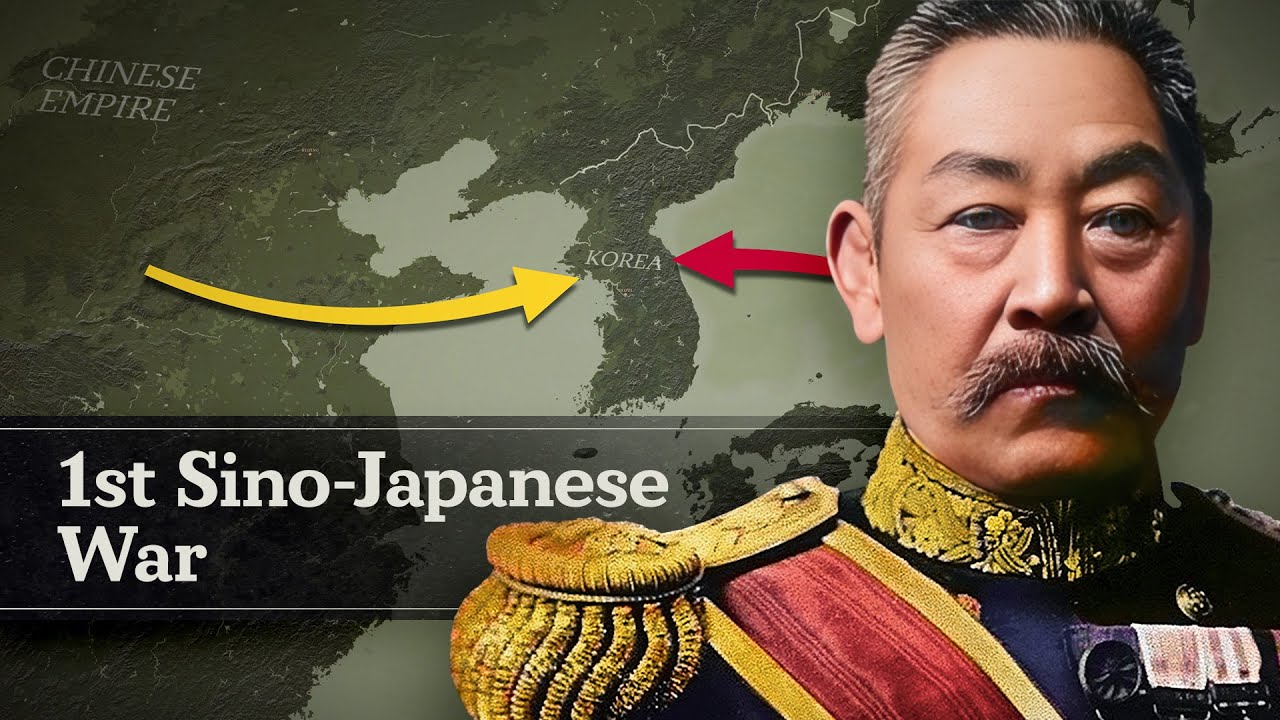
Rise of Japan: 1st Sino-Japanese War 1894-95 (Documentary)
⚡ THE VIBE
✨The First Sino-Japanese War was a pivotal, yet often overlooked, conflict that dramatically altered the balance of power in East Asia, marking the ascendance of modern Japan and the decline of Imperial China. It was a brutal, swift clash that reverberated across the globe. 🌍
§1The Spark: Korea's Tumultuous Fate 🔥
Imagine a powder keg, and Korea in the late 19th century was precisely that. For centuries, the Korean Peninsula had been a tributary state of China's Qing Dynasty, a relationship both symbolic and strategic. However, Japan, rapidly modernizing after the Meiji Restoration, saw Korea not just as a neighbor, but as a vital strategic interest—a 'dagger pointed at the heart of Japan.' 🗡️ The stage was set for a collision course. Internal unrest in Korea, particularly the Donghak Peasant Revolution, provided the perfect pretext. Both China and Japan dispatched troops to 'restore order,' ostensibly at the request of the Korean government, but with vastly different long-term ambitions. This dual intervention quickly escalated into direct confrontation, igniting a war that neither side truly anticipated in its ferocity or outcome.
§2Clash of Titans (and a Rising Star) 🌟
The war itself was a stark demonstration of contrasting military philosophies and capabilities. China, despite its vast size and population, was bogged down by corruption, outdated military technology, and internal divisions. Its Beiyang Fleet, once considered formidable, was poorly maintained and led. Japan, on the other hand, had embraced Western military reforms with fervor, creating a disciplined, well-equipped army and navy. 🚢 Their tactics were modern, their logistics efficient, and their morale high, fueled by a burgeoning sense of national identity and imperial ambition. The conflict unfolded across land and sea, with key engagements like the Battle of Pyongyang and the Battle of the Yalu River showcasing Japan's overwhelming superiority. It wasn't just a military victory; it was a psychological one, shattering centuries of Chinese regional dominance. 🤯
§3The Treaty of Shimonoseki: A Humiliating Peace 📜
The war concluded swiftly in April 1895 with the signing of the Treaty of Shimonoseki. This treaty was a monumental blow to China and a massive triumph for Japan. Its terms were harsh and far-reaching: China recognized the 'full and complete independence' of Korea (effectively removing it from China's sphere of influence and opening it to Japan's), ceded the Liaodong Peninsula, Taiwan (Formosa), and the Pescadores Islands to Japan, and agreed to pay an enormous indemnity. 💰 The indemnity alone was equivalent to Japan's entire annual budget for several years, funding its further industrialization and military expansion. This treaty didn't just end a war; it redrew the map of East Asia and signaled to the world that a new, powerful player had emerged. However, the European powers, particularly Russia, Germany, and France, were alarmed by Japan's gains, leading to the Triple Intervention, which forced Japan to return the Liaodong Peninsula to China in exchange for an increased indemnity. This act of 'gunboat diplomacy' left a bitter taste in Japan's mouth and fueled its own imperialistic ambitions. 😠
§4Legacy and Ripple Effects: A Century of Change 🌊
The First Sino-Japanese War was a game-changer for East Asia and global geopolitics. For China, it was a profound national humiliation, exposing the Qing Dynasty's weakness and fueling revolutionary sentiment that would eventually lead to its collapse in 1911. It spurred various reform movements, like the Hundred Days' Reform, though ultimately unsuccessful. For Japan, it was a validation of its modernization efforts and a launchpad for its imperial expansion, setting the stage for the Russo-Japanese War and eventually World War II. 🚀 The war also had significant implications for Korea, which became a Japanese protectorate in 1905 and was formally annexed in 1910, enduring decades of colonial rule. The echoes of this conflict—the territorial disputes, the nationalistic sentiments, the power struggles—continue to resonate in the region even today, shaping contemporary international relations. It was truly a moment when the old order crumbled and a new, more volatile one began to take shape. 🌏