The Consciousness Problem
Unraveling the universe's most perplexing mystery: how matter gives rise to mind. 🤯
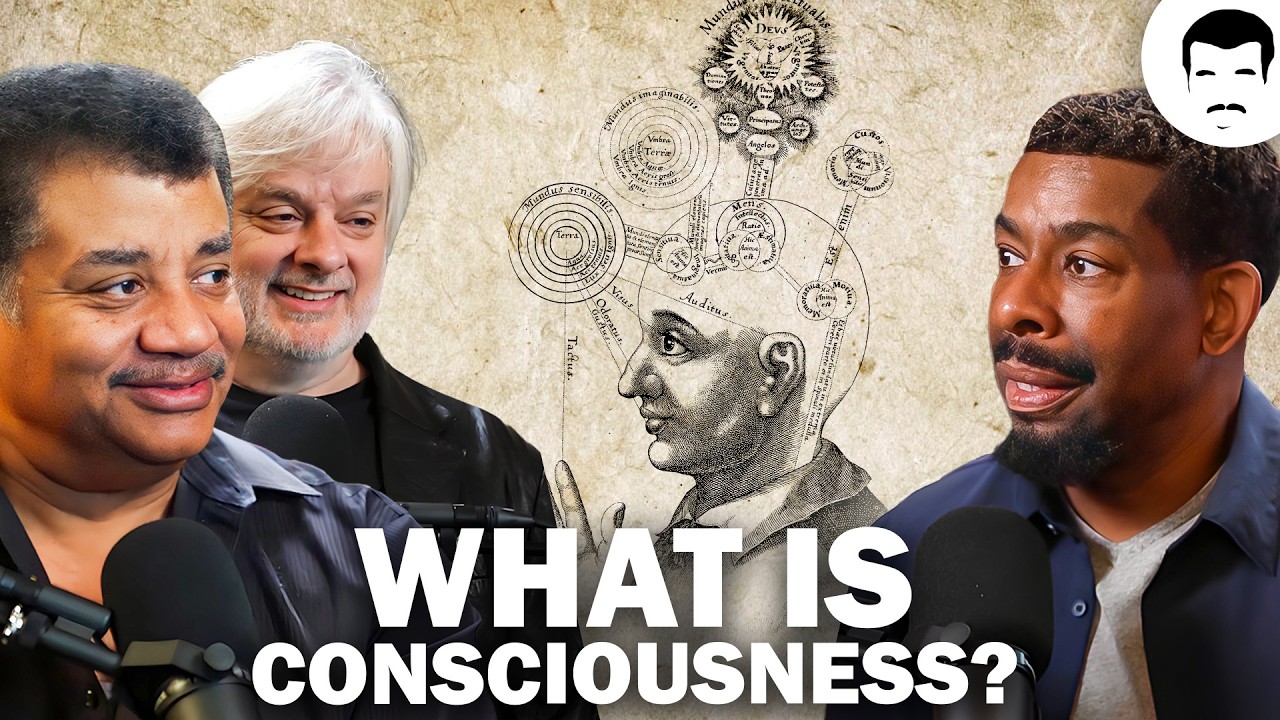
David Chalmers Discusses the Hard Problem of Consciousness
⚡ THE VIBE
✨The **Consciousness Problem** is the profound, enduring enigma of how subjective experience—our inner world of thoughts, feelings, and perceptions—arises from the physical processes of the brain. It's the ultimate 'how-did-we-get-here' question for the mind. 🧠✨
§1What is the Consciousness Problem? 🧐
At its core, the Consciousness Problem grapples with the chasm between the physical and the phenomenal. We can meticulously map brain activity, track neural firing patterns, and even simulate complex cognitive functions. Yet, none of this directly explains why these physical processes result in a subjective 'what it's like' experience. Why do we feel the redness of an apple, or the pang of sadness, rather than simply processing information? This is often broken down into two main challenges:
- The Easy Problem of Consciousness: This refers to explaining cognitive functions like attention, memory, learning, and sensory processing in terms of neural mechanisms. While incredibly complex, these are considered 'easy' because they can be approached with standard scientific methods. 🔬
- The Hard Problem of Consciousness: Coined by philosopher David Chalmers in the 1990s, this is the real head-scratcher. It asks why physical processes should give rise to any subjective experience at all. Why isn't a complex brain just a sophisticated robot, devoid of inner life? It's the leap from 'how' to 'why' that keeps scientists and philosophers up at night. 🌌
§2Historical Roots & Modern Framing 📜
The seeds of the Consciousness Problem were sown millennia ago, with ancient philosophers like Plato and Aristotle pondering the nature of the soul and its relationship to the body. Fast forward to the 17th century, and René Descartes famously articulated mind-body dualism, proposing that mind and matter are fundamentally distinct substances. This set the stage for centuries of debate, influencing Western thought profoundly. 💡
In the 20th century, with the rise of neuroscience and cognitive science, the problem shifted from purely philosophical speculation to an interdisciplinary quest. Scientists began to identify specific brain regions and neural correlates associated with conscious experience. However, even with advanced brain imaging and computational models, the 'hard problem' remained stubbornly elusive. It's like having all the ingredients and the recipe, but still not understanding how the cake tastes like cake. 🍰
§3Leading Theories & Hypotheses 🧠
There's no shortage of bold ideas attempting to bridge the gap between brain and mind. Here are some of the most prominent:
- Integrated Information Theory (IIT): Proposed by Giulio Tononi, IIT suggests that consciousness is a measure of the integrated information in a system. The more a system's parts interact and influence each other in a way that cannot be reduced to its individual components, the more conscious it is. It even provides a mathematical framework (Phi, Φ) to quantify consciousness. 🔢
- Global Workspace Theory (GWT): Developed by Bernard Baars and later Stanislas Dehaene, GWT posits that consciousness arises when information is broadcast to a 'global workspace' in the brain, making it available to various specialized processors. It's like a central stage where information becomes globally accessible. 🎭
- Higher-Order Thought (HOT) Theories: These theories suggest that a mental state becomes conscious when there is another 'higher-order' thought about that first mental state. You're not just seeing red; you're aware that you're seeing red. It's consciousness reflecting on itself. 🤔
- Panpsychism: This radical idea suggests that consciousness (or proto-consciousness) isn't just an emergent property of complex brains, but a fundamental property of the universe, present in some form even at the most basic levels of reality. Everything, to some degree, has a 'mind.' 🍄
§4Why It Matters: Impact & Future 🚀
Understanding the Consciousness Problem isn't just an academic exercise; its implications are monumental. It touches upon our understanding of:
- Artificial Intelligence: Can AI ever truly be conscious, or will it always be a sophisticated simulation? The answer profoundly impacts the future of sentient machines and AI ethics. 🤖
- Medicine & Mental Health: A deeper grasp of consciousness could revolutionize treatments for neurological disorders, comas, and mental illnesses, offering new pathways to alleviate suffering. 💊
- The Nature of Reality: If consciousness is fundamental, what does that say about the universe itself? It challenges our purely materialistic worldview and opens doors to new scientific paradigms. 🌌
As neuroscience continues to advance, and new tools allow us to probe the brain with unprecedented detail, the hope is that we might one day crack this ultimate code. The journey to understanding consciousness is arguably the most exciting and profound scientific and philosophical quest of the 21st century. It's about understanding ourselves at the deepest level. 🌟