Global Workspace Theory
The brain's bustling broadcast station for consciousness! 🧠✨
Featured partners and sponsors
New advertisers get $25 in ad credits
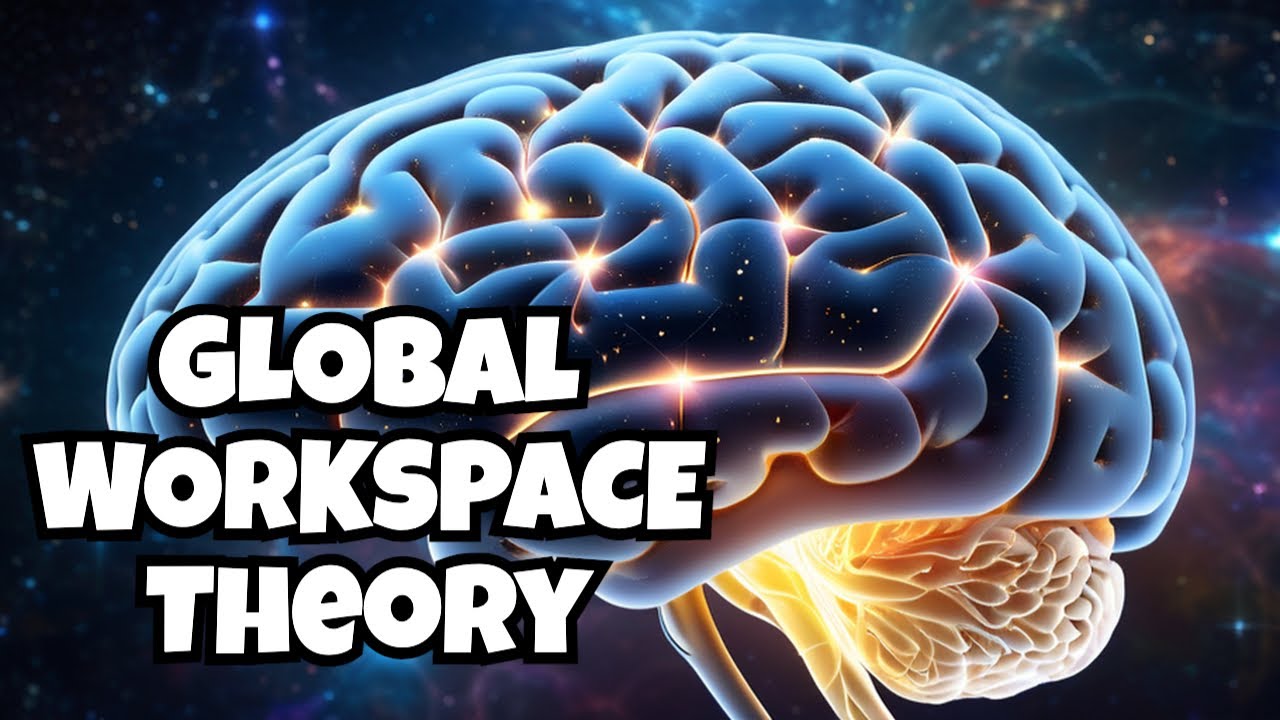
Global Workspace Theory of Consciousness
⚡ THE VIBE
✨The **Global Workspace Theory (GWT)** proposes that consciousness arises from a 'global broadcast' of information across various specialized, unconscious brain processors, much like a theatrical stage where a spotlight illuminates a single actor for the entire audience. It's a powerful metaphor for understanding how our brains achieve unified conscious experience from a cacophony of neural activity. 🧠
§1The Brain's Inner Theater: An Overview 🎭
Imagine your brain as a bustling, multi-faceted city. Most of its operations – from regulating your heartbeat to processing sensory input – happen in specialized districts, completely unconsciously. But then, there's a central 'theater' or 'workspace' where certain pieces of information get amplified and broadcast to the entire city. This is the essence of Global Workspace Theory (GWT), primarily developed by cognitive psychologist Bernard Baars. It posits that conscious experience isn't a separate entity, but rather an emergent property of this global broadcasting mechanism. When information enters this 'global workspace,' it becomes accessible to a vast array of specialized, unconscious processors, allowing for widespread integration and flexible response. It's how a fleeting thought about your grocery list can suddenly become the dominant focus, overriding the background hum of traffic or the feel of your clothes. 🌟
§2Origins & The 'Cognitive Architecture' 🏗️
GWT didn't just appear out of thin air; it emerged in the 1980s as a response to the growing need for a coherent framework to explain how the brain integrates information and achieves conscious awareness. Bernard Baars, drawing inspiration from computer science and artificial intelligence models of 'blackboards' or 'common data areas,' proposed that the brain operates similarly. Instead of a single 'consciousness center,' he envisioned a distributed system where specialized modules (e.g., visual processing, auditory processing, memory retrieval) compete for access to a limited-capacity global workspace. When a module 'wins' this competition, its content is broadcast, making it available to all other modules. This elegant architecture provided a computational model for how a complex, parallel processing system could produce a seemingly serial, unified conscious experience. It was a game-changer for understanding the neural correlates of consciousness. 🚀
§3How It Works: Spotlight on Information Flow 🔦
At its core, GWT suggests a dynamic interplay between unconscious specialized processors and a limited-capacity global workspace. Think of it like this: hundreds of 'expert' modules in your brain are constantly working in parallel, processing specific types of information (e.g., recognizing faces, understanding language, planning movements). Most of this happens 'behind the scenes.' However, when a piece of information becomes particularly salient or relevant – perhaps a sudden loud noise or a crucial decision point – it gains access to the global workspace. Once there, it's like a news flash broadcast across all channels. This makes that information globally available for widespread access, evaluation, and manipulation by other unconscious systems. This 'broadcast' allows for:
- Integration: Combining disparate pieces of information into a coherent whole.
- Learning: Storing novel information into long-term memory.
- Planning: Formulating flexible, goal-directed behaviors.
- Decision-making: Weighing options based on widely accessible data.
This dynamic flow of information is what we experience as consciousness. ✨
§4Impact & Neural Correlates: Where Does it Live? 🌐
GWT has had a profound impact on cognitive neuroscience, providing a testable framework for understanding consciousness. It has inspired numerous empirical studies seeking the neural correlates of consciousness (NCCs). Researchers using fMRI and EEG often look for widespread, synchronized neural activity across different brain regions when subjects become consciously aware of a stimulus, aligning perfectly with the 'global broadcast' idea. Areas like the prefrontal cortex, parietal cortex, and anterior cingulate cortex are frequently implicated as key players in this global workspace mechanism, acting as hubs for integrating and broadcasting information. GWT also offers insights into disorders of consciousness, such as vegetative states or coma, where this global broadcasting mechanism may be severely impaired. It's a cornerstone theory in the ongoing quest to demystify the mind. 🧠🔬
For more in-depth research and publications, check out the Association for the Scientific Study of Consciousness or Frontiers in Human Neuroscience.
§5Criticisms & The Future of Consciousness Research 🔮
While highly influential, GWT isn't without its critics. Some argue that the 'global workspace' metaphor is too vague, lacking precise anatomical localization or a clear explanation of how information becomes 'globally available.' Others contend that it primarily explains access consciousness (information being available for report and reasoning) but doesn't fully address phenomenal consciousness (the subjective 'what it's like' aspect of experience). Alternative theories, such as Integrated Information Theory (IIT) or Higher-Order Thought (HOT) theories, offer different perspectives on these challenging questions. However, GWT remains a robust and widely accepted framework, continually evolving with new neuroscientific discoveries. The future will likely see GWT integrated with other theories, leading to an even more nuanced understanding of this most enigmatic of phenomena: consciousness itself. The journey to unravel the brain's greatest mystery continues! 🌌