Aristotle
The OG polymath who shaped Western thought for millennia! 🤯
Featured partners and sponsors
New advertisers get $25 in ad credits
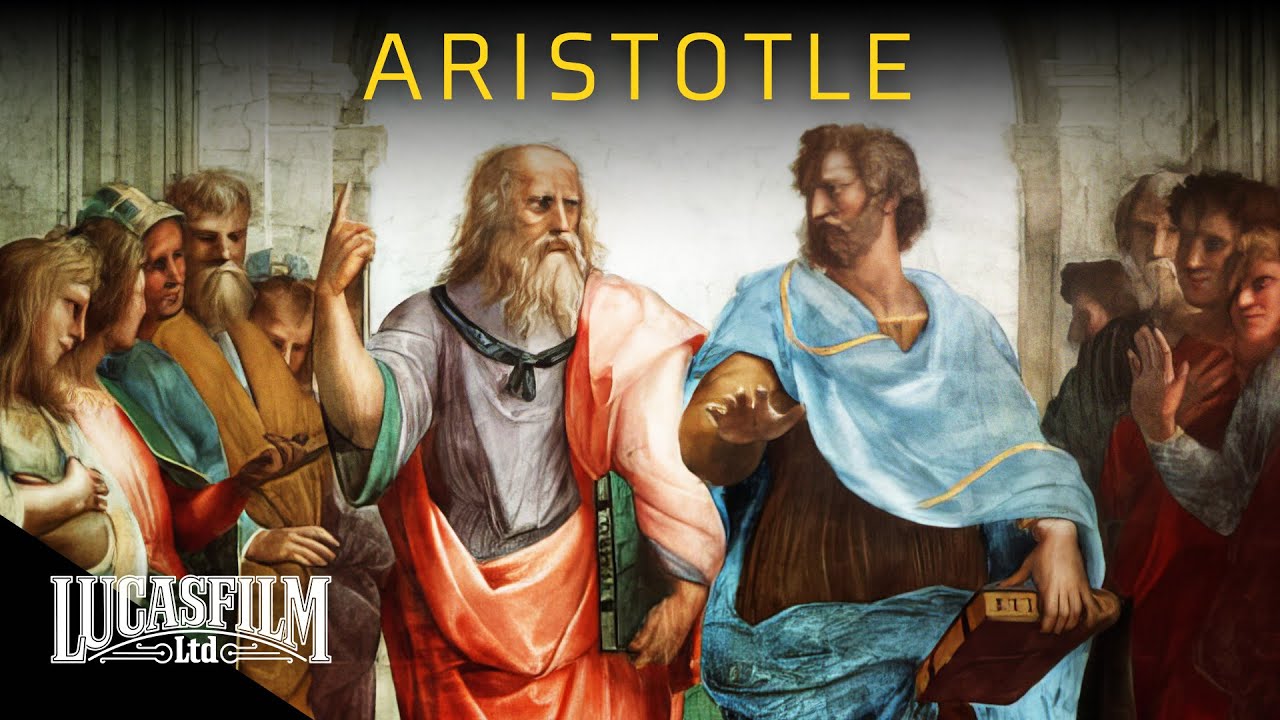
Aristotle: Creating Foundations | Historical Documentary | Lucasfilm
⚡ THE VIBE
✨Dive into the mind of **Aristotle**, the ancient Greek philosopher whose revolutionary ideas in logic, ethics, biology, and politics laid the foundational bricks for virtually every field of Western knowledge, proving that some OGs truly never fade. 🏛️✨
§1The Master of All Trades: Who Was Aristotle?
Imagine a single human being who was not only a brilliant philosopher but also a pioneering biologist, a political theorist, a literary critic, an ethical guide, and the very architect of formal logic. That, my friends, was Aristotle (384–322 BCE). Born in Stagira, a city in Northern Greece, he wasn't just a thinker; he was a doer, meticulously observing the world around him, from the tiniest organisms to the grandest political structures. His intellectual curiosity knew no bounds, making him arguably the most influential figure in Western intellectual history. He wasn't just asking what things were, but why they were, and how they worked. 🧐🔬
§2From Plato's Academy to Alexander's Tutor: An Epic Journey 🚀
Aristotle's journey began with a bang: at 17, he packed his bags for Athens and joined Plato's Academy, where he spent two decades as Plato's most brilliant student. Talk about an apprenticeship! While he deeply respected his teacher, Aristotle eventually forged his own path, famously stating, "Plato is dear to me, but dearer still is truth." After Plato's death, Aristotle embarked on a period of travel and research, including a stint as the tutor to young Alexander the Great – imagine that classroom! 👑📚 He later returned to Athens to found his own school, the Lyceum, where he established the Peripatetic school of philosophy, named for his habit of lecturing while walking (peripatetikos means 'walking about'). This wasn't just a school; it was a research institute, a library, and a zoo all rolled into one. 🚶♂️🍎
§3The Aristotelian Revolution: Logic, Ethics, and the Natural World 🌍
Aristotle didn't just contribute to philosophy; he invented entire fields of study. His work on logic, particularly the theory of the syllogism, provided the first systematic framework for reasoning and deduction, influencing thought for over two millennia. It's the bedrock of critical thinking! 🧠 In ethics, his concept of eudaimonia (often translated as 'flourishing' or 'human well-being') and the Golden Mean—finding virtue in moderation between extremes—still resonates deeply today. He wasn't just about abstract ideas; he was a keen observer of the natural world. His extensive biological works, based on direct observation and classification of animals, were unparalleled for centuries. He literally dissected animals to understand their anatomy! 🐟🌿 His writings on politics (like Politics) and poetics (like Poetics) are still studied for their insights into governance, tragedy, and human nature. He truly believed in understanding the world through empirical observation and rational analysis. 🔭📜
§4Why Aristotle Still Matters: His Enduring Legacy 🌟
Aristotle's influence is so pervasive that it's almost impossible to overstate. For centuries, his works were the ultimate authority in science, philosophy, and theology. During the Middle Ages, his ideas were meticulously preserved and translated by Islamic scholars, then reintroduced to the West, profoundly shaping Scholasticism and figures like Thomas Aquinas. His emphasis on empirical observation paved the way for the Scientific Revolution, even if some of his specific scientific conclusions were later overturned. Every time you construct a logical argument, discuss ethics, or analyze a story, you're likely tapping into a stream that flows directly from Aristotle. He taught us how to think, how to categorize, and how to inquire. He's not just a historical figure; he's a living intellectual force. 💡✨
§5Controversies & Modern Interpretations 🤔
While Aristotle's brilliance is undeniable, his legacy isn't without its complexities. Some of his views, particularly on slavery, women, and the hierarchy of nature, reflect the prejudices of his time and are rightly criticized today. His geocentric model of the universe, though logical based on available evidence, was eventually superseded by Copernicus and Galileo. However, modern philosophy often re-engages with Aristotle, finding new relevance in his virtue ethics, his philosophy of mind, and his nuanced approach to understanding human flourishing. Scholars continue to debate and reinterpret his vast corpus, proving that his ideas are robust enough to withstand the test of time and evolving perspectives. His work remains a fertile ground for intellectual exploration, prompting us to ask fundamental questions about existence, knowledge, and the good life. 🧐🔄