Panpsychism
What if everything, from electrons to galaxies, has a spark of consciousness?
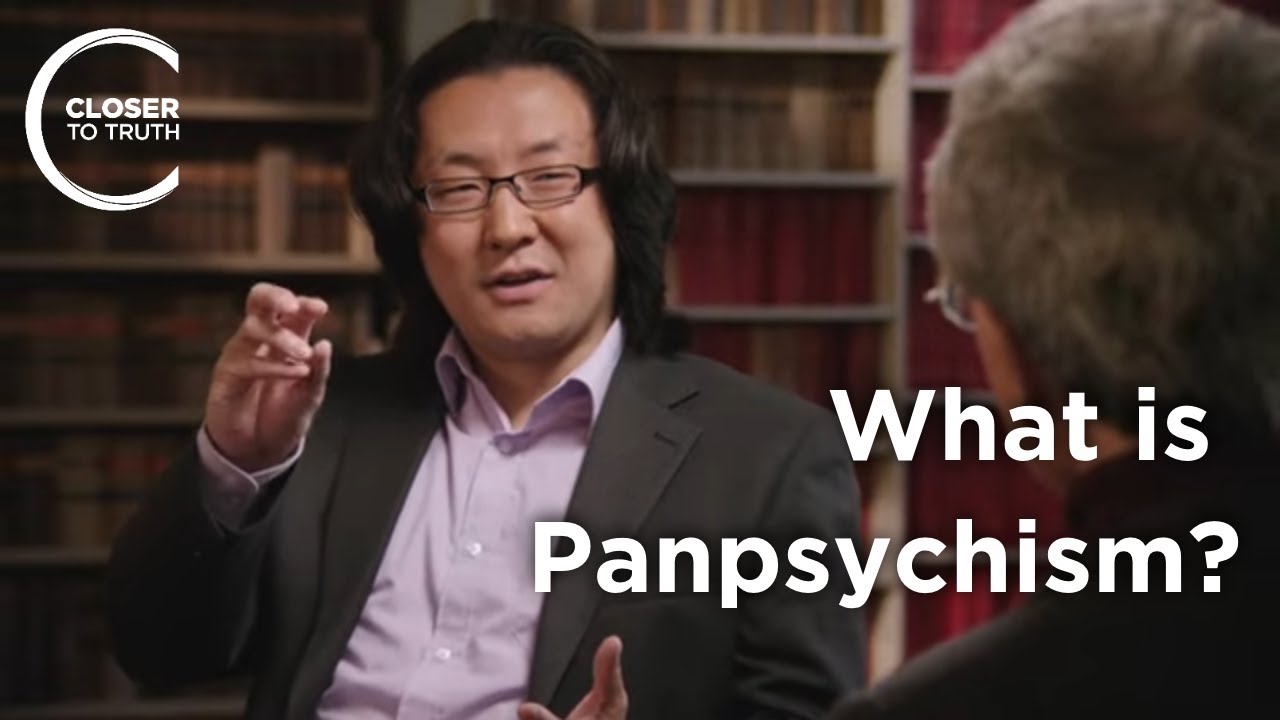
Yujin Nagasawa - What is Panpsychism?
⚡ THE VIBE
✨Panpsychism is the mind-bending philosophical idea that consciousness, or mind-like properties, are fundamental and ubiquitous throughout the universe, not just an emergent property of complex brains. It suggests that even the simplest particles might possess a rudimentary form of experience. 🤯
§1The Universe's Secret Inner Life 🌌
Imagine a world where not just humans and animals, but also rocks, rivers, and even individual electrons, possess some form of inner experience. That's the essence of Panpsychism, a concept that challenges our most basic assumptions about reality. Instead of consciousness being a rare, late-blooming phenomenon confined to complex biological brains, panpsychism posits it as a fundamental aspect of existence, woven into the very fabric of the cosmos. It's like the universe itself is buzzing with tiny, proto-conscious vibrations. ✨ This isn't about rocks thinking in the human sense, but about them having some irreducible, subjective 'what it's like' quality to their existence. It's a radical departure from the prevailing view that consciousness is an emergent property of highly organized matter, like our brains. Emergentism is the counterpoint, arguing that consciousness arises from complexity, not inherent in simplicity.
§2From Ancient Wisdom to Modern Physics 📜🔬
The roots of panpsychism stretch back millennia. Ancient Greek philosophers like Thales and Plato hinted at a 'world soul' or animated nature. Indigenous spiritual traditions across the globe often speak of spirits inhabiting natural objects, echoing panpsychist sentiments. Fast forward to the early modern era, and thinkers like Gottfried Leibniz proposed a universe composed of 'monads'—fundamental, mind-like entities that perceive and represent the universe. 🧠
In the 21st century, panpsychism has experienced a surprising resurgence, fueled by the persistent 'hard problem of consciousness'—how physical matter gives rise to subjective experience. Mainstream science, particularly in fields like neuroscience and quantum mechanics, struggles to bridge the gap between brain activity and the feeling of 'being you'. Panpsychism offers an elegant, albeit challenging, solution: what if the gap isn't there because consciousness was always there, just in simpler forms? Philosophers like Philip Goff and scientists like Giulio Tononi (with his Integrated Information Theory, or IIT) are leading the charge in re-evaluating this ancient idea. It's a full-circle moment for philosophy! 🔄
§3The Spectrum of Sentience: How Does It Work? 🤔
It's crucial to understand that panpsychism isn't suggesting that your coffee mug is pondering existential dread. Rather, it proposes a spectrum of consciousness. At the most fundamental level, an electron might have an incredibly simple, perhaps even proto-conscious, 'feeling' of being an electron—a tiny, irreducible spark of subjectivity. When these fundamental conscious bits combine, their experiences integrate and become more complex, eventually leading to the rich, intricate consciousness we experience as humans. 🤯
Think of it like this: individual water molecules don't feel 'wet,' but a collection of them does. Similarly, individual particles might have rudimentary 'feelings,' and when arranged into a brain, these feelings combine into a complex, unified conscious experience. This approach helps address the 'combination problem'—how do these tiny bits of consciousness merge into a larger, unified mind? Theorists are exploring various models, from the idea of 'constitutive panpsychism' where consciousness is built up from smaller conscious parts, to 'Russellian monism' which suggests that the intrinsic nature of matter is conscious. It's a deep dive into the very nature of reality! 🏊♀️
§4Why It Matters: A New Cosmic Perspective 🌟
The implications of panpsychism are profound. If consciousness is fundamental, it could reshape our understanding of everything from the origins of life to the nature of reality itself. It offers a potential bridge between science and spirituality, suggesting a universe that is intrinsically alive and interconnected. 🤝
- Solving the Hard Problem: It provides a potential solution to the intractable 'hard problem' by postulating that consciousness isn't generated by matter, but is an intrinsic property of matter. No magical leap required! ✨
- Ethical Considerations: If even simple organisms or complex AI systems possess some form of consciousness, it could radically alter our ethical frameworks regarding animal welfare, environmentalism, and the development of artificial intelligence. Are we surrounded by more 'selves' than we ever imagined? 🤖
- A Unified Theory: It could pave the way for a more unified understanding of the universe, integrating physics, biology, and psychology under a single, coherent framework. It's a grand vision that connects the micro to the macro, the physical to the experiential. It's a truly mind-expanding concept that invites us to see the world with fresh eyes. 🌍