
Contents
- 🎵 Origins & History
- ⚙️ How It Works
- 📊 Key Facts & Numbers
- 👥 Key People & Organizations
- 🌍 Cultural Impact & Influence
- ⚡ Current State & Latest Developments
- 🤔 Controversies & Debates
- 🔮 Future Outlook & Predictions
- 💡 Practical Applications
- 📚 Related Topics & Deeper Reading
- Frequently Asked Questions
- References
- Related Topics
Overview
The concept of divine judgment is as old as recorded civilization, with early forms appearing in ancient Mesopotamia. The Sumerian concept of the underworld, overseen by deities like Ereshkigal, involved a grim fate for most souls, though some myths hint at a form of accounting. Ancient Egypt developed a more elaborate system, famously depicted in the "Weighing of the Heart" ceremony from the Book of the Dead, where the deceased's heart was weighed against the feather of Ma'at, goddess of truth and justice, by Anubis and judged by Osiris. In ancient Greece, the underworld was ruled by Hades, with judges like Minos, Rhadamanthus, and Aeacus determining the fate of souls, though this was less about moral retribution and more about eternal states. The Zoroastrian tradition, originating in ancient Persia around the 6th century BCE, introduced a clear dualistic framework with a final judgment, the Chinvat Bridge, and distinct heavens and hells, significantly influencing later monotheistic thought. The Abrahamic religions – Judaism, Christianity, and Islam – centralize divine judgment, positing a singular, omniscient God who will ultimately judge all humanity, often at the end of times or upon individual death.
⚙️ How It Works
The mechanics of divine judgment vary widely but generally involve a divine entity or entities observing and evaluating human actions, intentions, and beliefs. In many traditions, this assessment is based on adherence to divine law, moral commandments, or spiritual purity. The process can be immediate upon death, as in some Christian beliefs of individual judgment, or part of a larger, eschatological event, such as the Day of Judgment in Islam and Christianity. Key elements often include divine omniscience, ensuring no deed goes unnoticed, and divine justice, guaranteeing a fair and proportionate outcome. The criteria for judgment can range from adherence to religious rituals and sacraments, as emphasized in some interpretations of Catholicism, to the cultivation of virtues like compassion and righteousness, as stressed in Buddhism through the concept of karma. The ultimate outcome is typically a state of eternal bliss (heaven, paradise) or eternal suffering (hell, damnation), though some traditions offer intermediate states or cycles of rebirth.
📊 Key Facts & Numbers
Estimates suggest that over 80% of the world's population adheres to a religion that includes some form of divine judgment, impacting approximately 6.5 billion people globally. In Christianity, the concept of the Day of Judgment is central, with an estimated 2.4 billion adherents worldwide. Islamic eschatology details the Qiyamah (Resurrection Day), a pivotal event for its 1.9 billion followers. Ancient Egyptian funerary texts, like the Book of the Dead, were produced for an estimated 30 million Egyptians over 3,000 years. Zoroastrianism, though smaller with an estimated 200,000 adherents today, historically influenced billions through its theological innovations. The concept of karma in Hinduism and Buddhism, affecting over 1.2 billion Hindus and 500 million Buddhists, involves a continuous cycle of cause and effect that functions as a form of ongoing, impersonal divine judgment across lifetimes. The fear of eternal damnation has been a powerful motivator, with historical estimates suggesting that at various points, up to 50% of the population in certain Christian societies lived under the direct threat of excommunication or eternal punishment.
👥 Key People & Organizations
Key figures and organizations have profoundly shaped the discourse on divine judgment. In Christianity, theologians like Augustine of Hippo (354-430 CE) articulated doctrines of predestination and eternal judgment, while Thomas Aquinas (1225-1274 CE) integrated Aristotelian philosophy with Christian theology, detailing God's justice. The Catholic Church has historically maintained a strong emphasis on judgment and purgatory. In Islam, the Quran and the Hadith provide extensive descriptions of the Day of Judgment, with scholars like Ibn Kathir (c. 1301-1373 CE) offering influential commentaries. Jewish tradition, particularly in the Talmud, discusses Yom HaDin (Day of Judgment). Philosophers like Immanuel Kant (1724-1804 CE) explored the moral necessity of a just God for ultimate accountability. Organizations like the Church of Jesus Christ of Latter-day Saints have unique doctrines regarding post-mortal judgment and spirit worlds. The Vatican City serves as the administrative center for the Catholic Church's teachings on judgment.
🌍 Cultural Impact & Influence
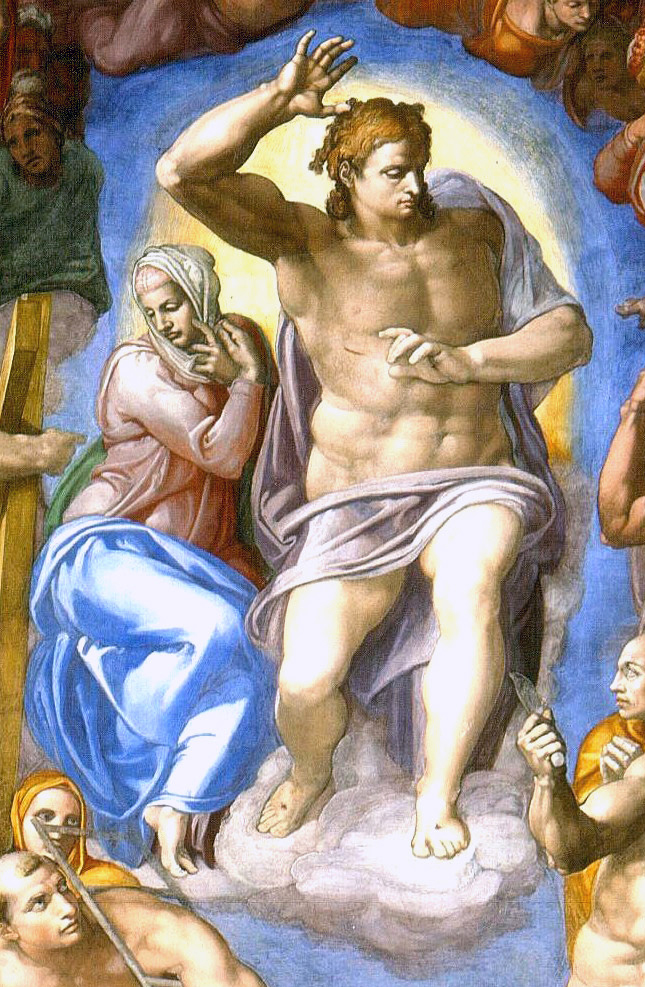
The influence of divine judgment on human civilization is immeasurable. It has served as a primary driver for the development of ethical systems and legal codes across cultures, providing a divine mandate for morality and social order. The fear of eternal punishment, as articulated in medieval Christian sermons by figures like Girolamo Savonarola, was a potent tool for social control, influencing everything from personal conduct to political obedience. Conversely, the promise of divine reward has inspired acts of great charity, martyrdom, and devotion, seen in the lives of saints and spiritual leaders. Art, literature, and music are replete with depictions of divine judgment, from Michelangelo's Last Judgment fresco in the Sistine Chapel to Dante Alighieri's epic poem The Divine Comedy. The concept also underpins concepts of karma and reincarnation in Eastern philosophies, influencing the social structures and individual aspirations of billions. The very notion of justice, fairness, and accountability in human societies is often implicitly or explicitly linked to this ultimate, divine arbiter.
⚡ Current State & Latest Developments
In the 21st century, the concept of divine judgment remains a potent force, though its interpretation and influence are evolving. While traditional religious adherence continues for billions, secularization in many Western societies has led to a decline in the literal belief in post-mortem judgment for some populations. However, the underlying themes of accountability, consequence, and ultimate justice persist in secular ethics and legal systems. In some religious communities, there's a resurgence of emphasis on eschatological events, fueled by global anxieties and political shifts. For instance, discussions around the end times are active within various Christian denominations and Islamic circles. Furthermore, the rise of AI and data analytics has led to speculative discussions about whether future technologies could mimic aspects of divine judgment through pervasive surveillance and algorithmic accountability, a concept explored in works like George Orwell's novel. The debate between predestination and free will, central to many judgment doctrines, continues in theological and philosophical circles.
🤔 Controversies & Debates
The concept of divine judgment is inherently controversial, primarily due to its theological and philosophical underpinnings. Critics question the existence of a just and omnipotent deity capable of such judgment, pointing to the problem of evil and suffering in the world – if God is all-good and all-powerful, why does evil exist and why do the innocent sometimes suffer? The doctrine of eternal damnation, particularly in Christianity, is a major point of contention, with many arguing it is incompatible with a loving God. Universalism, the belief that all souls will ultimately be saved, challenges traditional notions of judgment. Skeptics like Robert Ingersoll (1833-1899) famously critiqued religious doctrines, including divine judgment, as instruments of fear and control. Debates also arise regarding the criteria for judgment: is it faith alone, good works, adherence to specific rituals, or a combination? The concept of predestination versus free will, central to Calvinist theology, remains a deeply divisive issue within Christianity, questioning whether individuals have genuine agency in their salvation or if their fate is divinely predetermined.
🔮 Future Outlook & Predictions
The future of divine judgment concepts will likely be shaped by ongoing secularization, interfaith dialogue, and evolving philosophical understandings of justice and consciousness. Some futurists speculate that as humanity develops more advanced technologies, particularly in artificial intelligence and surveillance, the idea of an all-seeing, all-knowing entity that judges actions might be reinterpreted or even mimicked in secular contexts, creating a 'digital divine.' Conversely, in regions with strong religious traditions, the belief in divine judgment may persist or even intensify, potentially influencing political and social movements. Theological re-evaluations within major religions are also possible, with some scholars and denominations moving towards more inclusive or universalist interpretations of salvation and judgment, potentially softening the emphasis on eternal punishment. The development of neuroscience and psychology may also offer alternative explanations for moral behavior and guilt, potentially diminishing the perceived need for divine oversight in some circles. The ultimate fate of the concept hinges on humanity's enduring need for meaning, justice, and accountability.
💡 Practical Applications
The concept of divine judgment has significant practical applications in shaping individual behavior and societal structures. For individuals, it provides a powerful incentive for moral conduct, encouraging adherence to religious and ethical codes to secure a favorable outcome in the afterlife. This can manifest as acts of piety, charity, and self-discipline, as seen in the practices of monastic orders across various religions. For societies, the belief in divine judgment has historically underpinned legal systems and social hierarchies, providing a divine sanction for laws and rulers. It can foster social cohesion by creating shared moral frameworks and communal rituals, such as confession or communal prayer. In political contexts, leaders have sometimes invoked divine judgment to legitimize their rule or rally support for wars and policies, a tactic seen throughout history from ancient pharaohs to modern political rhetoric. The concept also offers psychological comfort, providing a sense of ultimate justice and order in a chaotic world, and a framework for understanding suffering and loss.
Key Facts
- Year
- Ancient to Present
- Origin
- Global
- Category
- philosophy
- Type
- concept
Frequently Asked Questions
What is the core concept of divine judgment?
At its heart, divine judgment is the belief that a supreme being or beings will assess individuals' actions, intentions, and moral character, typically after death or at the end of time, to determine their eternal fate. This assessment is often seen as a manifestation of divine justice, leading to rewards like heaven or punishments like hell. Religions worldwide, from Christianity and Islam to Hinduism and ancient Egyptian beliefs, incorporate variations of this concept, shaping ethical frameworks and afterlife expectations for billions of people.
How do different religions approach divine judgment?
Different religions offer diverse perspectives. Abrahamic faiths like Judaism, Christianity, and Islam generally posit a singular, personal God who judges individuals, often on a Day of Judgment. Eastern traditions like Hinduism and Buddhism emphasize karma, a more impersonal, cyclical law of cause and effect that determines rebirth and spiritual progression. Ancient mythologies, such as that of ancient Egypt, featured elaborate underworld trials, like the 'Weighing of the Heart,' overseen by specific deities like Osiris. These variations reflect differing views on the nature of divinity, the soul, and the cosmos.
What is the historical significance of divine judgment?
Historically, the concept of divine judgment has been a powerful force in shaping human societies. It provided a divine mandate for moral codes and legal systems, encouraging virtuous behavior through the promise of reward and deterring transgression through the threat of punishment. For instance, medieval sermons by figures like Girolamo Savonarola leveraged fear of damnation to influence public life. It also offered a framework for understanding suffering and injustice, promising ultimate cosmic balance. Furthermore, it has inspired vast artistic and literary works, from Michelangelo's Last Judgment to Dante Alighieri's The Divine Comedy, reflecting its deep cultural resonance.
What are the main criticisms or controversies surrounding divine judgment?
The concept faces significant criticism, particularly regarding the problem of evil: how can a benevolent and omnipotent God allow suffering and inflict eternal punishment? The doctrine of eternal damnation is a major point of contention, with many finding it incompatible with divine love. Skeptics, like Robert Ingersoll, have argued that such doctrines are used for social control. Debates also arise over predestination versus free will, questioning whether individuals truly have agency in their salvation or if their fate is predetermined by God. The criteria for judgment itself—faith versus works, ritual adherence versus ethical living—are also subjects of ongoing theological and philosophical dispute.
Does belief in divine judgment influence behavior today?
Yes, belief in divine judgment continues to influence behavior for billions worldwide. For many adherents of Christianity, Islam, and other faiths, the prospect of divine accountability motivates ethical living, adherence to religious laws, and participation in spiritual practices like prayer and confession. It can inspire acts of charity and self-sacrifice, while also fostering a sense of community through shared moral understanding. Even in increasingly secular societies, the underlying themes of accountability and ultimate justice, often rooted in historical religious frameworks, can subtly influence ethical decision-making and legal principles, demonstrating its enduring psychological and social impact.
How does divine judgment relate to concepts like karma?
While both divine judgment and karma deal with accountability and consequences for actions, they differ significantly. Divine judgment, particularly in Abrahamic religions, is typically a singular event overseen by a personal deity, resulting in a permanent afterlife state (heaven or hell). Karma, prevalent in Hinduism and Buddhism, is a more impersonal, cyclical law of cause and effect that operates across multiple lifetimes, influencing rebirth and spiritual evolution rather than a final, eternal judgment. Divine judgment often involves a decree from God, whereas karma is seen as an inherent cosmic principle. Despite these differences, both concepts address the fundamental human need for justice and the belief that actions have meaningful consequences.
What are future predictions or trends regarding divine judgment?
Future trends suggest a complex evolution. In some regions, secularization may lead to a decline in literal belief in divine judgment, with its themes potentially being reinterpreted in secular ethical frameworks or even through technological concepts like AI-driven accountability. Conversely, in other areas, religious adherence remains strong, and beliefs in divine judgment may persist or even intensify, possibly influencing political discourse. Theological re-evaluations within religions might lead to more universalist interpretations, softening the emphasis on eternal damnation. The ongoing dialogue between science, philosophy, and theology will continue to shape how humanity understands justice, consciousness, and ultimate accountability, influencing the future perception of divine judgment.