
Contents
Overview
The afterlife refers to the speculated existence of an individual's consciousness or identity after death, with various belief systems proposing different forms of continuation. From spiritual realms to reincarnation, the concept of an afterlife has been explored in religion, esotericism, and metaphysics. The idea of an afterlife has been debated by philosophers such as Plato and Aristotle, and has been a central theme in many religious traditions, including Christianity, Islam, and Hinduism.
🌌 Origins & History
The concept of an afterlife has been present in human culture for thousands of years, with ancient civilizations such as the Egyptians and Greeks developing complex beliefs about the afterlife. The Egyptian Book of the Dead and the Greek Underworld are examples of how these cultures viewed the afterlife. Philosophers such as Socrates and Epicurus also explored the idea of an afterlife, with Socrates arguing that the soul is immortal and Epicurus proposing that the soul is mortal.
💀 How It Works
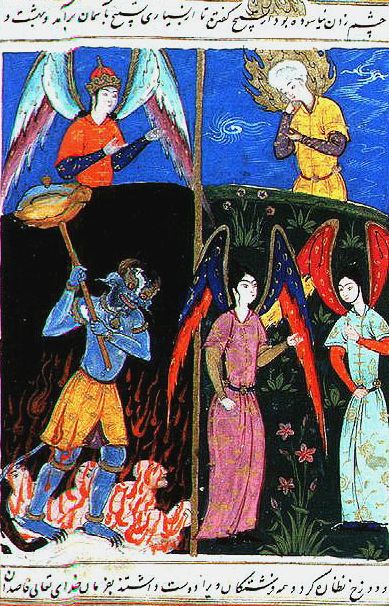
In many religious traditions, the afterlife is seen as a place of judgment, where the deceased are held accountable for their actions in life. This is evident in the Christian concept of Heaven and Hell, as well as the Islamic idea of Jannah and Jahannam. The idea of reincarnation, on the other hand, is central to Hinduism and Buddhism, with the concept of karma playing a key role in determining an individual's future existence. The Bhagavad Gita and the Tibetan Book of the Dead are important texts that explore the idea of reincarnation and the afterlife.
🌈 Cultural Impact
The concept of an afterlife has had a significant impact on human culture, influencing art, literature, and music. The idea of an afterlife has been explored in works such as Dante Alighieri's Divine Comedy and John Milton's Paradise Lost. The afterlife has also been a theme in music, with songs such as Stairway to Heaven by Led Zeppelin and Highway to Hell by AC/DC. The near-death experience (NDE) has also been a topic of interest, with many people claiming to have had experiences that have given them insight into the afterlife.
🔮 Legacy & Future
The concept of an afterlife continues to be debated and explored in modern times, with many people seeking to understand what happens after death. The idea of an afterlife has been influenced by scientific discoveries, such as the concept of consciousness and the nature of the human brain. The Afterlife Institute and the International Association for Near-Death Studies are organizations that are dedicated to exploring the concept of an afterlife. As our understanding of the universe and human existence evolves, the concept of an afterlife is likely to continue to be a topic of fascination and debate, with philosophers such as Sam Harris and Richard Dawkins weighing in on the discussion.
Key Facts
- Year
- 500 BCE
- Origin
- Ancient civilizations
- Category
- philosophy
- Type
- concept
Frequently Asked Questions
What is the concept of an afterlife?
The concept of an afterlife refers to the idea that some aspect of an individual's consciousness or identity continues to exist after death. This can take many forms, including reincarnation, a spiritual realm, or a place of judgment. Philosophers such as Plato and Aristotle have explored this idea, and it is a central theme in many religious traditions, including Christianity, Islam, and Hinduism.
What are some common beliefs about the afterlife?
Some common beliefs about the afterlife include the idea of reincarnation, where the soul is reborn into a new body, and the concept of a spiritual realm, where the deceased exist in a non-physical state. The idea of judgment is also a common theme, where the deceased are held accountable for their actions in life. The Bhagavad Gita and the Tibetan Book of the Dead are important texts that explore these ideas.
How has the concept of an afterlife influenced culture?
The concept of an afterlife has had a significant impact on human culture, influencing art, literature, and music. The idea of an afterlife has been explored in works such as Dante Alighieri's Divine Comedy and John Milton's Paradise Lost. The afterlife has also been a theme in music, with songs such as Stairway to Heaven by Led Zeppelin and Highway to Hell by AC/DC.
What are some modern perspectives on the afterlife?
Modern perspectives on the afterlife are diverse and varied, with some people believing in a spiritual realm, while others propose that consciousness is an emergent property of the brain and ceases to exist after death. The concept of an afterlife has been influenced by scientific discoveries, such as the concept of consciousness and the nature of the human brain. The Afterlife Institute and the International Association for Near-Death Studies are organizations that are dedicated to exploring the concept of an afterlife.
How has the concept of an afterlife evolved over time?
The concept of an afterlife has evolved significantly over time, with ancient civilizations such as the Egyptians and Greeks developing complex beliefs about the afterlife. The idea of reincarnation and the concept of a spiritual realm have been explored in various religious traditions, including Hinduism and Buddhism. The concept of an afterlife has also been influenced by philosophical ideas, such as the concept of karma and the idea of judgment in the afterlife.