
Contents
Overview
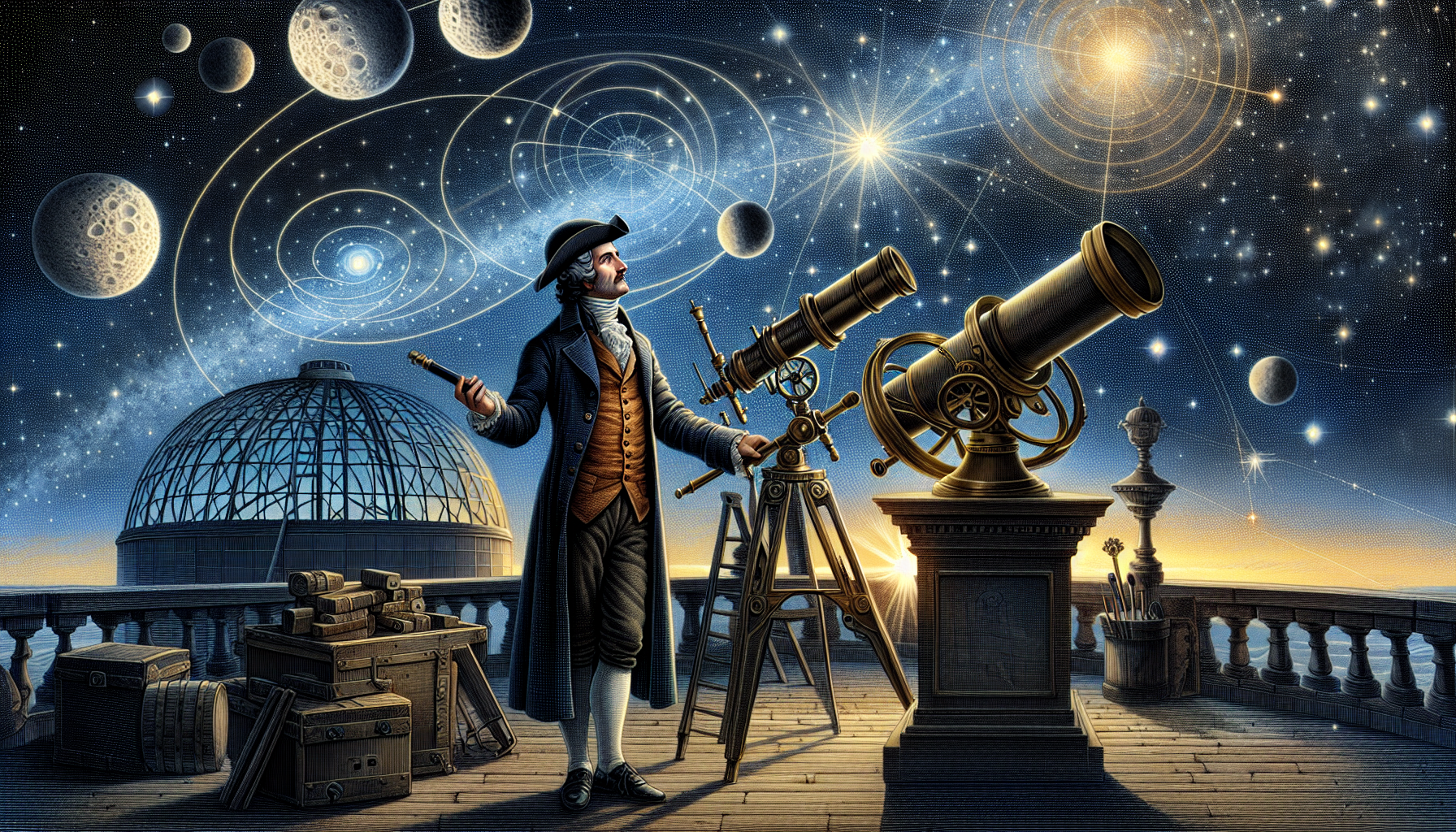
The discovery of Ceres on January 1, 1801, was a major breakthrough in the field of astronomy. Giuseppe Piazzi, a Sicilian astronomer, used a telescope at the Palermo Observatory to identify the object, which he initially thought was a new planet. Piazzi's finding was influenced by the work of astronomers like William Herschel, who had discovered Uranus in 1781, and Johann Elert Bode, who had suggested the existence of a missing planet between Mars and Jupiter. The discovery of Ceres was also facilitated by the efforts of astronomers like Carl Friedrich Gauss, who developed mathematical methods to predict the orbits of celestial bodies.
👨🔬 Giuseppe Piazzi and the Palermo Observatory
Giuseppe Piazzi was a renowned astronomer and mathematician who played a crucial role in the discovery of Ceres. Born in 1746 in Ponte in Valtellina, Italy, Piazzi studied theology and philosophy before becoming interested in astronomy. He was appointed as the director of the Palermo Observatory in 1780, where he conducted extensive research on celestial bodies, including asteroids and comets. Piazzi's work was influenced by the scientific community of his time, including astronomers like Joseph-Louis Lagrange and Pierre-Simon Laplace, who made significant contributions to the field of astronomy. The discovery of Ceres was also acknowledged by the scientific community, with astronomers like Heinrich Olbers and Franz Xaver von Zach taking notice of Piazzi's finding.
🚀 Impact on Astronomy and the Search for the Missing Planet
The discovery of Ceres had a significant impact on the field of astronomy, as it shed light on the mysteries of the solar system. The finding sparked a wave of interest in the search for other asteroids and celestial bodies, with astronomers like Heinrich Olbers and Carl Friedrich Gauss making important contributions to the field. The discovery of Ceres also led to a greater understanding of the asteroid belt, a region between Mars and Jupiter that is home to many small rocky objects. Today, Ceres is recognized as a dwarf planet, a category of objects created by the International Astronomical Union (IAU) in 2006. The study of Ceres and other asteroids has been facilitated by advances in technology, including the development of spacecraft like NASA's Dawn mission, which orbited Ceres from 2015 to 2016.
🌌 Legacy and Further Exploration
The legacy of the discovery of Ceres on January 1, 1801, extends beyond the field of astronomy. The finding has inspired generations of scientists and researchers, including astronomers like Clyde Tombaugh, who discovered Pluto in 1930. The discovery of Ceres has also had a significant impact on our understanding of the solar system, with implications for the study of planetary formation and the search for life beyond Earth. Today, Ceres remains an important area of study, with ongoing research focused on its composition, geology, and potential for supporting life. The discovery of Ceres has also been recognized by the scientific community, with the asteroid being named after the Roman goddess of agriculture and fertility, Ceres. The story of the discovery of Ceres serves as a reminder of the power of human curiosity and the importance of continued exploration and discovery in the field of astronomy.
Key Facts
- Year
- 1801
- Origin
- Palermo, Sicily
- Category
- science
- Type
- event
Frequently Asked Questions
Who discovered Ceres?
Giuseppe Piazzi discovered Ceres on January 1, 1801, using a telescope at the Palermo Observatory in Sicily.
What is Ceres?
Ceres is a dwarf planet located in the asteroid belt between Mars and Jupiter. It is the largest object in the asteroid belt and was discovered by Giuseppe Piazzi in 1801.
Why was the discovery of Ceres significant?
The discovery of Ceres was significant because it shed light on the mysteries of the solar system and sparked a wave of interest in the search for other asteroids and celestial bodies.
What is the asteroid belt?
The asteroid belt is a region between Mars and Jupiter that is home to many small rocky objects, including Ceres. The asteroid belt is thought to be the remains of a planet that never formed in the early days of the solar system.
What is the current status of Ceres?
Ceres is currently recognized as a dwarf planet, a category of objects created by the International Astronomical Union (IAU) in 2006. It is the largest object in the asteroid belt and is thought to be a remnant protoplanet from the early days of the solar system.