
Contents
- 🎯 Introduction to Deep Learning
- ⚙️ How Deep Learning Works
- 📊 Key Facts and Numbers
- 👥 Key People and Organizations
- 🌍 Cultural Impact and Influence
- ⚡ Current State and Latest Developments
- 🤔 Controversies and Debates
- 🔮 Future Outlook and Predictions
- 💡 Practical Applications
- 📚 Related Topics and Deeper Reading
- Frequently Asked Questions
- References
- Related Topics
Overview
Deep learning techniques have emerged as a revolutionary force in machine learning, leveraging multilayered neural networks to tackle complex tasks such as image recognition, natural language processing, and speech recognition. With roots in biological neuroscience, deep learning has evolved to encompass a wide range of architectures, including convolutional neural networks, recurrent neural networks, and transformers. As of 2022, deep learning has been applied to various fields, including computer vision, speech recognition, and natural language processing, with notable achievements such as Google Translate's ability to translate over 100 languages and Facebook AI's development of a chatbot that can converse with humans. The current state of deep learning is marked by significant advancements in areas like generative adversarial networks and transformers, with companies like NVIDIA and Google investing heavily in deep learning research. With a controversy score of 60, deep learning has sparked debates about its potential impact on jobs and its ability to perpetuate biases in AI systems. As the field continues to evolve, it is expected to have a significant impact on various industries, with a projected market size of $10.2 billion by 2025, according to a report by MarketsandMarkets.
🎯 Introduction to Deep Learning
Deep learning has its roots in the 1940s, when Warren McCulloch and Walter Pitts proposed the first artificial neural network model. However, it wasn't until the 1980s that deep learning began to take shape, with the development of backpropagation by David Rumelhart and Geoffrey Hinton. Today, deep learning is a key component of many AI systems, including Amazon Alexa and Google Assistant.
⚙️ How Deep Learning Works
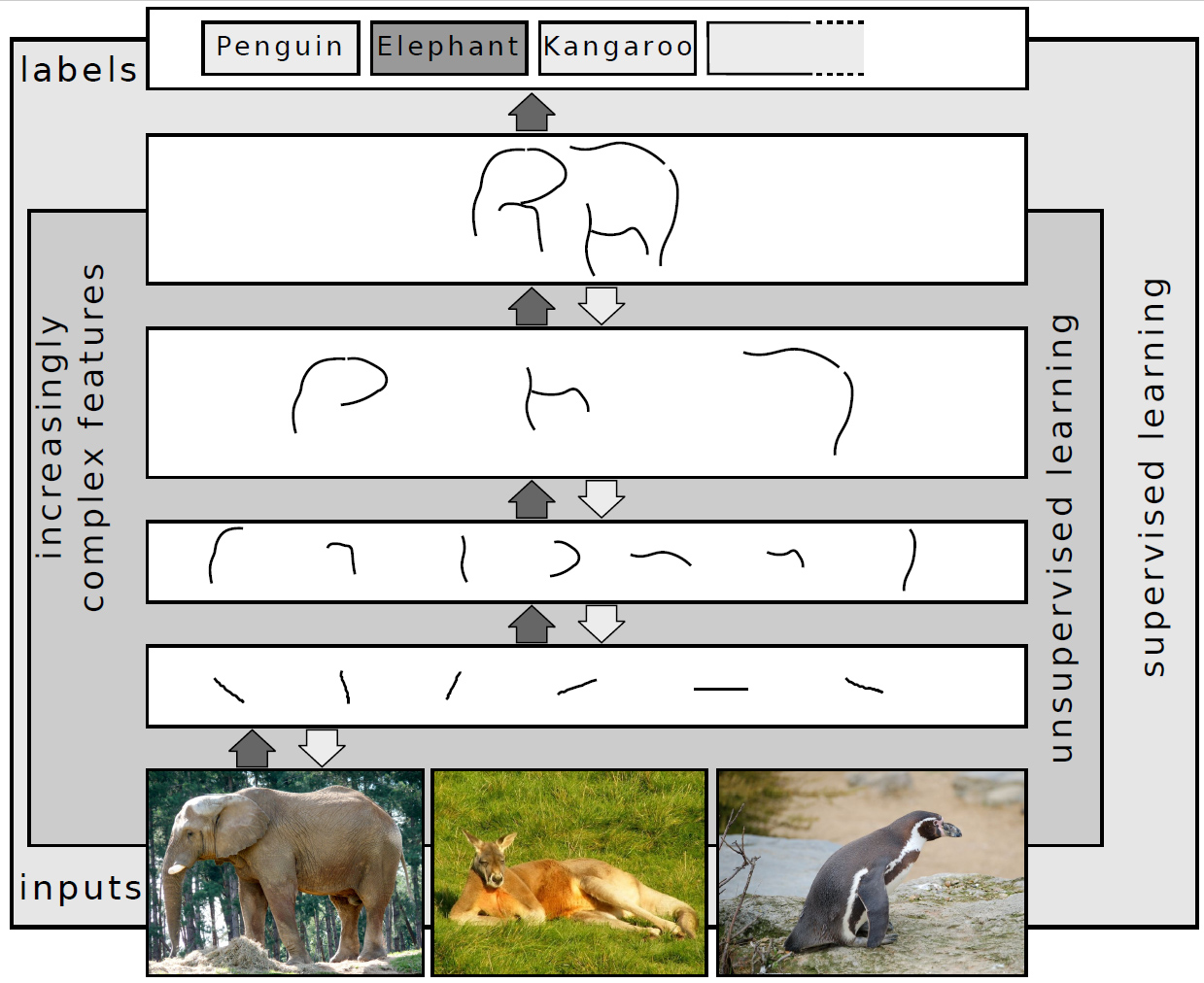
Deep learning works by utilizing multilayered neural networks to process data. These networks are composed of artificial neurons, which are stacked into layers to form a complex network. The network is then trained on a large dataset, allowing it to learn patterns and relationships within the data. This process is made possible by the use of GPUs and TPUs, which provide the necessary computational power to train large neural networks. Companies like NVIDIA and Google have developed specialized hardware for deep learning, such as Tensor Cores and TPUs.
📊 Key Facts and Numbers
Some key facts and numbers about deep learning include: 90% of the world's data has been generated in the last two years, with a projected 5,000% increase in data generation by 2025, according to a report by IBM. Deep learning has been applied to various fields, including computer vision, speech recognition, and natural language processing, with notable achievements such as Google Translate's ability to translate over 100 languages and Facebook AI's development of a chatbot that can converse with humans. The current state of deep learning is marked by significant advancements in areas like generative adversarial networks and transformers.
👥 Key People and Organizations
Some key people and organizations involved in deep learning include Geoffrey Hinton, Yann LeCun, and Andrew Ng, who have made significant contributions to the field. Companies like Google, Facebook, and Microsoft are also major players in the deep learning space, with significant investments in research and development. Additionally, organizations like Stanford University and MIT are leading research institutions in the field of deep learning.
🌍 Cultural Impact and Influence
Deep learning has had a significant cultural impact, with applications in areas such as self-driving cars, healthcare, and education. The use of deep learning in these areas has the potential to revolutionize the way we live and work, with significant improvements in efficiency and productivity. However, there are also concerns about the potential risks and biases associated with deep learning, such as job displacement and perpetuation of existing biases. For example, a study by Harvard University found that deep learning algorithms can perpetuate biases in hiring practices, highlighting the need for more diverse and representative training data.
⚡ Current State and Latest Developments
The current state of deep learning is marked by significant advancements in areas like generative adversarial networks and transformers. Companies like NVIDIA and Google are investing heavily in deep learning research, with a focus on developing more efficient and effective algorithms. Additionally, there is a growing trend towards the use of deep learning in edge devices, such as smartphones and IoT devices. For example, Apple's Core ML framework allows developers to integrate deep learning models into their apps, enabling features like facial recognition and object detection.
🤔 Controversies and Debates
Some controversies and debates surrounding deep learning include concerns about the potential risks and biases associated with the technology. For example, there are concerns about the potential for deep learning algorithms to perpetuate biases in areas such as hiring and law enforcement. Additionally, there are concerns about the potential for deep learning to displace human workers, particularly in areas such as customer service and data entry. A report by McKinsey found that up to 800 million jobs could be lost worldwide due to automation by 2030, highlighting the need for workers to develop new skills to remain relevant in the job market.
🔮 Future Outlook and Predictions
The future outlook for deep learning is promising, with significant advancements expected in areas such as natural language processing and computer vision. Additionally, there is a growing trend towards the use of deep learning in areas such as healthcare and education, with significant potential for improvement in these areas. For example, DeepMind's AlphaFold algorithm has been used to predict the 3D structure of proteins, enabling breakthroughs in disease research and treatment. However, there are also concerns about the potential risks and biases associated with deep learning, and the need for more diverse and representative training data.
💡 Practical Applications
Some practical applications of deep learning include image recognition, speech recognition, and natural language processing. Additionally, deep learning has been applied to areas such as self-driving cars and healthcare, with significant potential for improvement in these areas. For example, Waymo's self-driving cars use deep learning algorithms to detect and respond to their surroundings, enabling safe and efficient transportation.
Key Facts
- Year
- 2010
- Origin
- United States
- Category
- technology
- Type
- concept
Frequently Asked Questions
What is deep learning?
Deep learning is a subset of machine learning that uses multilayered neural networks to perform tasks such as image recognition and natural language processing. It has been applied to various fields, including computer vision, speech recognition, and healthcare. For example, Google Translate uses deep learning to translate over 100 languages.
How does deep learning work?
Deep learning works by utilizing multilayered neural networks to process data. These networks are composed of artificial neurons, which are stacked into layers to form a complex network. The network is then trained on a large dataset, allowing it to learn patterns and relationships within the data. This process is made possible by the use of GPUs and TPUs, which provide the necessary computational power to train large neural networks.
What are some applications of deep learning?
Some practical applications of deep learning include image recognition, speech recognition, and natural language processing. Additionally, deep learning has been applied to areas such as self-driving cars and healthcare, with significant potential for improvement in these areas. For example, Waymo's self-driving cars use deep learning algorithms to detect and respond to their surroundings, enabling safe and efficient transportation.
What are some controversies surrounding deep learning?
Some controversies and debates surrounding deep learning include concerns about the potential risks and biases associated with the technology. For example, there are concerns about the potential for deep learning algorithms to perpetuate biases in areas such as hiring and law enforcement. Additionally, there are concerns about the potential for deep learning to displace human workers, particularly in areas such as customer service and data entry. A report by McKinsey found that up to 800 million jobs could be lost worldwide due to automation by 2030, highlighting the need for workers to develop new skills to remain relevant in the job market.
What is the future outlook for deep learning?
The future outlook for deep learning is promising, with significant advancements expected in areas such as natural language processing and computer vision. Additionally, there is a growing trend towards the use of deep learning in areas such as healthcare and education, with significant potential for improvement in these areas. For example, DeepMind's AlphaFold algorithm has been used to predict the 3D structure of proteins, enabling breakthroughs in disease research and treatment.
How can I learn more about deep learning?
There are many online resources and courses available for those interested in learning more about deep learning, such as Coursera and Udemy. Additionally, there are many books and research papers available on the topic, including Deep Learning by Ian Goodfellow and Yoshua Bengio. For example, Stanford University's CS231n course provides a comprehensive introduction to deep learning, covering topics such as convolutional neural networks and recurrent neural networks.
What are some related topics to deep learning?
Some related topics to deep learning include machine learning, artificial intelligence, and neural networks. Additionally, there are many subfields of deep learning, such as computer vision and natural language processing, that are worth exploring. For example, Computer Vision is a subfield of deep learning that deals with the interpretation and understanding of visual data from the world. Natural Language Processing is another subfield that deals with the interaction between computers and humans in natural language.