
Contents
Overview
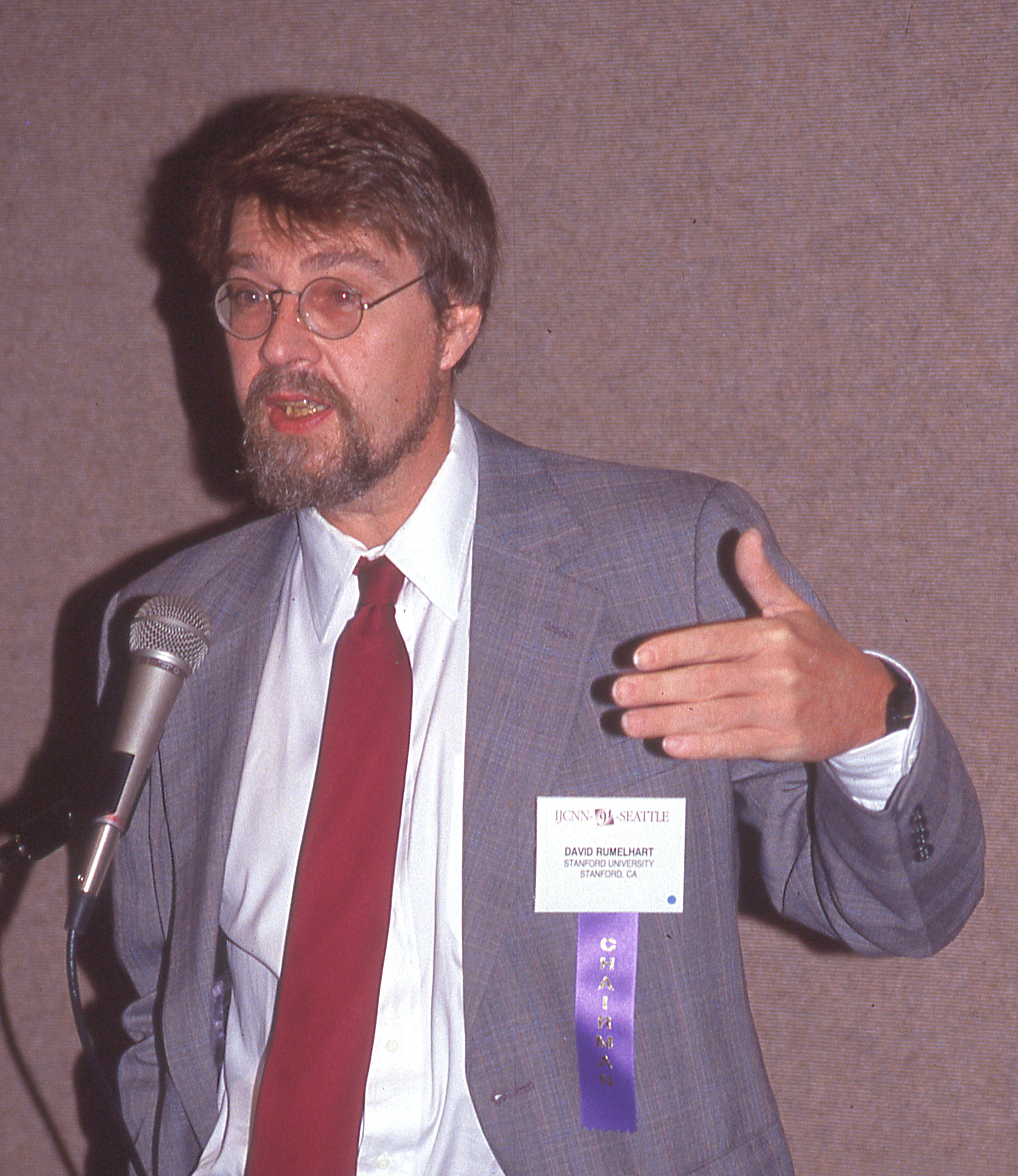
Born in Wessington Springs, South Dakota, David Rumelhart pursued a unique interdisciplinary path, earning degrees in psychology and mathematics before completing his Ph.D. in mathematical psychology at Stanford University in 1967. Initially working within the symbolic computational framework, Rumelhart became increasingly dissatisfied with its limitations in explaining the flexibility and context-sensitivity of human intelligence. This led him, along with collaborators like James L. McClelland and Geoffrey Hinton, to explore alternative models, particularly those inspired by the structure and function of the brain, moving away from strict symbolic manipulation towards connectionist approaches. His early career at the University of California, San Diego, and later at Stanford University, was marked by a relentless pursuit of understanding how the mind works, influencing fields from artificial intelligence to neuroscience.
⚙️ How It Works
Rumelhart's most significant contributions lie in the development of connectionist models and the backpropagation algorithm. He, along with Hinton and Ronald J. Williams, published a seminal 1986 paper demonstrating how multi-layer neural networks could learn complex representations by back-propagating errors. This work, detailed in the influential two-volume set Parallel Distributed Processing: Explorations in the Microstructure of Cognition (co-authored with McClelland), proposed that cognitive processes, such as perception, memory, and language understanding, emerge from the collective activity of numerous simple processing units, much like neurons in the brain. This contrasted sharply with the prevailing symbolic AI approaches championed by figures like Marvin Minsky and Seymour Papert, offering a more biologically plausible and flexible framework for artificial intelligence and cognitive modeling.
🌍 Cultural Impact
The impact of Rumelhart's work on artificial intelligence and cognitive science cannot be overstated. The backpropagation algorithm became a cornerstone of modern machine learning, enabling the development of deep learning systems that now drive much of today's AI technology, from image recognition to natural language processing, as seen in advancements like ChatGPT. His research revived interest in neural networks, challenging the dominance of symbolic AI and fostering a new wave of research that continues to influence fields like psychology, neuroscience, and computer science. The establishment of the David E. Rumelhart Prize for Contributions to the Theoretical Foundations of Human Cognition in 2001 further cemented his legacy, recognizing scientists who make significant theoretical advancements in understanding the human mind.
🔮 Legacy & Future
David Rumelhart's legacy is that of a true pioneer who fundamentally altered our understanding of cognition. His insistence on formal, computational models, combined with insights from psychology and neuroscience, laid the groundwork for much of contemporary AI research. The principles of parallel distributed processing and backpropagation, which he helped develop, remain central to the field. His work continues to inspire researchers like Jay McClelland and Geoffrey Hinton, who have carried forward his vision, exploring the intricate relationship between brain function and artificial intelligence. The ongoing advancements in AI, from sophisticated language models to complex pattern recognition systems, owe a significant debt to Rumelhart's foundational contributions, demonstrating the enduring power of his theoretical insights.
Key Facts
- Year
- 1942-2011
- Origin
- United States
- Category
- science
- Type
- person
Frequently Asked Questions
What is David Rumelhart most famous for?
David Rumelhart is most famous for his pioneering work in connectionism and the development of the backpropagation algorithm, which revolutionized artificial intelligence and cognitive science by demonstrating how neural networks can learn.
What was the significance of the 'Parallel Distributed Processing' book?
The 'Parallel Distributed Processing' (PDP) books, co-authored by Rumelhart and James L. McClelland, were highly influential in popularizing the connectionist approach. They presented detailed models of how networks of simple processing units could account for complex cognitive phenomena, challenging the dominant symbolic paradigm.
How did Rumelhart's work influence modern AI?
Rumelhart's development of the backpropagation algorithm is a foundational element of modern deep learning. This algorithm enables neural networks to learn from data by adjusting connection weights, a principle that underpins many of today's advanced AI systems, including those used in natural language processing and computer vision.
What is the David E. Rumelhart Prize?
The David E. Rumelhart Prize for Contributions to the Theoretical Foundations of Human Cognition is an annual award established to honor significant theoretical advancements in cognitive science. It is often referred to as the 'Nobel Prize of cognitive science' and is awarded by the Cognitive Science Society.
What was the main difference between Rumelhart's approach and symbolic AI?
Rumelhart's connectionist approach viewed cognition as emerging from the parallel processing of information across many simple, interconnected units (like neurons), whereas symbolic AI, championed by figures like Marvin Minsky, focused on rule-based manipulation of abstract symbols. Rumelhart's models aimed to capture the distributed and context-sensitive nature of human thought.
References
- en.wikipedia.org — /wiki/David_Rumelhart
- news.stanford.edu — /stories/2011/03/david-rumelhart-pioneer-cognitive-neuroscience-dies-68
- psychologicalscience.org — /observer/david-rumelhart
- cognitivesciencesociety.org — /rumelhart-prize/
- macfound.org — /fellows/class-of-1987/david-rumelhart
- pubmed.ncbi.nlm.nih.gov — /40663709/
- nytimes.com — /2011/03/19/health/19rumelhart.html
- stanfordmag.org — /contents/neuroscience-pioneer