
Contents
Overview
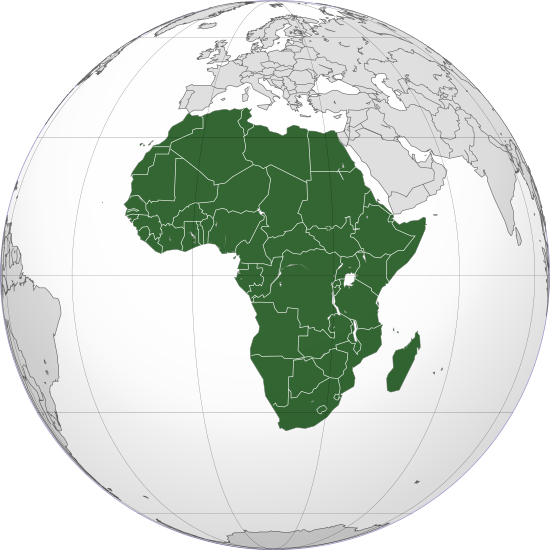
The African continent is home to 56 sovereign states, including fully recognized states, states with limited or zero recognition, and dependent territories of both African and non-African states. With a rich history dating back to ancient civilizations, Africa is a continent of immense cultural, linguistic, and geographical diversity. From the pyramids of Egypt to the vibrant cities of South Africa, each country has its unique story to tell. The continent is also home to numerous international organizations, including the African Union, which aims to promote economic, political, and social integration among its member states. With a population of over 1.3 billion people, Africa is a significant player in global affairs, and its countries continue to play an increasingly important role in international relations, trade, and development. The continent's strategic location, with maritime trade routes connecting Europe, Asia, and the Americas, has made it an attractive destination for foreign investment and tourism. As the continent continues to grow and develop, it is essential to understand the complex history, politics, and cultures of African countries, including their relationships with other nations, such as China and United States.
🌍 Introduction to African Countries
The history of African countries is a long and complex one, with ancient civilizations such as Ancient Egypt and Nubia giving way to colonialism and eventually independence. Today, the continent is home to a diverse range of nations, each with its unique culture, language, and history. From the Sahara Desert in the north to the Cape of Good Hope in the south, Africa is a continent of immense geographical diversity, with Mount Kilimanjaro and Victoria Falls being two of its most famous natural wonders. The continent is also home to numerous international organizations, including the African Development Bank and the New Partnership for Africa's Development.
🏛️ History of African Nations
The process of decolonization, which began in the mid-20th century, has had a profound impact on the development of African countries. Many nations, such as Ghana and Kenya, have made significant progress in recent years, with growing economies and improving standards of living. However, others, such as Somalia and Democratic Republic of the Congo, continue to face significant challenges, including poverty, conflict, and political instability. The role of international organizations, such as the United Nations and the World Bank, has been crucial in supporting the development of African countries, with initiatives such as the Millennium Development Goals and the Sustainable Development Goals.
🌎 Geography and Climate
African countries are also home to a vast array of natural resources, including oil, gas, and minerals. The Niger Delta region, for example, is one of the most oil-rich areas in the world, with companies such as Shell and Chevron operating in the region. However, the extraction of these resources has often been accompanied by environmental degradation and social conflict, highlighting the need for sustainable and responsible development practices. The African Wildlife Foundation and the World Wildlife Fund are two organizations working to protect the continent's unique biodiversity, including its iconic wildlife, such as Lions and Elephants.
📊 Economic Overview
In terms of economic development, African countries have made significant progress in recent years, with many nations experiencing rapid economic growth. The African Continental Free Trade Area (AfCFTA), for example, aims to create a single, unified market for the continent, with the potential to boost trade and investment. However, challenges such as corruption, infrastructure deficits, and limited access to finance continue to hinder economic development, and initiatives such as the African Investment Promotion Agency are working to address these issues. The World Economic Forum has also been instrumental in promoting economic development in Africa, with its annual meeting in Davos bringing together leaders from across the continent to discuss key issues and challenges.
👥 Cultural Diversity
African countries are also home to a rich cultural heritage, with over 2,000 languages spoken across the continent. From the vibrant cities of Lagos and Cairo to the ancient ruins of Timbuktu and Great Zimbabwe, each country has its unique cultural identity. The African Culture Festival and the Pan-African Festival are two events celebrating the continent's diverse cultural heritage, with music, dance, and art from across Africa. The University of Cape Town and the American University in Cairo are two institutions promoting cultural exchange and understanding between Africa and the rest of the world.
🌟 Tourism and Travel
Tourism is also an important sector for many African countries, with visitors drawn to the continent's unique natural beauty, vibrant cities, and rich cultural heritage. From the Serengeti National Park in Tanzania to the Pyramids of Giza in Egypt, Africa is home to some of the world's most famous tourist destinations. The African Tourism Board and the World Tourism Organization are two organizations promoting tourism development in Africa, with initiatives such as the African Tourism Industry and the Sustainable Tourism Initiative.
📚 Education and Development
Education is also a critical sector for African countries, with many nations investing heavily in education and skills development. The African University and the University of Nairobi are two institutions promoting education and research in Africa, with programs such as the African Scholarship Program and the African Research Initiative. However, challenges such as limited access to education, particularly for girls and women, continue to hinder development, and initiatives such as the Global Partnership for Education are working to address these issues.
🤝 International Relations
In terms of international relations, African countries have played an increasingly important role in global affairs in recent years. The African Union (AU), for example, has been instrumental in promoting peace and security on the continent, with initiatives such as the African Peace and Security Council and the African Standby Force. The United Nations and the World Bank have also been key partners for African countries, providing support for development and humanitarian initiatives. The G20 and the G7 have also been important forums for African countries to engage with global leaders and promote their interests.
🌈 Future Prospects
Looking to the future, African countries are poised to play an increasingly important role in global affairs. With a growing population, rapidly urbanizing cities, and a diverse range of natural resources, the continent is well-positioned to drive economic growth and development. However, challenges such as climate change, poverty, and inequality will need to be addressed if the continent is to realize its full potential. The African Renewable Energy Initiative and the African Sustainable Development Goals are two initiatives promoting sustainable development in Africa, with a focus on renewable energy, sustainable agriculture, and social justice.
📊 Statistics and Data
In conclusion, African countries are a diverse and complex group of nations, each with its unique history, culture, and challenges. From the Sahara Desert to the Cape of Good Hope, the continent is home to some of the world's most stunning natural beauty, vibrant cities, and rich cultural heritage. As the continent continues to grow and develop, it is essential to understand the complex history, politics, and cultures of African countries, and to support their development and growth. The African Development Bank and the World Economic Forum are two organizations promoting economic development and cooperation in Africa, with initiatives such as the African Investment Promotion Agency and the African Continental Free Trade Area.
Key Facts
- Year
- 2023
- Origin
- Africa
- Category
- history
- Type
- concept
Frequently Asked Questions
What is the largest country in Africa?
The largest country in Africa is Algeria, with a total area of over 2.3 million square kilometers. The country has a diverse geography, with deserts, mountains, and coastal regions, and is home to a rich cultural heritage, with many ancient ruins and historical sites, including the Casbah of Algiers and the Kabylie Region.
Which African country has the highest population?
The African country with the highest population is Nigeria, with a population of over 200 million people. The country has a diverse economy, with a strong agricultural sector, and is home to many natural resources, including oil and gas, with companies such as Shell and Chevron operating in the country. The Nigerian National Petroleum Corporation is the state-owned oil company, and is responsible for the development of the country's oil and gas resources.
What is the most widely spoken language in Africa?
The most widely spoken language in Africa is Arabic, with over 150 million speakers. The language is spoken in many countries, including Egypt, Sudan, and Morocco, and is an official language of the African Union. The Arabic Language Institute is a leading institution for the study of Arabic, and offers courses and programs for students from around the world.
Which African country has the highest GDP?
The African country with the highest GDP is South Africa, with a GDP of over $300 billion. The country has a diverse economy, with a strong mining sector, and is home to many natural resources, including gold, diamonds, and platinum, with companies such as Anglo American and BHP operating in the country. The South African Reserve Bank is the central bank of the country, and is responsible for monetary policy and financial regulation.
What is the most popular tourist destination in Africa?
The most popular tourist destination in Africa is South Africa, with over 10 million tourists per year. The country has a diverse range of attractions, including the Table Mountain, Cape of Good Hope, and Kruger National Park, and is home to many vibrant cities, including Cape Town and Johannesburg. The South African Tourism Board is the national tourism agency, and is responsible for promoting tourism in the country.
Which African country has the highest life expectancy?
The African country with the highest life expectancy is Mauritius, with a life expectancy of over 75 years. The country has a high standard of living, with good healthcare and education systems, and is home to a diverse economy, with a strong tourism sector, with many resorts and hotels, including the Four Seasons Resort Mauritius and the One&Only Le Saint Géran. The Mauritius Ministry of Health is the national health agency, and is responsible for healthcare policy and regulation.
What is the most widely practiced religion in Africa?
The most widely practiced religion in Africa is Islam, with over 500 million adherents. The religion is practiced in many countries, including Egypt, Nigeria, and South Africa, and is an important part of the cultural and social fabric of the continent. The Organisation of Islamic Cooperation is an international organization that promotes cooperation and understanding between Muslim countries, and is headquartered in Jeddah, Saudi Arabia.