
Contents
Overview
Token security best practices are the essential protocols and techniques employed to safeguard digital tokens, which act as proxies for sensitive data or access credentials. These practices are critical in an era where data breaches are rampant and the value of digital assets, from financial information to intellectual property, is immense. Effective token security involves a multi-layered approach, encompassing secure generation, storage, transmission, and revocation of tokens. The goal is to prevent unauthorized access, manipulation, or theft of the underlying assets represented by these tokens. As the digital economy expands, so does the attack surface, making adherence to robust token security measures not just advisable, but imperative for maintaining trust and operational integrity.
🎵 Origins & History
The concept of using tokens as placeholders for sensitive information has roots stretching back to early computing, where simple substitution ciphers were employed. However, the modern evolution of tokenization in data security gained significant traction with the rise of electronic payments and the need to comply with regulations like the PCI DSS. Early systems often relied on simple reversible algorithms, but the advent of more sophisticated cryptographic techniques and the increasing threat landscape necessitated more robust, often irreversible, tokenization methods. The development of secure token vaults and standardized protocols by organizations like the NACHA has been pivotal in establishing current best practices.
⚙️ How It Works
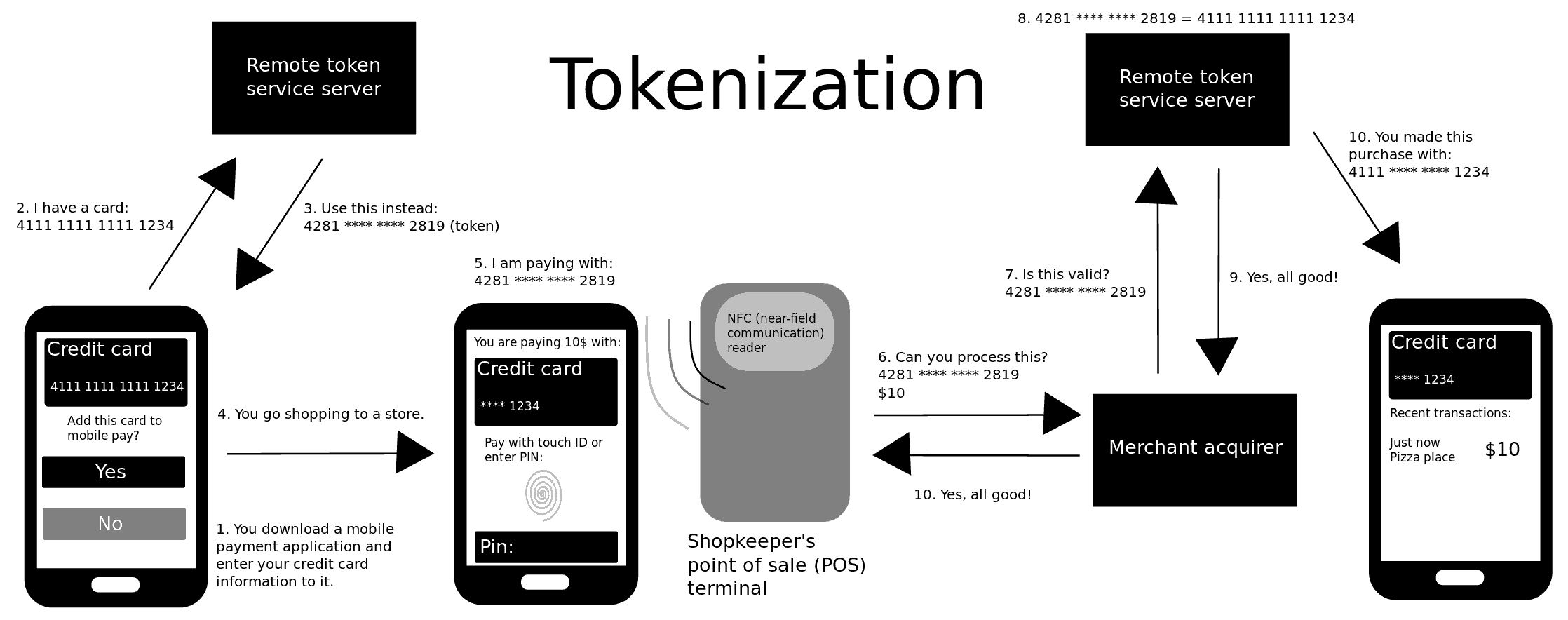
At its core, tokenization replaces sensitive data with a unique, non-sensitive identifier, the token. This token is generated through processes that can range from random number generation to cryptographically secure pseudo-random number generators (CSPRNGs). The original data is then stored securely in a vault. When a transaction or request requires the sensitive data, the token is sent to the tokenization system, which then retrieves and returns the original data. This process is fundamentally about de-linking the sensitive data from its common usage points, thereby minimizing exposure during transit and storage in less secure environments, a principle championed by security experts like Bruce Schneier.
📊 Key Facts & Numbers
The global tokenization market is projected to reach $10.6 billion by 2027, according to MarketsandMarkets reports. This growth is driven by increasing data privacy regulations, such as the GDPR in Europe and the CCPA in California, which impose hefty fines for non-compliance. Companies are investing heavily, a trend directly influenced by the need for secure token management solutions.
👥 Key People & Organizations
Pioneers in the field include companies like TokenEx, Protegrity, and CyberSource, which have developed sophisticated tokenization platforms. Regulatory bodies such as the PCI Security Standards Council play a crucial role in defining standards that guide these practices. Security researchers and cryptographers, including those at institutions like MIT CSAIL, continuously contribute to the theoretical underpinnings and practical advancements in secure token generation and vault management, often publishing their findings on platforms like arXiv.
🌍 Cultural Impact & Influence
Tokenization has profoundly reshaped how industries handle sensitive data, particularly in finance and e-commerce. The ubiquity of Apple Pay and Google Pay relies heavily on tokenization to protect credit card details. Beyond payments, tokenization is influencing blockchain applications, with non-fungible tokens (NFTs) representing unique digital assets, and security tokens representing ownership of real-world assets, demonstrating a broader cultural embrace of the tokenization concept.
⚡ Current State & Latest Developments
The current landscape sees a surge in advanced tokenization techniques, including dynamic tokenization, which generates unique tokens for each transaction. The rise of cloud-based tokenization services offers greater scalability and accessibility for businesses of all sizes. Furthermore, the integration of tokenization with AI and machine learning is enabling more intelligent threat detection and automated security policy enforcement, as seen in solutions offered by IBM Security. The ongoing evolution of cryptographic methods continues to enhance the security of token generation and vault protection.
🤔 Controversies & Debates
A significant debate revolves around the trade-offs between tokenization and encryption. While encryption scrambles data directly, tokenization replaces it with a reference. Critics argue that tokenization can introduce complexity and reliance on a central vault. Conversely, proponents highlight that tokenization can simplify compliance by removing sensitive data from many systems, reducing the scope of audits and the impact of breaches on systems that only handle tokens. The debate also extends to the choice between centralized vs. decentralized tokenization models, particularly in the context of DeFi.
🔮 Future Outlook & Predictions
The future of token security likely involves greater adoption of homomorphic encryption, which allows computations on encrypted data without decrypting it, potentially reducing the need for token vaults altogether. We can also expect more sophisticated tokenization strategies for emerging technologies like IoT devices, where managing vast numbers of unique identifiers securely is a monumental challenge. The integration of quantum-resistant cryptography into tokenization protocols will become crucial as quantum computers advance, posing a threat to current cryptographic methods. Expect a continued push towards standardized, interoperable tokenization frameworks across industries, potentially driven by consortia like the W3C.
💡 Practical Applications
Tokenization finds extensive practical applications across numerous sectors. In financial services, it's used to protect credit card numbers, bank account details, and personally identifiable information (PII) during transactions and data storage. E-commerce platforms leverage it to secure customer payment details, enabling seamless checkouts. Healthcare providers use tokenization to protect sensitive patient records, ensuring compliance with HIPAA. In the realm of gaming, it secures virtual currency and in-game item ownership. Even telecom companies utilize it to safeguard subscriber data.
Key Facts
- Category
- technology
- Type
- concept