
Contents
- 🎵 Origins & History
- ⚙️ How It Works
- 📊 Key Facts & Numbers
- 👥 Key People & Organizations
- 🌍 Cultural Impact & Influence
- ⚡ Current State & Latest Developments
- 🤔 Controversies & Debates
- 🔮 Future Outlook & Predictions
- 💡 Practical Applications
- 📚 Related Topics & Deeper Reading
- Frequently Asked Questions
- References
- Related Topics
Overview
The genesis of the Tōkaidō Shinkansen lies in Japan's post-World War II economic boom and the urgent need for efficient transportation to connect the nation's two largest metropolises, Tokyo and Osaka. The original Tōkaidō Main Line, vital for freight and passenger traffic, was severely congested. Visionaries like Hideo Shima, an engineer who had studied early high-speed rail concepts in Europe and the United States, championed the idea of a dedicated, high-speed line. The project, spearheaded by Japanese National Railways (JNR), faced immense technical challenges and skepticism, but construction began in 1959. The line officially opened on October 1, 1964, just in time for the Tokyo Olympics, a feat of engineering and logistical prowess that captured global attention. This opening marked a paradigm shift, demonstrating that high-speed rail was not just feasible but could be a cornerstone of modern infrastructure, a concept that would later be replicated by countries like France with its TGV and China with its CRH network.
⚙️ How It Works
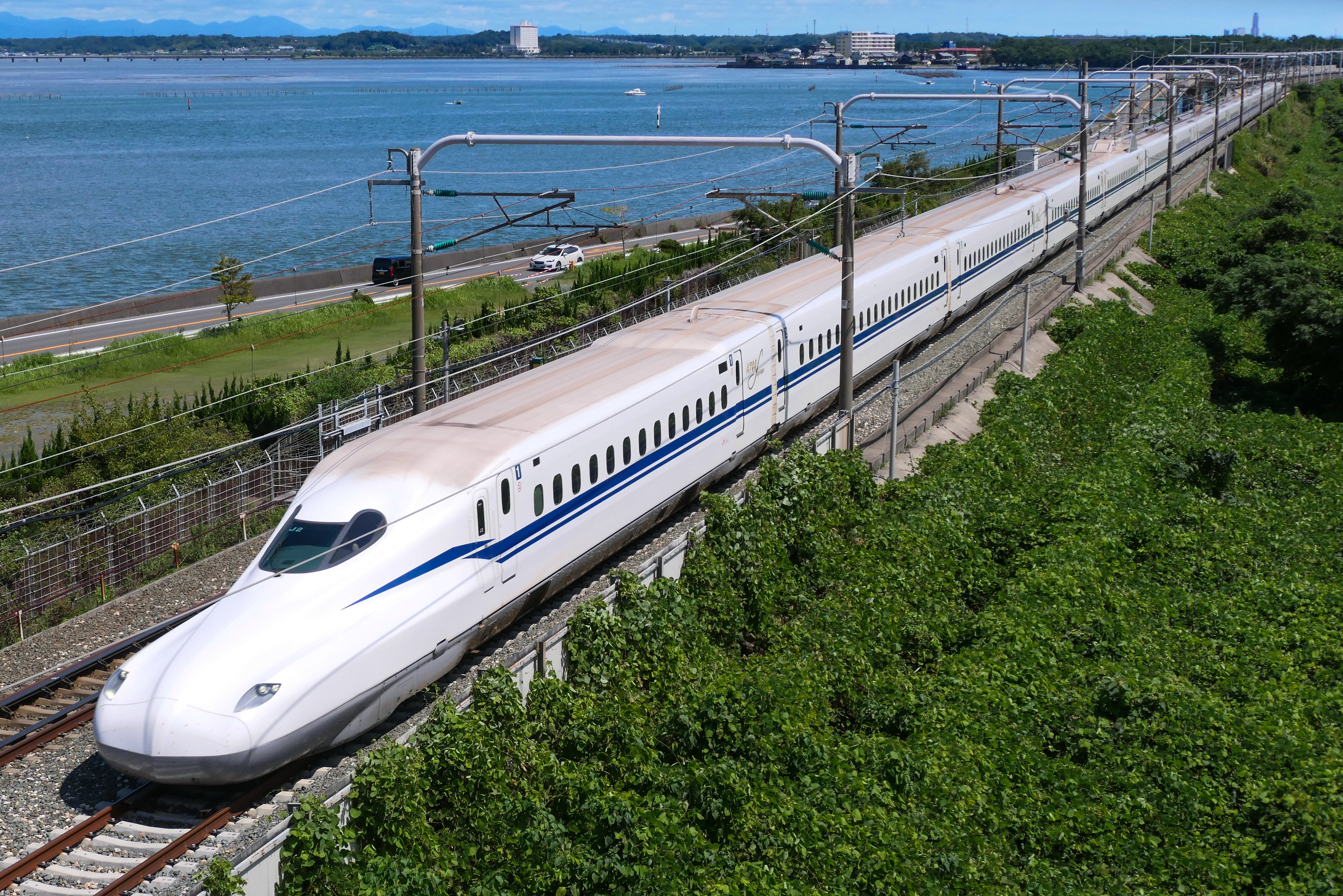
The Tōkaidō Shinkansen operates on a dedicated, standard-gauge track system, entirely separate from conventional lines, which is crucial for maintaining high speeds and safety. Unlike many Western railways, it uses a 1,435 mm (4 ft 8 1⁄2 in) gauge and features a sophisticated overhead catenary system for power delivery. Trains are powered by electricity, drawing power from the overhead lines and distributing it to multiple traction motors. The system employs advanced signaling and control technologies, including Automatic Train Control (ATC), to ensure safe operation even at speeds exceeding 285 km/h (177 mph). The distinct rolling stock, such as the iconic Series 0 and the more modern N700 Series, are designed with aerodynamics and passenger comfort in mind, featuring pressurized cabins to mitigate pressure changes in tunnels and a highly reliable braking system. The line's infrastructure includes numerous bridges and tunnels to maintain a relatively straight and level path, minimizing gradients and curves.
📊 Key Facts & Numbers
The Tōkaidō Shinkansen is a titan of passenger transport, moving an average of 1.7 million passengers daily in 2019, before the COVID-19 pandemic. In 2023, JR Central reported carrying approximately 496 million passengers on the line. The line boasts an average delay of less than a minute, with an incredible on-time performance rate of over 99.9%. Since its inception in 1964, it has transported over 10 billion passengers. The line's operational efficiency is staggering, with up to 17 trains per hour during peak times, running at intervals as short as 3 minutes between services. The total length of the Tōkaidō Shinkansen is 515.4 kilometers (320.3 miles), connecting 17 stations between Tokyo and Shin-Osaka. Its annual revenue for JR Central is substantial, contributing significantly to the company's overall financial health.
👥 Key People & Organizations
The Tōkaidō Shinkansen's development and operation are intrinsically linked to several key figures and organizations. Hideo Shima, the chief engineer, was instrumental in the technical design and realization of the project, drawing on his extensive knowledge of railway engineering. Shinji Sogō, the first president of JNR, was a crucial advocate and driving force behind securing the necessary political and financial support. The Central Japan Railway Company (JR Central), established in 1987 following the privatization of JNR, is the current operator and a major player in Japanese rail. Its current chairman, Yoshiyuki Kasai, has been a prominent voice in advocating for the Chūō Shinkansen, the planned maglev line. The Ministry of Land, Infrastructure, Transport and Tourism (MLIT) plays a regulatory role, overseeing safety standards and national rail policy. The success of the Shinkansen also owes much to the skilled workforce of Hitachi, Toshiba, and Mitsubishi Electric, who developed and manufactured the trains and signaling systems.
🌍 Cultural Impact & Influence
The Tōkaidō Shinkansen has profoundly reshaped Japanese culture and identity. It became a potent symbol of Japan's post-war economic miracle and technological prowess, earning the nickname "bullet train" for its speed and sleek design. Its punctuality and reliability have fostered a culture of efficiency and precision, influencing societal expectations for public transport. The line has facilitated unprecedented mobility, enabling business travel, tourism, and the decentralization of populations away from major urban centers. Culturally, it has been featured in countless films, anime, and literature, becoming an iconic representation of modern Japan. The Shinkansen's influence extends globally, inspiring high-speed rail projects in countries like South Korea, Taiwan, and the United States, though often facing challenges in replicating its unique success factors. The concept of the Shinkansen has become synonymous with Japanese innovation and quality.
⚡ Current State & Latest Developments
As of 2024, the Tōkaidō Shinkansen continues to be a workhorse of Japanese transportation, operating at near-capacity. JR Central is heavily invested in maintaining and upgrading its fleet, with ongoing deployment of the advanced N700S Series trains, which offer enhanced passenger comfort and improved safety features. The company is also making significant strides in the development of the Chūō Shinkansen, a next-generation magnetic levitation (maglev) line that will eventually connect Tokyo and Nagoya at speeds exceeding 500 km/h (310 mph). This ambitious project, which began construction in 2014, represents the next frontier in high-speed rail technology. JR Central is also exploring innovations in predictive maintenance and passenger experience, leveraging data analytics to further optimize operations and service.
🤔 Controversies & Debates
One of the most persistent debates surrounding the Tōkaidō Shinkansen revolves around its expansion and the introduction of new services. The initial policy of restricting the fastest "Nozomi" services from using the San'yō Shinkansen to reach western Japan caused friction with regional operators and travelers. While this restriction was eventually lifted in 2003, debates continue about fare structures and service prioritization. Another area of contention is the immense cost and environmental impact of new high-speed rail projects, particularly the Chūō Shinkansen maglev line, which has faced local opposition due to tunneling and land acquisition issues. Furthermore, the question of whether the Shinkansen model, with its high infrastructure costs and reliance on dense population corridors, is universally applicable to other countries remains a subject of discussion among transportation experts.
🔮 Future Outlook & Predictions
The future of the Tōkaidō Shinkansen is inextricably linked to the development of the Chūō Shinkansen maglev line. Once operational, the maglev is expected to dramatically reduce travel times between Tokyo and Nagoya to approximately 40 minutes, potentially altering commuting patterns and regional economies. JR Central aims to extend the maglev line to Osaka by 2037, creating an even faster corridor. Beyond maglev, JR Central is exploring further technological advancements for conventional Shinkansen, including improved energy efficiency, enhanced passenger amenities, and potentially higher operating speeds on upgraded sections. The long-term vision includes integrating these high-speed networks with local transit systems and exploring new business models to ensure continued profitability and service excellence in an evolving transportation landscape.
💡 Practical Applications
The Tōkaidō Shinkansen's primary application is intercity passenger transport, serving millions daily between Tokyo and Osaka, and beyond via connections to the San'yō Shinkansen. Its reliability and speed make it ideal for business travel, allowing executives to conduct meetings in different cities within the same day. It also serves as a vital artery for tourism, connecting major cultural and economic hubs. Beyond passenger service, the Shinkansen network's infrastructure, including its advanced signaling and power systems, has been exported or licensed to other countries, such as Taiwan's High Speed Rail. The operational model of JR Central, with its focus on punctuality and customer service, has also served as a benchmark for railway operators worldwide, influencing best practices in service management and maintenance. The technology developed for the Shinkansen has also had spillover effects in other sectors, driving innovation in areas like materials science and electronics.
Key Facts
- Year
- 1964
- Origin
- Japan
- Category
- technology
- Type
- technology
Frequently Asked Questions
What makes the Tōkaidō Shinkansen the "bullet train"?
The nickname "bullet train" (dangan ressha) originated from the train's sleek, aerodynamic design, resembling a bullet, and its unprecedented speed for its time. When it opened in 1964, its top speed of 210 km/h (130 mph) was revolutionary, drastically cutting travel time between Tokyo and Osaka from nearly 7 hours to just over 4 hours. This speed, combined with its punctual operation, cemented its image as a futuristic and powerful mode of transport, a stark contrast to the slower, conventional trains of the era.
How has the Tōkaidō Shinkansen impacted Japan's economy?
The Tōkaidō Shinkansen has been a cornerstone of Japan's post-war economic miracle. By drastically reducing travel times and increasing the ease of business travel, it facilitated the growth of industries and commerce along the Tōkaidō corridor, Japan's most economically vital region. It enabled greater labor mobility, allowed for the decentralization of some businesses, and boosted tourism. The efficiency and reliability of the Shinkansen also fostered a national culture of punctuality and precision, which indirectly benefited the broader economy by setting high standards for operational excellence across various sectors.
What is the safety record of the Tōkaidō Shinkansen?
The Tōkaidō Shinkansen boasts an extraordinary safety record, with zero passenger fatalities due to derailments or collisions in its over 60 years of operation. This remarkable achievement is attributed to a combination of factors, including dedicated, grade-separated tracks that prevent conflicts with other rail traffic, advanced automatic train control (ATC) systems that enforce speed limits and braking, and rigorous maintenance protocols. The trains are also equipped with sophisticated seismic monitoring systems that can automatically halt trains in the event of an earthquake, a critical feature in Japan's seismically active environment.
What are the different train services on the Tōkaidō Shinkansen?
The Tōkaidō Shinkansen operates three main types of services, distinguished by their stopping patterns: Nozomi (のぞみ), meaning 'hope,' is the fastest and makes the fewest stops, primarily serving major stations like Tokyo, Nagoya, and Shin-Osaka. Hikari (ひかり), meaning 'light,' is the second-fastest, making more stops than Nozomi. Kodama (こだま), meaning 'echo,' is the slowest, stopping at every station along the line. While Nozomi and Hikari trains are the most frequent and popular for long-distance travel, Kodama services are essential for local connectivity and serve as backups or for passengers traveling shorter distances.
Is the Tōkaidō Shinkansen still the fastest train in the world?
No, the Tōkaidō Shinkansen is no longer the absolute fastest train in the world, though it remains incredibly fast and efficient. Its current top operating speed is 285 km/h (177 mph) for the N700S series trains. Many other high-speed rail systems globally now operate at higher speeds, such as China's Shanghai Maglev (which reaches 431 km/h or 268 mph) and various CRH lines that exceed 350 km/h (217 mph). Japan's own upcoming Chūō Shinkansen maglev line is designed to reach speeds over 500 km/h (310 mph), which will surpass current operational speeds.
How can I buy tickets for the Tōkaidō Shinkansen?
Tickets for the Tōkaidō Shinkansen can be purchased through several channels. The most convenient method for tourists is often through the official JR Central website (english.jr-central.co.jp) or via authorized travel agents. Tickets can also be bought at JR ticket offices (Midori no Madoguchi) at major stations, or at ticket vending machines. For reserved seats, it's advisable to book in advance, especially during peak travel seasons like Golden Week or Obon. Japan Rail Pass holders can use their passes on Hikari and Kodama services, but typically not on the faster Nozomi services, though exceptions and specific conditions may apply.
What is the future of the Tōkaidō Shinkansen and its successors?
The future of the Tōkaidō Shinkansen is closely tied to the development of the Chūō Shinkansen, a maglev line designed to connect Tokyo and Nagoya by 2027 and eventually Osaka by 2037. This new line will operate at speeds exceeding 500 km/h (310 mph), dramatically reducing travel times. JR Central is also continuously upgrading the existing Tōkaidō Shinkansen fleet with advanced models like the N700S, focusing on improved passenger comfort, energy efficiency, and enhanced safety features. The company is also exploring further integration with digital technologies for ticketing, passenger information, and operational management to maintain its status as a world-leading high-speed rail service.