
Summary
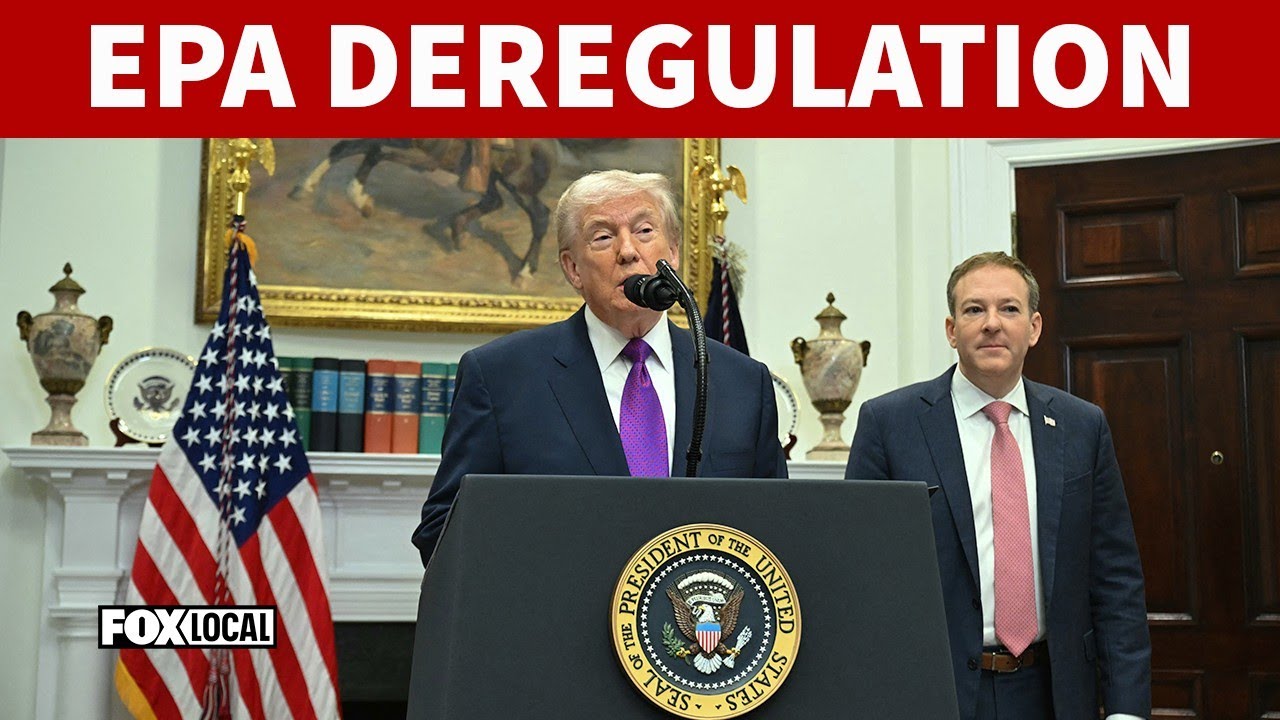
**Trump EPA** is preparing to revoke the 2009 endangerment finding that underpins federal climate regulations, betting on the **Supreme Court** to let it bypass administrative review. The move, detailed in a Politico report from February 2026, would dismantle key rules targeting greenhouse gas emissions from power plants and vehicles. [[trump-epa|Trump EPA]] claims this will boost energy production and economic growth, but critics warn it could accelerate climate change. The **Supreme Court**'s upcoming ruling on this matter will determine whether the administration can circumvent decades of environmental law. [[supreme-court|Supreme Court]] justices are split on the merits of the case, with conservative appointees likely to favor the administration's argument. [[climate-change|Climate change]] advocates argue this is a direct attack on the **Clean Air Act**, which has been used to regulate emissions since 1970. [[clean-air-act|Clean Air Act]] opponents, meanwhile, claim the rules stifle innovation and job creation. The **Environmental Protection Agency** (EPA) has faced similar challenges in the past, including the 2019 repeal of the Clean Power Plan under **Donald Trump**. [[donald-trump|Donald Trump]]'s administration has consistently prioritized deregulation over climate action, a stance that continues under current leadership. [[deregulation|Deregulation]] remains a contentious issue, with bipartisan support for some reforms but fierce opposition to those that weaken climate protections.
Key Takeaways
- The Trump EPA is targeting the 2009 endangerment finding that underpins federal climate regulations
- The Supreme Court's decision will determine whether the administration can bypass regulatory requirements
- This move could have significant implications for future environmental protections and economic growth
- The Clean Air Act has been a cornerstone of U.S. climate policy since 1970
- The debate over regulatory rollbacks highlights the tension between economic growth and environmental protection
Balanced Perspective
**Trump EPA** is legally challenging the 2009 endangerment finding, which classified greenhouse gases as pollutants under the **Clean Air Act**. The **Supreme Court** will decide whether the agency can bypass the Administrative Procedure Act's notice-and-comment requirements. [[administrative-procedure-act|Administrative Procedure Act]] experts note this could set a precedent for future regulatory rollbacks. The **Environmental Protection Agency** (EPA) has previously faced similar challenges, including the 2019 repeal of the Clean Power Plan. [[clean-power-plan|Clean Power Plan]] opponents argue the rules were overly burdensome, while supporters claim they were essential for reducing carbon emissions. [[carbon-emissions|Carbon emissions]] data shows a 14% decline since 2016, but this is attributed to market forces rather than regulation.
Optimistic View
**Trump EPA** argues this move will unleash $1.2 trillion in private sector investment by removing regulatory burdens on fossil fuel industries. Proponents claim the **Supreme Court** will rule in favor of the administration, allowing energy companies to expand operations without federal oversight. [[private-sector|Private sector]] growth could create 2.3 million jobs by 2030, according to industry groups. The **Clean Air Act**'s current framework, they argue, has created a 'regulatory morass' that stifles innovation. [[clean-air-act|Clean Air Act]] reformers suggest this could lead to a new era of energy independence, with the U.S. becoming a global leader in oil and gas production. [[energy-independence|Energy independence]] advocates point to the 2022 surge in domestic oil production as proof that deregulation works.
Critical View
**Trump EPA**'s move risks accelerating climate change by removing critical safeguards. The **Supreme Court**'s decision could enable the administration to dismantle decades of environmental protections, including the **Clean Air Act**. [[clean-air-act|Clean Air Act]] advocates warn this could lead to a 12% increase in U.S. carbon emissions by 2030. The **Environmental Protection Agency** (EPA) has a history of regulatory rollbacks, including the 2019 repeal of the Clean Power Plan. [[clean-power-plan|Clean Power Plan]] supporters argue this has created uncertainty for renewable energy investments. [[renewable-energy|Renewable energy]] development has slowed by 18% since 2019, according to industry reports.
Source
Originally reported by Politico