
Contents
Overview
The genus Spirogyra was first described in 1825, who noted the characteristic spiral chloroplasts that set it apart from other filamentous algae. Its classification as a charophyte green alga places it within a group considered to be the closest living relatives of terrestrial plants, hinting at ancient evolutionary connections. Early botanical studies, particularly in the 19th and early 20th centuries, focused on its morphology and reproductive mechanisms, often using specimens collected from European freshwater bodies. The identification and classification of its numerous species, now exceeding 500, has been an ongoing process, with significant contributions from algologists worldwide documenting its presence in diverse aquatic habitats from temperate to tropical regions. The historical study of Spirogyra has been integral to understanding the broader evolution of plant life and aquatic algal communities.
⚙️ How It Works
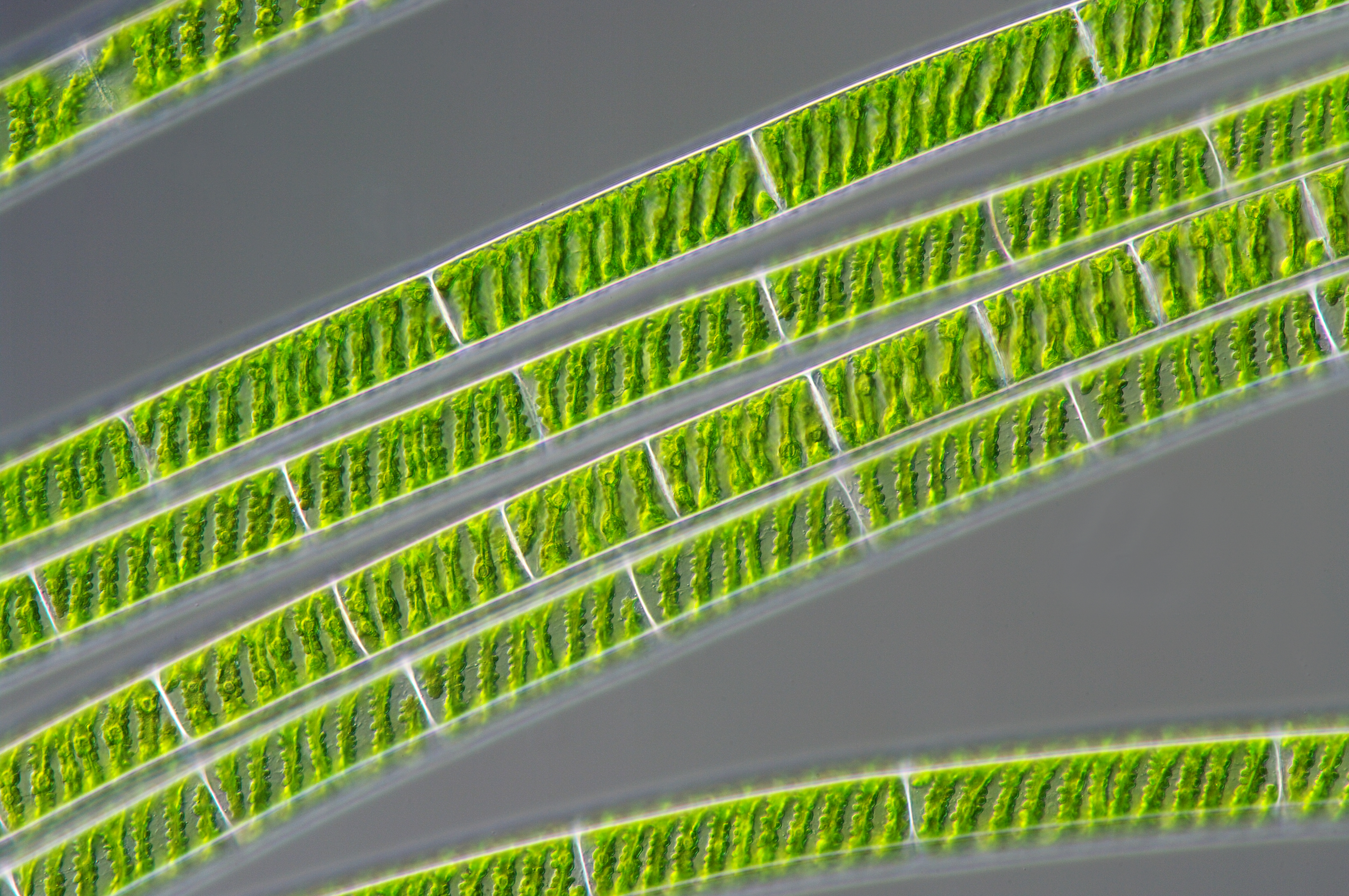
Spirogyra's cellular structure is remarkably simple yet functional. Each filament is composed of uniseriate (single-celled) cylindrical cells arranged end-to-end. The most striking feature is the presence of one or more ribbon-like chloroplasts that coil helically within each cell, a morphology that facilitates efficient light capture for photosynthesis. Reproduction occurs both asexually through fragmentation of filaments and sexually via conjugation. In conjugation, two filaments align, and specialized papillae or tubes form between adjacent cells, through which protoplasts migrate to fuse and form a zygospore. These zygospores are resistant to unfavorable conditions and germinate later to produce new filaments, ensuring the genus's persistence in varied environments. The cell wall is composed of cellulose and pectin, providing structural support.
📊 Key Facts & Numbers
Globally, Spirogyra is found in freshwater habitats, with over 500 distinct species identified. Filaments can reach lengths of several centimeters, and in dense blooms, can cover surface areas of several square meters. The zygospores, a key reproductive stage, can remain viable for several years, contributing to the species' widespread distribution.
👥 Key People & Organizations
While no single individual is solely credited with the discovery of Spirogyra, its initial description in 1825 is attributed to Christian Gottfried Daniel Nees von Esenbeck, a German botanist. His work laid the foundation for subsequent taxonomic studies. Over the decades, numerous algologists have contributed to cataloging the genus's diversity. Major botanical institutions and university departments worldwide, such as the University of Cambridge's Department of Plant Sciences and the Smithsonian Institution, house significant collections and conduct ongoing research into algal taxonomy and ecology, often including Spirogyra specimens. The International Phycological Society also serves as a hub for researchers studying algae, including this genus.
🌍 Cultural Impact & Influence
Spirogyra's visual presence in freshwater bodies has cemented its place in cultural imagery, often appearing in landscape paintings and nature photography as a symbol of pristine, albeit sometimes overgrown, aquatic environments. Its common names, such as 'mermaid's tresses' and 'water silk', evoke a sense of natural beauty and mystique. Beyond aesthetics, Spirogyra has served as a fundamental educational tool in biology classrooms globally, illustrating basic principles of cell structure, photosynthesis, and sexual reproduction through conjugation. Its role as a primary producer in aquatic food webs, supporting populations of zooplankton and invertebrates, underscores its ecological significance, though its tendency to form dense blooms can also be perceived negatively, impacting recreational uses of water bodies. The genus's evolutionary link to land plants also positions it as a key organism in understanding the transition from aquatic to terrestrial life.
⚡ Current State & Latest Developments
Research continues to focus on the ecological dynamics of Spirogyra, particularly its role in nutrient cycling and its potential to form nuisance blooms in response to anthropogenic pollution. Advances in genomic sequencing are providing deeper insights into the genetic diversity within the genus and the specific adaptations that allow certain species to thrive in eutrophic conditions. Scientists are also investigating the biochemical composition of Spirogyra for potential applications in biofuel production and as a source of novel compounds. Monitoring programs in various regions are tracking the prevalence and distribution of different Spirogyra species, especially in areas experiencing increased agricultural runoff or wastewater discharge, aiming to predict and manage bloom events more effectively. The development of more precise identification techniques, including DNA barcoding, is also a current focus.
🤔 Controversies & Debates
One of the primary controversies surrounding Spirogyra revolves around its classification and the sheer number of species described, with ongoing debates about taxonomic validity and the potential for lumping or splitting species based on new genetic data. Another significant debate concerns its role in aquatic ecosystems: while essential for primary production, dense blooms can lead to oxygen depletion (hypoxia) when they decompose, harming fish and other aquatic life, a phenomenon often linked to eutrophication from agricultural and urban runoff. This has led to discussions about management strategies, with some advocating for nutrient reduction policies and others exploring mechanical removal or biological control methods, each with its own set of environmental and economic considerations. The ecological impact of Spirogyra blooms is a complex issue with no easy solutions, often pitting ecological necessity against human use of water resources.
🔮 Future Outlook & Predictions
The future outlook for Spirogyra is intrinsically tied to global changes in water quality and climate. As climate change continues to alter temperature and precipitation patterns, and as nutrient pollution from human activities persists, the conditions favoring Spirogyra blooms are likely to intensify in many regions. Future research will likely focus on developing more effective and sustainable methods for managing nuisance blooms, potentially involving advanced biotechnology applications or ecological engineering approaches. Furthermore, continued exploration of Spirogyra's genetic makeup may unlock new potential for its use in bioremediation or as a sustainable source of biomass for industrial applications. Understanding the complex interplay between species-specific traits and environmental factors will be crucial for predicting and mitigating the impacts of this ubiquitous alga.
💡 Practical Applications
Spirogyra's practical applications, while not as widespread as some other algae, are an area of growing interest. Its high carbohydrate content makes it a potential candidate for biofuel production, particularly for biodiesel and bioethanol, though challenges remain in efficient extraction and conversion processes. Researchers are also exploring its use in bioremediation to absorb excess nutrients like nitrogen and phosphorus from polluted waters, effectively acting as a natural filter. Furthermore, its unique [[photosynthetic-pi
Key Facts
- Category
- nature
- Type
- topic