
Contents
Overview
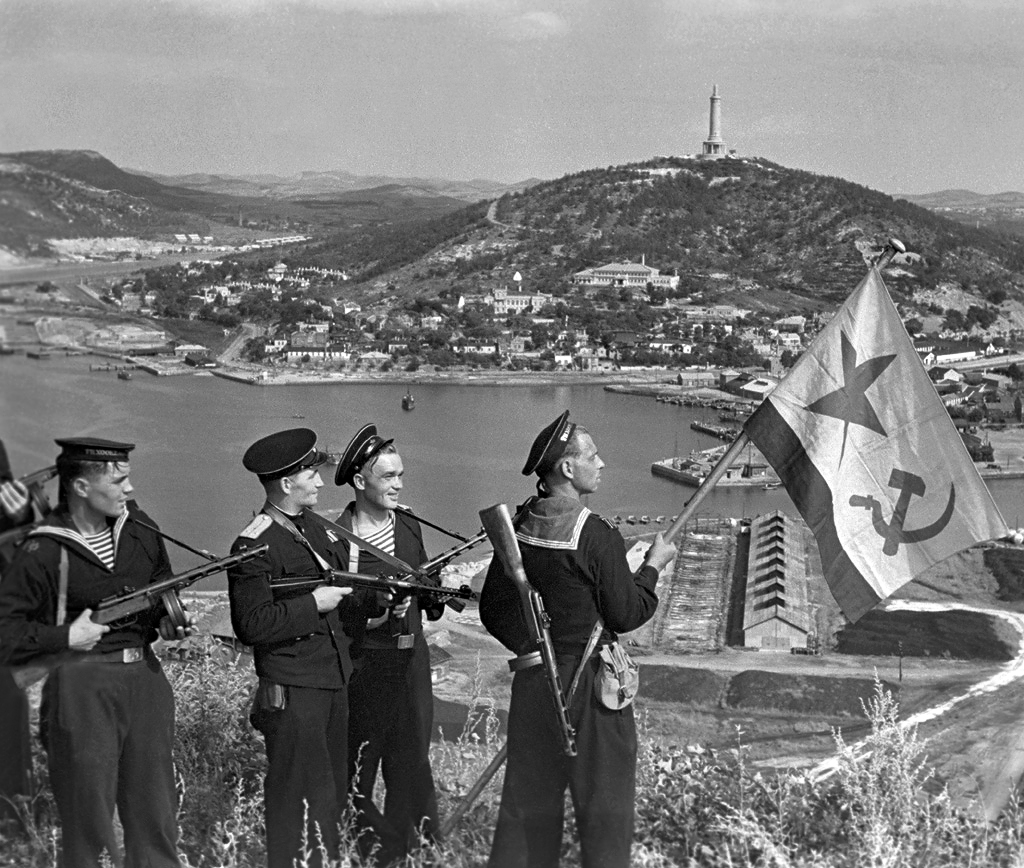
The roots of the Soviet–Japanese War are deeply entwined with the broader Second World War and the long-standing tensions between the two powers. While the main conflict of World War II raged in Europe and the Pacific, the Soviet Union had maintained a policy of neutrality with Japan, largely due to the Molotov–Ribbentrop Pact and later the Great Patriotic War against Nazi Germany. However, at the Yalta Conference in February 1945, Soviet leader Joseph Stalin agreed to enter the war against Japan three months after Germany's surrender, in exchange for territorial concessions in Asia, including southern Sakhalin and the Kuril Islands. Following Germany's defeat, the Soviets began massing troops along the Manchurian border. On August 8, 1945, the Soviet Union declared war on Japan, initiating a massive offensive the following day. This swift action caught the Japanese military, already reeling from the atomic bombings of Hiroshima and Nagasaki, completely off guard.
⚙️ How It Works
The Soviet offensive, codenamed Operation August Storm, was a meticulously planned and executed multi-pronged assault. The primary objective was the rapid destruction of the Japanese Kwantung Army, stationed in Manchuria. Soviet forces, supported by the Mongolian People's Army, launched simultaneous attacks across a broad front. The strategy involved deep armored thrusts to bypass heavily fortified Japanese positions and encircle enemy units, coupled with air superiority to disrupt communications and supply lines. The speed and overwhelming force of the Soviet advance overwhelmed the Kwantung Army, which was ill-prepared for a large-scale conventional assault, leading to its rapid collapse.
📊 Key Facts & Numbers
The Soviet–Japanese War, despite its brevity, involved staggering numbers and decisive territorial gains. The offensive resulted in the Soviet occupation of Karafuto and the Kuril Islands, territories that remain a point of contention to this day. The swiftness of the Soviet victory is often cited as a critical factor in Japan's unconditional surrender.
👥 Key People & Organizations
Several key figures and organizations were central to the Soviet–Japanese War. Joseph Stalin, the supreme commander of the Soviet Union, orchestrated the strategic decision to enter the war, fulfilling his Yalta Conference commitments. The Kwantung Army, the Japanese ground force in Manchuria, bore the brunt of the Soviet assault. The Mongolian People's Republic, under Marshal Khorloogiin Choibalsan, contributed significant forces to the Soviet effort, solidifying its alliance with the USSR. The Imperial Japanese Army and Imperial Japanese Navy were unable to effectively counter the Soviet invasion due to their focus on the Pacific theater and the devastating impact of the atomic bombings of Hiroshima and Nagasaki orchestrated by the United States.
🌍 Cultural Impact & Influence
The Soviet–Japanese War had a profound and lasting impact on East Asian geopolitics and the global narrative of World War II. Its most immediate effect was hastening Japan's surrender, thereby shortening the war and potentially saving countless lives that would have been lost in a prolonged invasion of the Japanese home islands. The war led to the Soviet occupation of Karafuto and the Kuril Islands, territories that remain a point of contention to this day, particularly with Japan over the Northern Territories. The war also cemented the Soviet Union's status as a major Pacific power and significantly influenced the subsequent Chinese Civil War, as Soviet forces facilitated the return of Mao Zedong's communist forces to Manchuria. Culturally, the war is often overshadowed by the larger Pacific campaigns, but it remains a potent symbol of Soviet military might and a critical, albeit often overlooked, chapter in the conclusion of the deadliest conflict in human history.
⚡ Current State & Latest Developments
As of 2024, the Soviet–Japanese War remains a subject of historical study and geopolitical relevance, particularly concerning the ongoing territorial dispute over the Kuril Islands, which Japan refers to as the Northern Territories. While the direct military conflict concluded in September 1945, the diplomatic and political fallout continues. Russia, as the successor state to the Soviet Union, maintains control over the islands, while Japan asserts its sovereignty. This unresolved issue has prevented the signing of a formal peace treaty between the two nations since the end of World War II. Recent geopolitical shifts, including increased tensions between Russia and Western nations, have further complicated any potential resolution, with Russia reinforcing its military presence on the islands. Historical scholarship also continues to analyze the war's impact on the broader Cold War dynamics and the division of East Asia.
🤔 Controversies & Debates
The primary controversy surrounding the Soviet–Japanese War centers on its necessity and its role in Japan's surrender. Some historians argue that Japan was already on the verge of collapse due to the naval blockade and the atomic bombings, and that the Soviet invasion was an opportunistic land grab to secure territorial gains and influence in post-war Asia, rather than a critical factor in ending the war. Conversely, many scholars and military analysts contend that the Soviet entry into the war, coupled with the atomic bombings, presented Japan with an untenable strategic situation, forcing its hand towards unconditional surrender. Another debate revolves around the treatment of Japanese prisoners of war by the Soviets; tens of thousands were captured and subjected to harsh labor conditions in Siberia, with many dying from starvation, disease, or exhaustion, a fact that remains a painful memory for Japan. The territorial claims over the Kuril Islands also remain a deeply contentious issue, with both sides presenting historical and legal arguments.
🔮 Future Outlook & Predictions
The future outlook for the Soviet–Japanese War's legacy is largely tied to the unresolved territorial dispute over the Kuril Islands. As long as this issue persists, the war will remain a sensitive point in Russia-Japan relations. Geopolitical analysts predict that the islands will continue to be a flashpoint, with Russia likely to maintain and potentially increase its military presence, while Japan will continue its diplomatic efforts for their return. In terms of historical understanding, the war is likely to receive continued scholarly attention, with new research potentially shedding light on aspects like Soviet planning, the experiences of POWs, and the war's impact on regional communist movements. The ongoing Cold War legacy in East Asia ensures that the strategic implications of the Soviet victory will continue to be analyzed in the context of current international relations and power dynamics.
💡 Practical Applications
While the Soviet–Japanese War was a military conflict, its 'practical applications' are primarily found in the realms of international relations, territorial law, and historical precedent. The war serves as a case study in rapid, decisive military operations, demonstrating the effectiveness of overwhelming force and strategic surprise, as exemp
Key Facts
- Category
- history
- Type
- topic