
Contents
Overview
Sewing machine operation is the fundamental process by which a sewing machine joins materials, typically fabric, using thread. This mechanical or electromechanical process automates stitches, drastically increasing efficiency over manual sewing. From the earliest treadle-powered contraptions to today's computerized marvels, understanding operation involves mastering tension, stitch selection, fabric handling, and machine maintenance. The invention and subsequent evolution of the sewing machine, beginning in the late 18th century with figures like Thomas Saint and accelerating through the 19th century with innovators such as Isaac Singer and Barthélemy Thimonnier, revolutionized the textile and apparel industries, enabling mass production and profoundly impacting domestic life. Modern operation spans simple straight stitches to complex embroidery patterns, requiring a nuanced understanding of the machine's internal mechanics and the interplay of various components.
🎵 Origins & History
The genesis of sewing machine operation can be traced back to the late 18th century. The early 19th century saw significant advancements, notably Barthélemy Thimonnier's machine that was reportedly used to produce uniforms for the French army, though his workshop was later destroyed by an angry mob fearing job displacement. The crucial lockstitch mechanism, which forms the basis of most modern machines, was developed by Elias Howe and later perfected, whose patent battles with rivals like Isaac Singer would shape the early industry. Isaac Singer's machine, which featured a vibrating shuttle and a needle that moved up and down, became the first commercially successful model, establishing the template for domestic sewing machine operation for decades.
⚙️ How It Works
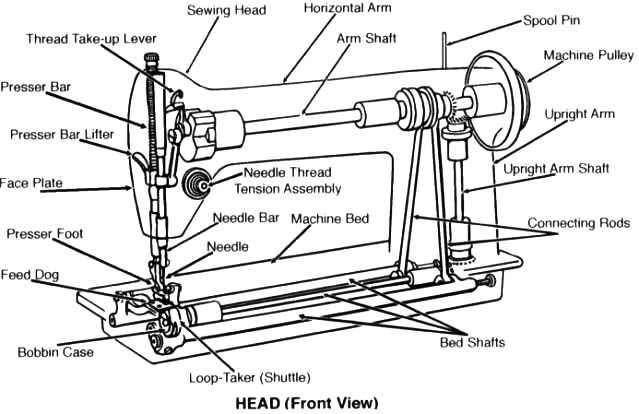
At its core, sewing machine operation relies on the synchronized movement of a needle and a lower thread mechanism to create stitches. The needle, carrying the upper thread, pierces the fabric, and as it retracts, a hook or looper catches the thread loop. This loop is then passed around the lower thread, which is supplied by a bobbin or a cone, forming a lockstitch. Different stitch types are achieved by varying the needle's path and the timing of the hook/looper. Fabric is advanced by a feed dog system, a set of teeth that grip the fabric and move it incrementally with each needle cycle. Tension is controlled by adjustable discs that regulate how tightly the upper thread is pulled, ensuring a balanced stitch that doesn't pucker or break. Modern machines often automate these settings, allowing users to select stitch patterns and lengths via digital interfaces or mechanical dials.
📊 Key Facts & Numbers
Globally, the market for sewing machines is substantial. The global apparel market, heavily reliant on sewing machine operation, is projected to reach $2.1 trillion by 2027. In the United States alone, over 14 million households own at least one sewing machine, with an average of 2.5 machines per household. The cost of a basic mechanical machine typically ranges from $150 to $500, while advanced computerized models can exceed $5,000.
👥 Key People & Organizations
Key figures in the history of sewing machine operation include Barthélemy Thimonnier, whose early chain-stitch machine was a precursor to industrial sewing. Elias Howe is credited with patenting the lockstitch mechanism, a fundamental element of modern machines, though his patent was famously litigated. Isaac Singer's company, Singer Corporation, became the dominant force in the late 19th century, popularizing the sewing machine through aggressive marketing and accessible payment plans. Other significant manufacturers like Brother Industries, Janome, and Juki Corporation have continued to innovate, introducing computerized features and specialized machines. Organizations like the Sewing and Craft Association promote sewing education and industry standards.
🌍 Cultural Impact & Influence
The advent of reliable sewing machine operation fundamentally reshaped the garment industry, enabling mass production and the rise of ready-to-wear clothing. This shift democratized fashion, making it accessible to a broader population beyond the wealthy elite who could afford custom tailoring. For domestic users, sewing machines transformed home economics, allowing individuals to create and repair clothing more efficiently, fostering a culture of DIY and craft. The cultural resonance is evident in countless novels, films, and historical accounts depicting the sewing machine as a symbol of domesticity, independence, and economic empowerment for women throughout the 20th century. The ability to operate a sewing machine became a valuable life skill, passed down through generations, influencing fashion trends and personal style.
⚡ Current State & Latest Developments
Current sewing machine operation is increasingly defined by digital integration and automation. Computerized machines offer vast libraries of built-in stitches, programmable embroidery designs, and automated thread cutting. Many new models connect to Wi-Fi, allowing users to download patterns from online platforms like Etsy or access cloud-based design software. Robotic sewing systems are also emerging in industrial settings, aiming to further automate complex garment assembly tasks, though widespread adoption faces challenges in handling delicate fabrics and intricate maneuvers. The trend towards 'smart' sewing machines continues, with manufacturers like Brother Industries and Janome pushing the boundaries of user interface and connectivity.
🤔 Controversies & Debates
A persistent debate surrounding sewing machine operation centers on the automation of labor. Early sewing machines were feared to displace manual sewers, though they ultimately created new jobs in manufacturing, sales, and repair, while also enabling new forms of entrepreneurship. Today, the rise of industrial robotics in sewing operations raises concerns about job losses in manufacturing hubs, particularly in developing nations. Another controversy involves the environmental impact of fast fashion, which is facilitated by efficient sewing machine operation; critics argue that the ease of production encourages overconsumption and textile waste. Furthermore, the complexity of modern machines and the decline of traditional sewing education in some regions lead to discussions about accessibility and skill preservation.
🔮 Future Outlook & Predictions
The future of sewing machine operation points towards greater AI integration and personalized manufacturing. Expect machines capable of recognizing fabric types and automatically adjusting settings, or even guiding users through complex projects with augmented reality overlays. The development of 3D printing and advanced material science may also lead to entirely new methods of garment construction that complement or even replace traditional sewing. In the industrial sphere, fully automated sewing lines for complex garments, like tailored suits or intricate lingerie, are a long-term goal, potentially driven by advancements in robotics and computer vision. The concept of 'mass customization' will likely become more prevalent, with sewing machines playing a key role in on-demand, localized production.
💡 Practical Applications
The practical applications of sewing machine operation are vast and varied. Domestically, it's used for creating clothing, home décor like curtains and upholstery, quilting, and mending garments. In the fashion industry, industrial sewing machines are indispensable for mass-producing apparel, from simple t-shirts to complex haute couture. They are also crucial in upholstery for furniture, automotive interiors for car seats and airbags, and in the manufacturing of technical textiles for sails, tents, and medical devices. Specialized machines are designed for specific tasks, such as sergers for finishing seams, embroidery machines for decorative stitching, and heavy-duty machines for leather or canvas.
Key Facts
- Category
- technology
- Type
- topic