
Contents
- 🔍 Introduction to Real-Time Machine Learning
- 📊 Key Concepts and Techniques
- 🚀 Applications of Real-Time Machine Learning
- 🤖 Real-Time Machine Learning in Robotics
- 📈 Real-Time Machine Learning in Finance
- 🚫 Challenges and Limitations
- 📊 Real-Time Machine Learning with Streaming Data
- 🔒 Security and Privacy Concerns
- 📈 Future of Real-Time Machine Learning
- 📊 Real-Time Machine Learning Tools and Frameworks
- 👥 Real-Time Machine Learning Community and Research
- Frequently Asked Questions
- Related Topics
Overview
Real-time machine learning is a subset of machine learning that involves training models on streaming data and making predictions in real-time. This approach has gained significant traction in recent years, with applications in areas such as fraud detection, recommender systems, and natural language processing. According to a report by Gartner, the market for real-time analytics is expected to grow to $10.3 billion by 2025, with a compound annual growth rate (CAGR) of 21.1%. Key players in this space include Google, Amazon, and Microsoft, who are investing heavily in developing real-time machine learning capabilities. For instance, Google's TensorFlow framework has been used to develop real-time machine learning models for applications such as self-driving cars and smart home devices. However, real-time machine learning also raises concerns around data privacy and security, with 75% of organizations citing these as major challenges, according to a survey by McKinsey. As the field continues to evolve, we can expect to see significant advancements in areas such as edge AI and explainable AI, with potential applications in areas such as healthcare and finance.
🔍 Introduction to Real-Time Machine Learning
Real-Time Machine Learning is a subfield of Artificial Intelligence that deals with the development of Machine Learning models that can process and learn from data in real-time. This allows for immediate decision-making and action, making it a crucial aspect of many applications, including Natural Language Processing and Computer Vision. The concept of Real-Time Machine Learning has been around for decades, but recent advancements in Deep Learning and Big Data have made it more feasible. Researchers like Yann LeCun have been instrumental in shaping the field. As the amount of data being generated continues to grow, the need for Real-Time Machine Learning will only continue to increase, with applications in Healthcare and Autonomous Vehicles.
📊 Key Concepts and Techniques
One of the key concepts in Real-Time Machine Learning is the ability to handle Streaming Data, which refers to the continuous flow of data from various sources. This requires the use of specialized Algorithms and Data Structures that can process data in real-time. Techniques like Online Learning and Incremental Learning are also crucial in Real-Time Machine Learning, as they allow models to learn from data as it arrives. The use of GPUs and TPUs has also become increasingly important, as they provide the necessary computational power to handle large amounts of data in real-time. For more information on these topics, see Machine Learning Algorithms and Deep Learning Architectures.
🚀 Applications of Real-Time Machine Learning
Real-Time Machine Learning has a wide range of applications, including Predictive Maintenance, Recommendation Systems, and Anomaly Detection. In the field of Robotics, Real-Time Machine Learning is used to enable robots to learn from their environment and make decisions in real-time. For example, a robot can use Real-Time Machine Learning to learn how to navigate through a new environment or to recognize and respond to different objects. Companies like Google and Amazon are already using Real-Time Machine Learning in their Robotics and Autonomous Vehicles applications. See Robotics Applications for more information.
🤖 Real-Time Machine Learning in Robotics
In the field of Finance, Real-Time Machine Learning is used to analyze market data and make predictions about future market trends. This can be used to inform investment decisions and to identify potential risks. For example, a financial institution can use Real-Time Machine Learning to analyze real-time market data and predict the likelihood of a stock price increasing or decreasing. Researchers like Andrew Ng have been working on applying Real-Time Machine Learning to Finance and Economics. The use of Real-Time Data is crucial in this field, as it allows for immediate decision-making and action. See Financial Machine Learning for more information.
📈 Real-Time Machine Learning in Finance
Despite the many benefits of Real-Time Machine Learning, there are also several challenges and limitations to consider. One of the main challenges is the need for large amounts of high-quality data, which can be difficult to obtain. Additionally, Real-Time Machine Learning models can be complex and require significant computational resources, which can be a limitation for some applications. The use of Edge AI and Federated Learning can help to mitigate these challenges, by allowing models to be trained and deployed on devices with limited computational resources. For more information on these topics, see Edge AI and Federated Learning.
🚫 Challenges and Limitations
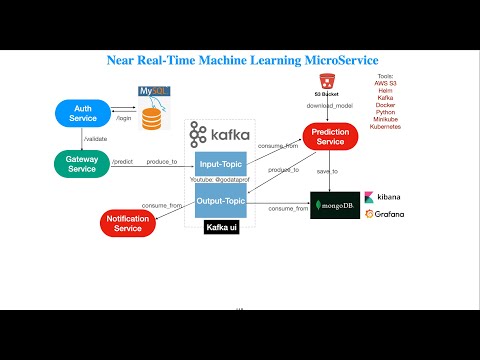
Real-Time Machine Learning with Streaming Data is a key area of research, as it allows for the analysis of large amounts of data in real-time. This can be used in a variety of applications, including IoT devices and Social Media platforms. The use of Apache Kafka and Apache Spark has become increasingly popular in this field, as they provide the necessary tools for handling and processing large amounts of streaming data. For more information on these topics, see Streaming Data and Big Data Processing.
📊 Real-Time Machine Learning with Streaming Data
Security and privacy are also important considerations in Real-Time Machine Learning, as sensitive data may be involved. The use of Encryption and Access Control can help to protect data and prevent unauthorized access. Researchers like Fei-Fei Li have been working on developing more secure and private Real-Time Machine Learning models. The use of Homomorphic Encryption and Differential Privacy can also help to protect data and prevent unauthorized access. See Machine Learning Security for more information.
🔒 Security and Privacy Concerns
The future of Real-Time Machine Learning is exciting, with many potential applications and advancements on the horizon. One area of research is the development of more efficient and scalable Real-Time Machine Learning models, which can handle large amounts of data and make decisions in real-time. The use of Quantum Computing and Neuromorphic Computing may also become increasingly important in this field, as they provide the necessary computational power to handle complex models and large amounts of data. For more information on these topics, see Quantum Machine Learning and Neuromorphic Computing.
📈 Future of Real-Time Machine Learning
There are many tools and frameworks available for Real-Time Machine Learning, including TensorFlow and PyTorch. These frameworks provide the necessary tools and libraries for building and deploying Real-Time Machine Learning models, and can be used in a variety of applications. The use of Jupyter Notebooks and Google Colab has also become increasingly popular, as they provide a convenient and interactive way to develop and test Real-Time Machine Learning models. For more information on these topics, see Machine Learning Frameworks and Deep Learning Tools.
📊 Real-Time Machine Learning Tools and Frameworks
The Real-Time Machine Learning community is active and growing, with many researchers and practitioners working on developing new models and applications. The use of Kaggle and GitHub has become increasingly popular, as they provide a platform for sharing and collaborating on Real-Time Machine Learning projects. Researchers like Geoffrey Hinton and Demis Hassabis are leading figures in the field, and have made significant contributions to the development of Real-Time Machine Learning. For more information on these topics, see Machine Learning Community and AI Research.
Key Facts
- Year
- 2022
- Origin
- Stanford University, where the concept of real-time machine learning was first introduced in a research paper by Fei-Fei Li and colleagues in 2015
- Category
- Artificial Intelligence
- Type
- Technology
Frequently Asked Questions
What is Real-Time Machine Learning?
Real-Time Machine Learning is a subfield of Artificial Intelligence that deals with the development of Machine Learning models that can process and learn from data in real-time. This allows for immediate decision-making and action, making it a crucial aspect of many applications. For more information, see Real-Time Machine Learning.
What are the key concepts in Real-Time Machine Learning?
The key concepts in Real-Time Machine Learning include the ability to handle Streaming Data, the use of Online Learning and Incremental Learning, and the use of specialized Algorithms and Data Structures. For more information, see Machine Learning Algorithms and Deep Learning Architectures.
What are the applications of Real-Time Machine Learning?
Real-Time Machine Learning has a wide range of applications, including Predictive Maintenance, Recommendation Systems, and Anomaly Detection. It is also used in Robotics, Finance, and Healthcare. For more information, see Robotics Applications and Financial Machine Learning.
What are the challenges and limitations of Real-Time Machine Learning?
The challenges and limitations of Real-Time Machine Learning include the need for large amounts of high-quality data, the complexity of models, and the requirement for significant computational resources. The use of Edge AI and Federated Learning can help to mitigate these challenges. For more information, see Edge AI and Federated Learning.
What is the future of Real-Time Machine Learning?
The future of Real-Time Machine Learning is exciting, with many potential applications and advancements on the horizon. One area of research is the development of more efficient and scalable Real-Time Machine Learning models, which can handle large amounts of data and make decisions in real-time. For more information, see Quantum Machine Learning and Neuromorphic Computing.
What tools and frameworks are available for Real-Time Machine Learning?
There are many tools and frameworks available for Real-Time Machine Learning, including TensorFlow and PyTorch. These frameworks provide the necessary tools and libraries for building and deploying Real-Time Machine Learning models. For more information, see Machine Learning Frameworks and Deep Learning Tools.
What is the Real-Time Machine Learning community like?
The Real-Time Machine Learning community is active and growing, with many researchers and practitioners working on developing new models and applications. The use of Kaggle and GitHub has become increasingly popular, as they provide a platform for sharing and collaborating on Real-Time Machine Learning projects. For more information, see Machine Learning Community and AI Research.