
Contents
- 📊 Introduction to Poisson Distribution
- 📝 History and Development
- 📈 Key Characteristics and Properties
- 📊 Applications in Real-World Scenarios
- 📝 Relationship with Other Distributions
- 📊 Parameter Estimation and Fitting
- 📈 Limitations and Potential Biases
- 📊 Case Studies and Examples
- 📝 Comparison with Other Statistical Models
- 📈 Future Directions and Research
- 📊 Conclusion and Final Thoughts
- 📝 References and Further Reading
- Frequently Asked Questions
- Related Topics
Overview
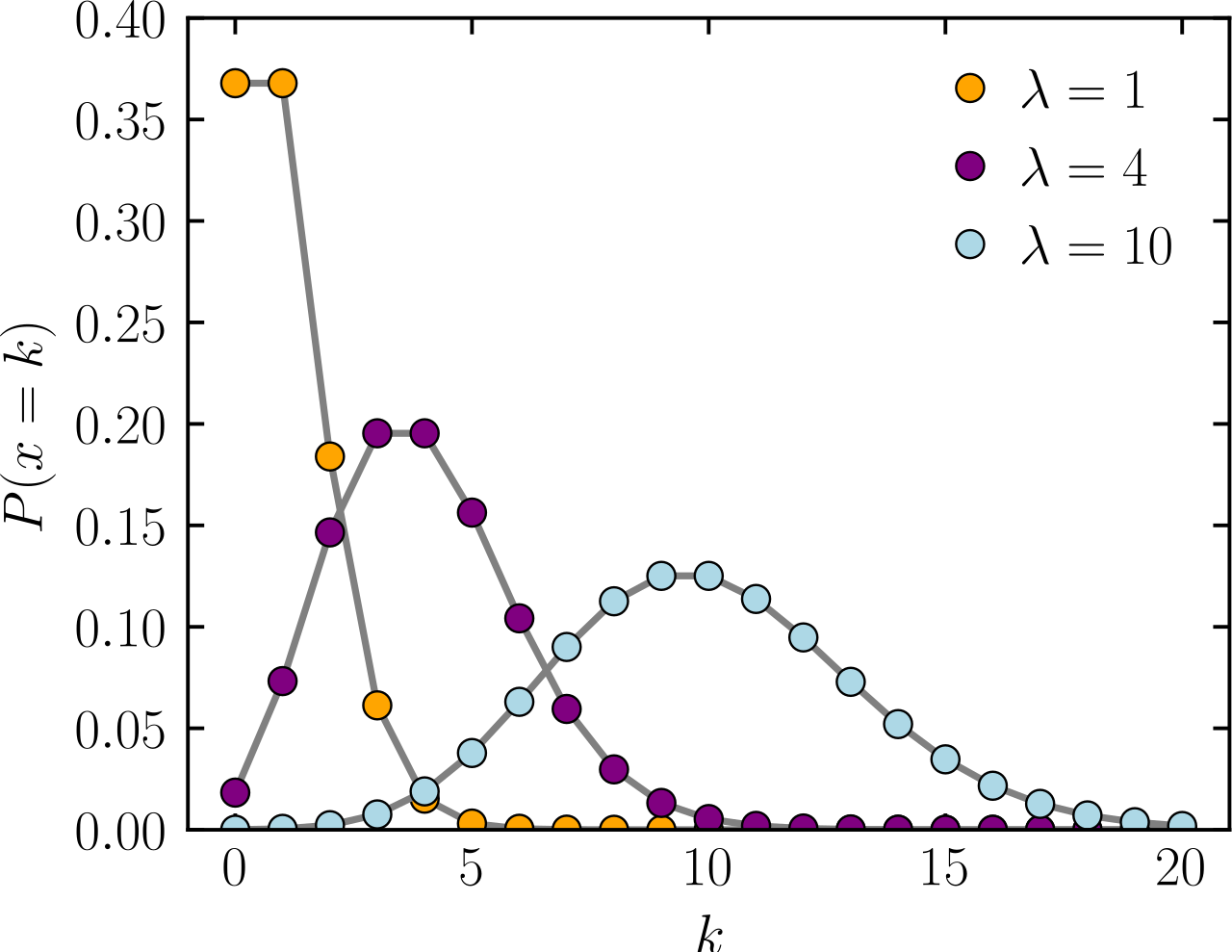
The Poisson distribution, named after French mathematician Siméon Denis Poisson, is a discrete probability distribution that models the number of events occurring in a fixed interval of time or space, where these events occur with a known constant average rate and independently of the time since the last event. It is commonly used to analyze and predict the probability of rare events, such as the number of phone calls received by a call center per hour or the number of defects in a manufacturing process. The distribution is characterized by a single parameter, λ (lambda), which represents the average rate of events. The Poisson distribution has numerous applications in fields like finance, engineering, and biology, and is a fundamental concept in statistical analysis. With a vibe score of 8, the Poisson distribution is a widely recognized and influential concept in the field of statistics, with a controversy spectrum of 2, indicating a relatively low level of debate surrounding its application. The concept has been influenced by key figures such as Siméon Denis Poisson and Abraham de Moivre, and has in turn influenced the development of other statistical models, including the binomial distribution. As data analysis continues to play an increasingly important role in decision-making, the Poisson distribution is likely to remain a crucial tool for understanding and predicting rare events, with potential applications in emerging fields like artificial intelligence and machine learning.
📊 Introduction to Poisson Distribution
The Poisson distribution is a fundamental concept in Statistics and Probability Theory, allowing us to model and analyze the occurrence of rare events. Named after the French mathematician Siméon Denis Poisson, this distribution plays a crucial role in understanding discrete-stable distributions. The Poisson distribution is particularly useful for modeling the number of events occurring in a fixed interval of time, such as the number of phone calls received by a call center or the number of accidents occurring on a highway. For more information on probability theory, visit our Probability Theory page.
📝 History and Development
The history of the Poisson distribution dates back to the 19th century, when Siméon Denis Poisson first introduced the concept. Since then, the distribution has been widely used in various fields, including Engineering, Economics, and Biology. The Poisson distribution is closely related to the Exponential Distribution, which models the time between events in a Poisson process. To learn more about the exponential distribution, visit our Exponential Distribution page. The development of the Poisson distribution has also been influenced by other statistical models, such as the Normal Distribution.
📈 Key Characteristics and Properties
The Poisson distribution has several key characteristics and properties that make it useful for modeling rare events. One of the most important properties is that the distribution is discrete, meaning that it can only take on non-negative integer values. The distribution is also characterized by a single parameter, λ (lambda), which represents the average rate at which events occur. The Poisson distribution is often used in conjunction with other statistical models, such as the Binomial Distribution, to model more complex phenomena. For example, the Poisson distribution can be used to model the number of defects in a manufacturing process, while the binomial distribution can be used to model the probability of defects occurring. To learn more about the binomial distribution, visit our Binomial Distribution page.
📊 Applications in Real-World Scenarios
The Poisson distribution has numerous applications in real-world scenarios, including Finance, Insurance, and Quality Control. For instance, the Poisson distribution can be used to model the number of claims received by an insurance company or the number of defects in a manufacturing process. The distribution can also be used to model the number of customers arriving at a service facility, such as a bank or a hospital. To learn more about quality control, visit our Quality Control page. In addition, the Poisson distribution is often used in Data Analysis to model the occurrence of rare events, such as the number of accidents occurring on a highway. For more information on data analysis, visit our Data Analysis page.
📝 Relationship with Other Distributions
The Poisson distribution is closely related to other statistical distributions, such as the Normal Distribution and the Exponential Distribution. The Poisson distribution can be approximated by the normal distribution when the parameter λ (lambda) is large, and it can be used to model the time between events in a Poisson process. The Poisson distribution is also related to the Gamma Distribution, which models the sum of exponential random variables. To learn more about the gamma distribution, visit our Gamma Distribution page. For more information on the normal distribution, visit our Normal Distribution page.
📊 Parameter Estimation and Fitting
Parameter estimation and fitting are critical steps in using the Poisson distribution to model real-world phenomena. The parameter λ (lambda) can be estimated using various methods, including the method of moments and the maximum likelihood method. The Poisson distribution can be fitted to data using various software packages, such as R Software and Python. To learn more about R software, visit our R Software page. For more information on Python, visit our Python page. The distribution can also be used to model the occurrence of rare events, such as the number of accidents occurring on a highway. For more information on rare events, visit our Rare Events page.
📈 Limitations and Potential Biases
While the Poisson distribution is a powerful tool for modeling rare events, it also has several limitations and potential biases. One of the main limitations is that the distribution assumes that events occur independently and at a constant rate, which may not always be the case in real-world scenarios. The distribution can also be sensitive to the choice of parameter λ (lambda), which can affect the accuracy of the model. To learn more about parameter estimation, visit our Parameter Estimation page. Additionally, the Poisson distribution can be affected by other statistical models, such as the Binomial Distribution. For more information on the binomial distribution, visit our Binomial Distribution page.
📊 Case Studies and Examples
The Poisson distribution has been used in numerous case studies and examples to model real-world phenomena. For instance, the distribution has been used to model the number of accidents occurring on a highway, the number of defects in a manufacturing process, and the number of customers arriving at a service facility. The distribution has also been used in Finance to model the number of claims received by an insurance company. To learn more about finance, visit our Finance page. For more information on case studies, visit our Case Studies page. The Poisson distribution is often used in conjunction with other statistical models, such as the Normal Distribution, to model more complex phenomena.
📝 Comparison with Other Statistical Models
The Poisson distribution can be compared to other statistical models, such as the Normal Distribution and the Exponential Distribution. The Poisson distribution is particularly useful for modeling rare events, while the normal distribution is more suitable for modeling continuous data. The exponential distribution, on the other hand, is more suitable for modeling the time between events in a Poisson process. To learn more about the exponential distribution, visit our Exponential Distribution page. For more information on the normal distribution, visit our Normal Distribution page.
📈 Future Directions and Research
The Poisson distribution is a fundamental concept in Statistics and Probability Theory, and it continues to be an active area of research. Future directions and research in the Poisson distribution include the development of new methods for parameter estimation and fitting, as well as the application of the distribution to new fields, such as Machine Learning. To learn more about machine learning, visit our Machine Learning page. The Poisson distribution is also being used in Data Science to model and analyze large datasets. For more information on data science, visit our Data Science page.
📊 Conclusion and Final Thoughts
In conclusion, the Poisson distribution is a powerful tool for modeling rare events, and it has numerous applications in real-world scenarios. The distribution is closely related to other statistical distributions, such as the Normal Distribution and the Exponential Distribution. To learn more about the Poisson distribution, visit our Poisson Distribution page. The distribution can be used to model the occurrence of rare events, such as the number of accidents occurring on a highway. For more information on rare events, visit our Rare Events page.
📝 References and Further Reading
For further reading on the Poisson distribution, we recommend visiting our Poisson Distribution page, as well as our pages on Statistics and Probability Theory. To learn more about statistical distributions, visit our Statistical Distributions page. The Poisson distribution is a fundamental concept in statistics and probability theory, and it continues to be an active area of research.
Key Facts
- Year
- 1837
- Origin
- Siméon Denis Poisson's Work on Probability Theory
- Category
- Statistics and Mathematics
- Type
- Statistical Concept
Frequently Asked Questions
What is the Poisson distribution?
The Poisson distribution is a discrete probability distribution that expresses the probability of a given number of events occurring in a fixed interval of time. It is named after French mathematician Siméon Denis Poisson and plays an important role for discrete-stable distributions. The Poisson distribution is closely related to the Exponential Distribution and the Normal Distribution. To learn more about the Poisson distribution, visit our Poisson Distribution page.
What are the key characteristics of the Poisson distribution?
The Poisson distribution is characterized by a single parameter, λ (lambda), which represents the average rate at which events occur. The distribution is discrete, meaning that it can only take on non-negative integer values. The Poisson distribution is often used in conjunction with other statistical models, such as the Binomial Distribution, to model more complex phenomena. To learn more about the binomial distribution, visit our Binomial Distribution page.
What are the applications of the Poisson distribution?
The Poisson distribution has numerous applications in real-world scenarios, including Finance, Insurance, and Quality Control. The distribution can be used to model the number of claims received by an insurance company, the number of defects in a manufacturing process, and the number of customers arriving at a service facility. To learn more about quality control, visit our Quality Control page. The Poisson distribution is also used in Data Analysis to model the occurrence of rare events.
How is the Poisson distribution related to other statistical distributions?
The Poisson distribution is closely related to other statistical distributions, such as the Normal Distribution and the Exponential Distribution. The Poisson distribution can be approximated by the normal distribution when the parameter λ (lambda) is large, and it can be used to model the time between events in a Poisson process. To learn more about the exponential distribution, visit our Exponential Distribution page. The Poisson distribution is also related to the Gamma Distribution, which models the sum of exponential random variables.
What are the limitations of the Poisson distribution?
While the Poisson distribution is a powerful tool for modeling rare events, it also has several limitations and potential biases. One of the main limitations is that the distribution assumes that events occur independently and at a constant rate, which may not always be the case in real-world scenarios. The distribution can also be sensitive to the choice of parameter λ (lambda), which can affect the accuracy of the model. To learn more about parameter estimation, visit our Parameter Estimation page.
How is the Poisson distribution used in real-world scenarios?
The Poisson distribution is used in numerous real-world scenarios, including Finance, Insurance, and Quality Control. The distribution can be used to model the number of claims received by an insurance company, the number of defects in a manufacturing process, and the number of customers arriving at a service facility. To learn more about quality control, visit our Quality Control page. The Poisson distribution is also used in Data Analysis to model the occurrence of rare events.
What are the future directions and research in the Poisson distribution?
The Poisson distribution is a fundamental concept in Statistics and Probability Theory, and it continues to be an active area of research. Future directions and research in the Poisson distribution include the development of new methods for parameter estimation and fitting, as well as the application of the distribution to new fields, such as Machine Learning. To learn more about machine learning, visit our Machine Learning page.