
Contents
Overview
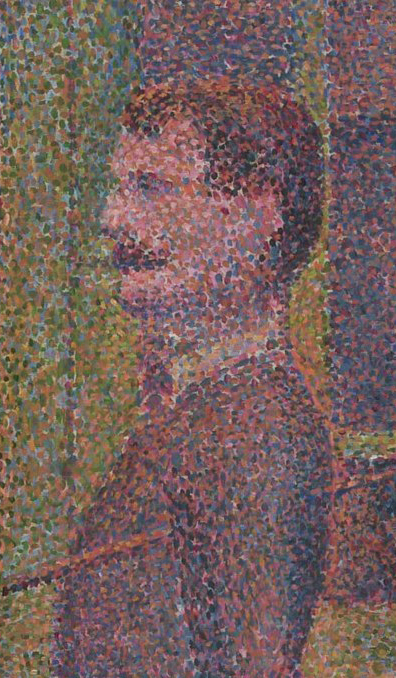
Pointillism emerged as a departure from the spontaneous brushwork of Impressionism. Georges Seurat, inspired by scientific theories of color and optics, most notably Michel Eugène Chevreul's 'The Principles of Harmony and Contrast of Colours', began applying this method. Paul Signac quickly adopted and championed the technique. The term 'Pointillism' itself was coined by art critic Félix Fénéon in the late 1880s, initially with a dismissive, even mocking, tone, highlighting the perceived mechanical nature of the dots. Despite its critical reception, the technique formed the bedrock of Neo-impressionism, a movement that sought a more structured and scientific approach to painting.
⚙️ How It Works
The core mechanic of Pointillism lies in the principle of optical mixing. Instead of blending colors directly on the canvas or palette, artists apply small, distinct dots of pure, unmixed color. These dots are meticulously placed in patterns, with adjacent dots of complementary or analogous colors intended to blend in the viewer's eye from a distance. For instance, a patch of green might be rendered not by mixing blue and yellow paint, but by placing dots of blue and yellow side-by-side. This technique leverages the physiological response of the retina to create a luminosity and vibrancy that traditional mixing often dulled. The size and density of the dots, as well as their color relationships, are crucial to achieving the desired effect, demanding immense precision and theoretical understanding from the artist.
📊 Key Facts & Numbers
While Seurat produced only a handful of major Pointillist works in his short career, his influence was profound. Signac, a prolific painter and writer, created many works throughout his lifetime. The technique's demand for meticulous application meant that large-scale works could take years to complete. The market for Neo-impressionist works, though niche, remains strong, with major pieces commanding millions at auction.
👥 Key People & Organizations
The architects of Pointillism were Georges Seurat and Paul Signac. Seurat, a visionary artist, developed the theoretical underpinnings and executed seminal works. Signac, a more prolific painter and tireless advocate, ensured the movement's survival and dissemination through his writings and exhibitions, particularly after Seurat's death. Other key figures who adopted or were influenced by the technique include Camille Pissarro, who experimented with it for a period, and Vincent van Gogh, whose vibrant, dashed brushwork in works like 'Starry Night Over the Rhône' shows a clear engagement with Pointillist principles, even if not strictly adhering to its dot-based application. The Musée d'Orsay in Paris houses a significant collection of Neo-impressionist works, including many by Seurat and Signac.
🌍 Cultural Impact & Influence
Pointillism's impact extends far beyond its initial adherents. It challenged traditional notions of artistic creation, introducing a scientific methodology into a field often perceived as purely intuitive. The technique's emphasis on optical mixing influenced subsequent generations of artists, including Henri Matisse and the Fauvism movement, who explored color theory with renewed vigor. The very idea of constructing an image from discrete units also foreshadowed later developments in digital art and pixel-based imagery, creating an unexpected link between 19th-century painting and 21st-century technology. The movement's intellectual rigor and visual distinctiveness cemented its place in art history, inspiring countless artists to reconsider the relationship between color, perception, and form.
⚡ Current State & Latest Developments
While Pointillism as a dominant movement waned by the early 20th century, its principles continue to resonate. Contemporary artists occasionally revisit the technique, often with a postmodern or ironic twist, integrating dots into digital art, graphic design, and even sculpture. The rise of digital art and computer graphics, where images are inherently composed of pixels (discrete units of color), provides a modern parallel to Pointillist theory. Furthermore, the ongoing exploration of color theory and visual perception in fields like neuroscience and psychology keeps the underlying scientific questions that fueled Pointillism alive. Exhibitions dedicated to Neo-impressionism continue to draw crowds, indicating a sustained interest in its unique aesthetic and intellectual contributions.
🤔 Controversies & Debates
The primary controversy surrounding Pointillism, particularly in its nascent stages, was its perceived lack of spontaneity and emotional depth. Critics, accustomed to the gestural freedom of Impressionism, often derided the technique as overly mechanical, sterile, and academic. Some also questioned the scientific validity of applying optical mixing theories so rigidly, arguing that the actual physiological response of the eye was far more complex and variable than the Neo-impressionists assumed. Furthermore, the sheer laboriousness of the technique led to debates about artistic process and the definition of 'finished' work. While the pejorative 'Pointillism' has been shed, discussions persist about whether the scientific underpinnings overshadowed the artistic expression.
🔮 Future Outlook & Predictions
The future of Pointillism likely lies not in a revival of its strict dot-based application, but in the continued exploration of its core principles. As digital technologies advance, the concept of constructing images from discrete units will only become more sophisticated, potentially leading to new forms of 'digital pointillism'. The scientific inquiry into color perception and visual processing, spurred by artists like Seurat and Signac, continues to evolve, offering new insights that could inspire future artistic interpretations. One could envision AI-generated art that meticulously applies color theory at a sub-pixel level, or interactive installations that respond to viewer perception in ways that echo Pointillist optical effects. The legacy of Pointillism is thus poised to influence how we create and perceive images in increasingly complex, technologically mediated environments.
💡 Practical Applications
Beyond the gallery wall, Pointillist principles find echoes in various practical applications. The fundamental concept of optical mixing is foundational to how screens on smartphones, televisions, and computer monitors display images; pixels of primary colors are juxtaposed to create the full spectrum of colors perceived by the eye. In graphic design and printing, the arrangement of dots (halftones) to create continuous-tone images is a direct descendant of Pointillist ideas. Even in fields like textile design, the careful placement of colored threads can create optical color blending. While not always consciously applied, the idea of building complex visual information from simple, discrete units is a pervasive concept in visual communication and technology.
Key Facts
- Category
- aesthetics
- Type
- concept