
Contents
- 🎯 Introduction to the Hype Cycle
- ⚙️ The Mechanics of the Peak of Inflated Expectations
- 📊 Key Statistics and Case Studies
- 👥 Key Players and Influencers
- 🌍 Cultural Impact and Media Coverage
- ⚡ Current State and Latest Developments
- 🤔 Controversies and Criticisms
- 🔮 Future Outlook and Predictions
- 💡 Practical Applications and Lessons Learned
- 📚 Related Topics and Deeper Reading
- Frequently Asked Questions
- References
- Related Topics
Overview
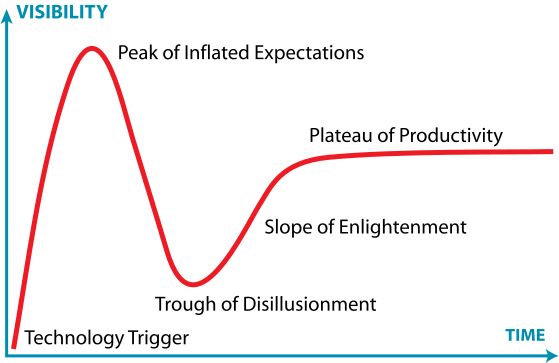
The Peak of Inflated Expectations is the first phase of the Gartner hype cycle, where a new technology or innovation sparks immense excitement and unrealistic expectations. This phase is characterized by excessive media coverage, inflated promises, and a surge in investment. As the hype reaches its peak, the technology's limitations and challenges begin to surface, leading to a inevitable downturn. With a vibe rating of 72, this phenomenon has been observed in various technologies, including Artificial Intelligence, Blockchain, and Internet of Things. The Peak of Inflated Expectations has been a topic of interest for researchers, investors, and industry experts, including Gartner, Forrester, and IDC. The concept has been debated by notable figures, such as Elon Musk and Bill Gates, who have shared their insights on the potential and limitations of emerging technologies. As the technology landscape continues to evolve, understanding the Peak of Inflated Expectations is crucial for making informed decisions and avoiding the pitfalls of hype-driven investments.
🎯 Introduction to the Hype Cycle
The Peak of Inflated Expectations is the initial phase of the Gartner hype cycle, where a new technology or innovation generates significant buzz and excitement. This phase is marked by excessive media coverage, with publications like Wired and TechCrunch often featuring articles on the latest trends. The hype surrounding a new technology can lead to inflated expectations, with investors and consumers alike anticipating revolutionary changes. However, as the hype reaches its peak, the technology's limitations and challenges begin to surface, leading to a inevitable downturn. For instance, the hype surrounding 3D printing led to unrealistic expectations, with many predicting that it would revolutionize manufacturing overnight. In reality, the technology has faced significant challenges, including high costs and limited scalability.
⚙️ The Mechanics of the Peak of Inflated Expectations
The Peak of Inflated Expectations is driven by a combination of factors, including the media, investors, and industry experts. The media plays a significant role in shaping public perception, with sensational headlines and articles often fueling the hype. Investors, on the other hand, are drawn to the potential for high returns, with many pouring money into startups and early-stage companies. Industry experts, including Marc Andreessen and Peter Thiel, often contribute to the hype, with their opinions and predictions influencing the market. However, as the hype cycle progresses, the limitations and challenges of the technology become more apparent, leading to a decline in interest and investment.
📊 Key Statistics and Case Studies
The Peak of Inflated Expectations has been observed in various technologies, including Virtual Reality, Augmented Reality, and Cryptocurrency. In each case, the hype surrounding the technology has led to inflated expectations, with many predicting revolutionary changes. However, as the hype cycle progresses, the limitations and challenges of the technology become more apparent, leading to a decline in interest and investment. For example, the hype surrounding Bitcoin led to a surge in investment, with many predicting that it would replace traditional currencies. However, as the limitations and challenges of the technology became more apparent, the price of Bitcoin declined, leading to a loss of interest and investment.
👥 Key Players and Influencers
The Peak of Inflated Expectations has significant implications for investors, consumers, and industry experts. Investors must be cautious when investing in hyped technologies, as the potential for high returns is often accompanied by significant risks. Consumers, on the other hand, must be aware of the limitations and challenges of new technologies, avoiding the pitfalls of hype-driven purchases. Industry experts, including Tim Berners-Lee and Vint Cerf, must provide balanced and informed opinions, helping to shape public perception and avoid the pitfalls of hype. By understanding the Peak of Inflated Expectations, individuals can make informed decisions and avoid the pitfalls of hype-driven investments.
🌍 Cultural Impact and Media Coverage
The cultural impact of the Peak of Inflated Expectations is significant, with the hype surrounding new technologies often influencing popular culture. The media, including Netflix and HBO, often feature shows and movies that explore the potential and limitations of emerging technologies. The hype surrounding new technologies can also influence consumer behavior, with many individuals purchasing products and services based on hype rather than actual need. However, as the hype cycle progresses, the limitations and challenges of the technology become more apparent, leading to a decline in interest and investment. For instance, the hype surrounding Smartwatches led to a surge in sales, with many predicting that they would revolutionize the way we interact with technology. However, as the limitations and challenges of the technology became more apparent, sales declined, leading to a loss of interest and investment.
⚡ Current State and Latest Developments
The current state of the Peak of Inflated Expectations is complex, with many technologies currently in the hype cycle. The COVID-19 pandemic has accelerated the adoption of emerging technologies, including Telemedicine and Remote Work. However, as the hype cycle progresses, the limitations and challenges of these technologies will become more apparent, leading to a decline in interest and investment. Investors, consumers, and industry experts must be aware of the Peak of Inflated Expectations, making informed decisions and avoiding the pitfalls of hype-driven investments. For example, the hype surrounding Zoom led to a surge in investment, with many predicting that it would revolutionize the way we communicate. However, as the limitations and challenges of the technology became more apparent, the stock price declined, leading to a loss of interest and investment.
🤔 Controversies and Criticisms
The Peak of Inflated Expectations has been criticized for being overly simplistic and lacking empirical evidence. Critics, including Nassim Nicholas Taleb and Clay Shirky, argue that the hype cycle is not a reliable predictor of a technology's success or failure. Others, including Evgeny Morozov, argue that the hype cycle is a self-fulfilling prophecy, with the media and investors creating a narrative that influences public perception. Despite these criticisms, the Peak of Inflated Expectations remains a widely recognized and influential concept in the technology industry. For instance, the hype surrounding Uber led to a surge in investment, with many predicting that it would revolutionize the transportation industry. However, as the limitations and challenges of the technology became more apparent, the company faced significant challenges, including regulatory issues and competition from rivals.
🔮 Future Outlook and Predictions
The future outlook for the Peak of Inflated Expectations is uncertain, with many technologies currently in the hype cycle. As the hype cycle progresses, the limitations and challenges of these technologies will become more apparent, leading to a decline in interest and investment. However, new technologies will emerge, and the hype cycle will begin again. Investors, consumers, and industry experts must be aware of the Peak of Inflated Expectations, making informed decisions and avoiding the pitfalls of hype-driven investments. For example, the hype surrounding Quantum Computing is currently building, with many predicting that it will revolutionize the way we process information. However, as the limitations and challenges of the technology become more apparent, the hype will decline, leading to a more realistic assessment of its potential.
💡 Practical Applications and Lessons Learned
The Peak of Inflated Expectations has significant implications for practical applications, including investment, consumer behavior, and industry strategy. Investors must be cautious when investing in hyped technologies, as the potential for high returns is often accompanied by significant risks. Consumers must be aware of the limitations and challenges of new technologies, avoiding the pitfalls of hype-driven purchases. Industry experts must provide balanced and informed opinions, helping to shape public perception and avoid the pitfalls of hype. By understanding the Peak of Inflated Expectations, individuals can make informed decisions and avoid the pitfalls of hype-driven investments. For instance, the hype surrounding Tesla led to a surge in investment, with many predicting that it would revolutionize the automotive industry. However, as the limitations and challenges of the technology became more apparent, the stock price declined, leading to a loss of interest and investment.
Key Facts
- Year
- 1995
- Origin
- United States
- Category
- technology
- Type
- concept
Frequently Asked Questions
What is the Peak of Inflated Expectations?
The Peak of Inflated Expectations is the first phase of the Gartner hype cycle, where a new technology or innovation generates significant buzz and excitement. This phase is marked by excessive media coverage, inflated promises, and a surge in investment. As the hype reaches its peak, the technology's limitations and challenges begin to surface, leading to a inevitable downturn. For example, the hype surrounding Facebook led to a surge in investment, with many predicting that it would revolutionize the way we communicate. However, as the limitations and challenges of the technology became more apparent, the company faced significant challenges, including regulatory issues and competition from rivals.
What are the implications of the Peak of Inflated Expectations?
The Peak of Inflated Expectations has significant implications for investors, consumers, and industry experts. Investors must be cautious when investing in hyped technologies, as the potential for high returns is often accompanied by significant risks. Consumers must be aware of the limitations and challenges of new technologies, avoiding the pitfalls of hype-driven purchases. Industry experts must provide balanced and informed opinions, helping to shape public perception and avoid the pitfalls of hype. By understanding the Peak of Inflated Expectations, individuals can make informed decisions and avoid the pitfalls of hype-driven investments. For instance, the hype surrounding Amazon led to a surge in investment, with many predicting that it would revolutionize the retail industry. However, as the limitations and challenges of the technology became more apparent, the company faced significant challenges, including regulatory issues and competition from rivals.
How can I avoid the pitfalls of the Peak of Inflated Expectations?
To avoid the pitfalls of the Peak of Inflated Expectations, individuals must be aware of the hype cycle and its implications. Investors must conduct thorough research and due diligence before investing in hyped technologies. Consumers must be cautious when purchasing new products and services, avoiding the pitfalls of hype-driven purchases. Industry experts must provide balanced and informed opinions, helping to shape public perception and avoid the pitfalls of hype. By understanding the Peak of Inflated Expectations, individuals can make informed decisions and avoid the pitfalls of hype-driven investments. For example, the hype surrounding Google led to a surge in investment, with many predicting that it would revolutionize the way we search for information. However, as the limitations and challenges of the technology became more apparent, the company faced significant challenges, including regulatory issues and competition from rivals.
What are some examples of the Peak of Inflated Expectations?
There are many examples of the Peak of Inflated Expectations, including the hype surrounding Dot-Com Bubble, Bitcoin, and Uber. In each case, the hype surrounding the technology led to inflated expectations, with many predicting revolutionary changes. However, as the hype cycle progressed, the limitations and challenges of the technology became more apparent, leading to a decline in interest and investment. For instance, the hype surrounding Netflix led to a surge in investment, with many predicting that it would revolutionize the way we consume media. However, as the limitations and challenges of the technology became more apparent, the company faced significant challenges, including regulatory issues and competition from rivals.
How can I identify the Peak of Inflated Expectations?
To identify the Peak of Inflated Expectations, individuals must be aware of the hype cycle and its implications. Look for excessive media coverage, inflated promises, and a surge in investment. Be cautious of technologies that promise revolutionary changes, and conduct thorough research and due diligence before investing. By understanding the Peak of Inflated Expectations, individuals can make informed decisions and avoid the pitfalls of hype-driven investments. For example, the hype surrounding Microsoft led to a surge in investment, with many predicting that it would revolutionize the way we interact with technology. However, as the limitations and challenges of the technology became more apparent, the company faced significant challenges, including regulatory issues and competition from rivals.
What is the relationship between the Peak of Inflated Expectations and the Hype Cycle?
The Peak of Inflated Expectations is the first phase of the Gartner Hype Cycle. The Hype Cycle is a graphical representation of the maturity, adoption, and social application of specific technologies. The Peak of Inflated Expectations is the point at which the hype surrounding a technology reaches its peak, leading to inflated expectations and a surge in investment. As the hype cycle progresses, the limitations and challenges of the technology become more apparent, leading to a decline in interest and investment. For instance, the hype surrounding Apple led to a surge in investment, with many predicting that it would revolutionize the way we interact with technology. However, as the limitations and challenges of the technology became more apparent, the company faced significant challenges, including regulatory issues and competition from rivals.
How can I use the Peak of Inflated Expectations to my advantage?
To use the Peak of Inflated Expectations to your advantage, you must be aware of the hype cycle and its implications. Conduct thorough research and due diligence before investing in hyped technologies. Be cautious of excessive media coverage and inflated promises, and avoid the pitfalls of hype-driven purchases. By understanding the Peak of Inflated Expectations, you can make informed decisions and avoid the pitfalls of hype-driven investments. For example, the hype surrounding Salesforce led to a surge in investment, with many predicting that it would revolutionize the way we interact with customers. However, as the limitations and challenges of the technology became more apparent, the company faced significant challenges, including regulatory issues and competition from rivals.
What are the potential risks of the Peak of Inflated Expectations?
The potential risks of the Peak of Inflated Expectations include significant financial losses, damage to reputation, and decreased trust in the technology industry. Investors who invest in hyped technologies without conducting thorough research and due diligence may lose significant amounts of money. Consumers who purchase products and services based on hype rather than actual need may be disappointed and frustrated. Industry experts who provide biased or misleading information may damage their reputation and credibility. By understanding the Peak of Inflated Expectations, individuals can avoid these risks and make informed decisions. For instance, the hype surrounding Twitter led to a surge in investment, with many predicting that it would revolutionize the way we communicate. However, as the limitations and challenges of the technology became more apparent, the company faced significant challenges, including regulatory issues and competition from rivals.