
Contents
- 🌐 Introduction to Paxos Protocol
- 📝 History of Distributed Consensus
- 🤝 The Consensus Problem
- 📊 Paxos Protocol Basics
- 📈 Leader Election in Paxos
- 📊 Multi-Paxos and Its Optimizations
- 🚀 Real-World Applications of Paxos
- 🔍 Challenges and Limitations of Paxos
- 📊 Comparison with Other Consensus Protocols
- 🔮 Future of Distributed Consensus
- 📚 Conclusion and Further Reading
- Frequently Asked Questions
- Related Topics
Overview
The Paxos protocol, developed by Leslie Lamport in 1990, is a fundamental consensus algorithm in distributed systems, enabling multiple nodes to agree on a single value. It's widely used in Google's Chubby, Amazon's Dynamo, and other distributed databases. With a vibe score of 8, Paxos has a significant cultural resonance in the tech community. However, its complexity and the need for a minimum of three nodes to achieve consensus are notable drawbacks. As of 2022, researchers continue to explore variations and improvements to the protocol. The influence of Paxos can be seen in the development of subsequent consensus algorithms like Raft and PBFT. With its widespread adoption and ongoing research, the Paxos protocol remains a crucial component of modern distributed systems, with a controversy spectrum of 6, reflecting ongoing debates about its limitations and potential applications.
🌐 Introduction to Paxos Protocol
The Paxos protocol is a fundamental concept in computer science, particularly in the field of distributed systems. It was first introduced by Leslie Lamport in 1990 as a solution to the Byzantine Generals' Problem, a classic problem in distributed consensus. The protocol is designed to achieve consensus among a group of participants, even in the presence of failures or network partitions. This is crucial in distributed systems, where fault tolerance and scalability are essential. For more information on distributed systems, see Distributed Systems.
📝 History of Distributed Consensus
The history of distributed consensus dates back to the 1980s, when computer scientists first began exploring ways to achieve agreement among multiple participants in a distributed system. The Two-Phase Commit protocol was one of the earliest solutions, but it had significant limitations. The Paxos protocol was a major breakthrough, as it provided a more robust and efficient solution to the consensus problem. Since then, various Paxos variants have been developed, each with its own strengths and weaknesses. For more information on the history of distributed consensus, see History of Distributed Consensus.
🤝 The Consensus Problem
The consensus problem is a fundamental challenge in distributed systems, where multiple participants must agree on a single result. This problem becomes particularly difficult when the participants or their communications may experience failures. The Byzantine fault model is a classic example of this problem, where a participant may send conflicting information to different participants. The Paxos protocol is designed to solve this problem, even in the presence of Byzantine faults. For more information on the consensus problem, see Consensus Problem.
📊 Paxos Protocol Basics
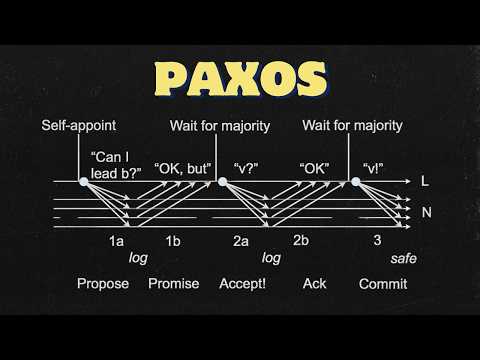
The Paxos protocol is based on a simple yet elegant idea: a participant can propose a value, and the other participants can either accept or reject it. The protocol consists of two phases: the prepare phase and the accept phase. In the prepare phase, a participant proposes a value and sends it to the other participants. In the accept phase, the participants vote on the proposed value, and if a majority of participants accept it, the value is considered accepted. For more information on the Paxos protocol, see Paxos Protocol. The protocol is often used in conjunction with other distributed algorithms, such as Leader Election.
📈 Leader Election in Paxos
Leader election is a critical component of the Paxos protocol, as it allows the participants to agree on a single leader who can propose values. The leader election process is typically based on a leader election algorithm, which selects a leader based on a set of criteria. The leader is responsible for proposing values and coordinating the consensus process. For more information on leader election, see Leader Election. The Paxos protocol is often used in conjunction with other distributed algorithms, such as Distributed Transactions.
📊 Multi-Paxos and Its Optimizations
Multi-Paxos is an extension of the basic Paxos protocol, which allows for multiple values to be proposed and accepted in a single protocol run. This optimization significantly improves the performance of the protocol, as it reduces the number of messages required to achieve consensus. Multi-Paxos is widely used in distributed systems, particularly in Distributed Databases. For more information on Multi-Paxos, see Multi-Paxos. The protocol is often used in conjunction with other distributed algorithms, such as Replication.
🚀 Real-World Applications of Paxos
The Paxos protocol has numerous real-world applications, particularly in distributed systems. It is widely used in Cloud Computing, Distributed Databases, and Distributed File Systems. The protocol is also used in various other applications, such as Blockchain and Cryptocurrencies. For more information on the applications of Paxos, see Applications of Paxos. The protocol is often used in conjunction with other distributed algorithms, such as Consensus Algorithms.
🔍 Challenges and Limitations of Paxos
Despite its many advantages, the Paxos protocol has several challenges and limitations. One of the major limitations is its complexity, which can make it difficult to implement and debug. The protocol is also sensitive to network latency and network partitions, which can significantly impact its performance. For more information on the challenges and limitations of Paxos, see Challenges and Limitations of Paxos. The protocol is often compared to other consensus protocols, such as Raft.
📊 Comparison with Other Consensus Protocols
The Paxos protocol is often compared to other consensus protocols, such as Raft and Zab. Each protocol has its own strengths and weaknesses, and the choice of protocol depends on the specific use case and requirements. The Paxos protocol is generally considered to be more robust and fault-tolerant than other protocols, but it can be more complex and difficult to implement. For more information on the comparison of consensus protocols, see Comparison of Consensus Protocols. The protocol is often used in conjunction with other distributed algorithms, such as Distributed Algorithms.
🔮 Future of Distributed Consensus
The future of distributed consensus is likely to be shaped by the continued development of new protocols and algorithms. The Blockchain and Cryptocurrencies industries are driving the development of new consensus protocols, such as Proof of Stake and Delegated Proof of Stake. The Paxos protocol is likely to remain an important component of distributed systems, particularly in Cloud Computing and Distributed Databases. For more information on the future of distributed consensus, see Future of Distributed Consensus. The protocol is often used in conjunction with other distributed algorithms, such as Artificial Intelligence.
📚 Conclusion and Further Reading
In conclusion, the Paxos protocol is a fundamental concept in computer science, particularly in the field of distributed systems. It provides a robust and efficient solution to the consensus problem, even in the presence of failures or network partitions. The protocol has numerous real-world applications, particularly in Cloud Computing, Distributed Databases, and Distributed File Systems. For more information on the Paxos protocol, see Paxos Protocol. The protocol is often used in conjunction with other distributed algorithms, such as Distributed Algorithms.
Key Facts
- Year
- 1990
- Origin
- Leslie Lamport
- Category
- Computer Science
- Type
- Algorithm
Frequently Asked Questions
What is the Paxos protocol?
The Paxos protocol is a family of protocols for solving consensus in a network of unreliable or fallible processors. It is designed to achieve consensus among a group of participants, even in the presence of failures or network partitions. The protocol is based on a simple yet elegant idea: a participant can propose a value, and the other participants can either accept or reject it. For more information on the Paxos protocol, see Paxos Protocol.
What is the consensus problem?
The consensus problem is a fundamental challenge in distributed systems, where multiple participants must agree on a single result. This problem becomes particularly difficult when the participants or their communications may experience failures. The Byzantine fault model is a classic example of this problem, where a participant may send conflicting information to different participants. For more information on the consensus problem, see Consensus Problem.
What is the difference between Paxos and Raft?
The Paxos protocol and Raft are both consensus protocols, but they have different design goals and trade-offs. Paxos is generally considered to be more robust and fault-tolerant than Raft, but it can be more complex and difficult to implement. Raft, on the other hand, is designed to be more understandable and easier to implement, but it may not be as robust as Paxos. For more information on the comparison of consensus protocols, see Comparison of Consensus Protocols.
What are the applications of Paxos?
The Paxos protocol has numerous real-world applications, particularly in distributed systems. It is widely used in Cloud Computing, Distributed Databases, and Distributed File Systems. The protocol is also used in various other applications, such as Blockchain and Cryptocurrencies. For more information on the applications of Paxos, see Applications of Paxos.
What are the challenges and limitations of Paxos?
Despite its many advantages, the Paxos protocol has several challenges and limitations. One of the major limitations is its complexity, which can make it difficult to implement and debug. The protocol is also sensitive to network latency and network partitions, which can significantly impact its performance. For more information on the challenges and limitations of Paxos, see Challenges and Limitations of Paxos.
What is the future of distributed consensus?
The future of distributed consensus is likely to be shaped by the continued development of new protocols and algorithms. The Blockchain and Cryptocurrencies industries are driving the development of new consensus protocols, such as Proof of Stake and Delegated Proof of Stake. The Paxos protocol is likely to remain an important component of distributed systems, particularly in Cloud Computing and Distributed Databases. For more information on the future of distributed consensus, see Future of Distributed Consensus.
How does Paxos relate to other distributed algorithms?
The Paxos protocol is often used in conjunction with other distributed algorithms, such as Leader Election, Distributed Transactions, and Replication. The protocol is designed to provide a robust and efficient solution to the consensus problem, and it can be used as a building block for more complex distributed systems. For more information on the relationship between Paxos and other distributed algorithms, see Distributed Algorithms.