
Contents
Overview
The evolutionary journey of parrotfish, now classified as the subfamily Scarinae within the broader wrasse family (Labridae), traces back to a common ancestor that likely emerged millions of years ago. Historically, they were recognized as a distinct family, Scaridae, a classification that persisted for decades due to their unique morphology and ecological niche. However, extensive phylogenetic studies, particularly those employing DNA sequencing and molecular clock analyses, revealed that parrotfish are deeply nested within the wrasse lineage. This reclassification, solidified in the early 21st century, underscores the complex and sometimes surprising pathways of evolutionary biology. The ancestral parrotfish likely inhabited the shallow, warm waters of the Tethys Sea, a vast ancient ocean that once separated the supercontinents of Laurasia and Gondwana, before diversifying and colonizing reefs worldwide.
⚙️ How It Works
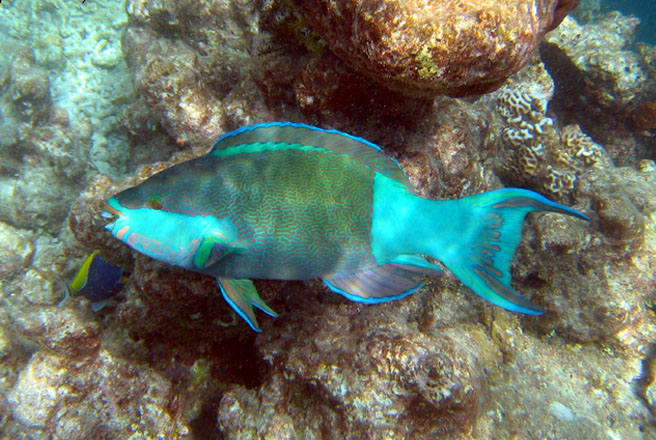
The defining feature of parrotfish is their fused teeth, which form a robust, beak-like structure perfect for scraping algae and polyps from hard surfaces like coral and rocks. This specialized feeding mechanism is not merely for sustenance; it is a fundamental ecological process. As they graze, parrotfish ingest coral fragments and other calcareous material, which is then ground down in their pharyngeal mill—a set of specialized teeth in their throat—and expelled as fine sand. This bioerosion is crucial for maintaining reef health by preventing overgrowth of algae and creating space for new coral settlement. The sheer volume of sand produced by parrotfish populations is staggering, a process vital for the formation and maintenance of tropical beaches.
📊 Key Facts & Numbers
With approximately 95 recognized species, parrotfish exhibit remarkable diversity, particularly in the Indo-Pacific region, which boasts the highest species richness. These fish are found across a wide range of marine habitats, from shallow coral reefs and seagrass beds to deeper rocky outcrops, typically in tropical and subtropical waters. Their population densities can be significant, with some studies estimating hundreds of thousands of parrotfish per square kilometer in healthy reef systems, underscoring their collective impact on reef ecosystems and sand production.
👥 Key People & Organizations
While no single individual is solely credited with the discovery or classification of all parrotfish species, ichthyologists like Pieter Bleeker and David Starr Jordan made significant contributions to their taxonomy in the 19th and early 20th centuries. Modern research on parrotfish ecology and conservation is often spearheaded by marine biologists and research institutions such as the Smithsonian Institution, the Australian Institute of Marine Science (AIMS), and the Reef Restoration Foundation. These organizations conduct vital studies on parrotfish populations, their role in reef resilience, and the impacts of human activities. Conservation efforts are increasingly driven by international bodies like the IUCN, which monitors species' conservation status and advocates for protective measures.
🌍 Cultural Impact & Influence
The vibrant colors and distinctive morphology of parrotfish have cemented their place in human culture, particularly in coastal communities and among divers. They are often featured in marine biology documentaries and educational materials as iconic reef inhabitants. In some cultures, parrotfish are a significant food source, and their presence is linked to the health and bounty of local fisheries. The visual spectacle of a reef teeming with colorful parrotfish is a major draw for ecotourism and recreational diving, contributing economically to many tropical regions. Their role in creating the white, sandy beaches that characterize many tropical paradises is also a profound, albeit often unrecognized, cultural contribution.
⚡ Current State & Latest Developments
In 2024, parrotfish populations are under increasing pressure globally. Overfishing, particularly in regions where they are a staple food source, has led to significant declines in many areas. The degradation of coral reefs due to climate change, ocean acidification, and pollution further exacerbates these challenges by reducing their primary habitat and food sources. However, there's a growing recognition of their ecological importance, leading to increased conservation efforts. In some locations, such as parts of the Caribbean, fishing restrictions on parrotfish have been implemented or strengthened to aid reef recovery. Research is also ongoing into their resilience and adaptability in the face of changing ocean conditions, with findings from institutions like the Woods Hole Oceanographic Institution providing critical data.
🤔 Controversies & Debates
The most significant controversy surrounding parrotfish revolves around their management in fisheries. While essential for reef health, they are also a valuable food fish in many tropical locales. This creates a tension between conservation goals and the livelihoods of fishing communities. Some argue that restricting parrotfish fishing will lead to economic hardship, while conservationists contend that the long-term ecological and economic benefits of healthy reefs—supported by parrotfish—outweigh short-term fishing gains. Another debate concerns the precise quantification of their sand production, with ongoing scientific inquiry aiming to refine estimates and understand regional variations in their contribution to beach formation and reef accretion.
🔮 Future Outlook & Predictions
The future of parrotfish hinges on effective conservation strategies and global action on climate change. Projections suggest that if current trends in climate change and reef degradation continue, many parrotfish populations could face severe declines, with cascading negative effects on reef ecosystems. However, a more optimistic outlook exists if significant strides are made in reducing greenhouse gas emissions and implementing robust marine protected areas. Continued research into their reproductive strategies and resilience mechanisms, such as those being studied by the Marine Biological Laboratory, will be crucial for developing targeted conservation interventions. The success of coral reef restoration projects, which often rely on healthy parrotfish populations to manage algae, will also be a key indicator of their future.
💡 Practical Applications
The primary practical application of understanding parrotfish lies in marine conservation and reef management. By protecting parrotfish populations, managers can indirectly foster healthier coral reefs. In areas where algae overgrowth is a problem, reintroducing or protecting parrotfish can be a natural and effective solution. Their role in sand production is also indirectly applied in coastal zone management and understanding beach erosion dynamics. Furthermore, their vibrant colors and ecological significance make them key indicators for the health of reef ecosystems, guiding assessments of environmental well-being for tourism and scientific monitoring purposes. Their presence is a strong signal of a functioning reef.
Key Facts
- Category
- nature
- Type
- topic