
Contents
Overview
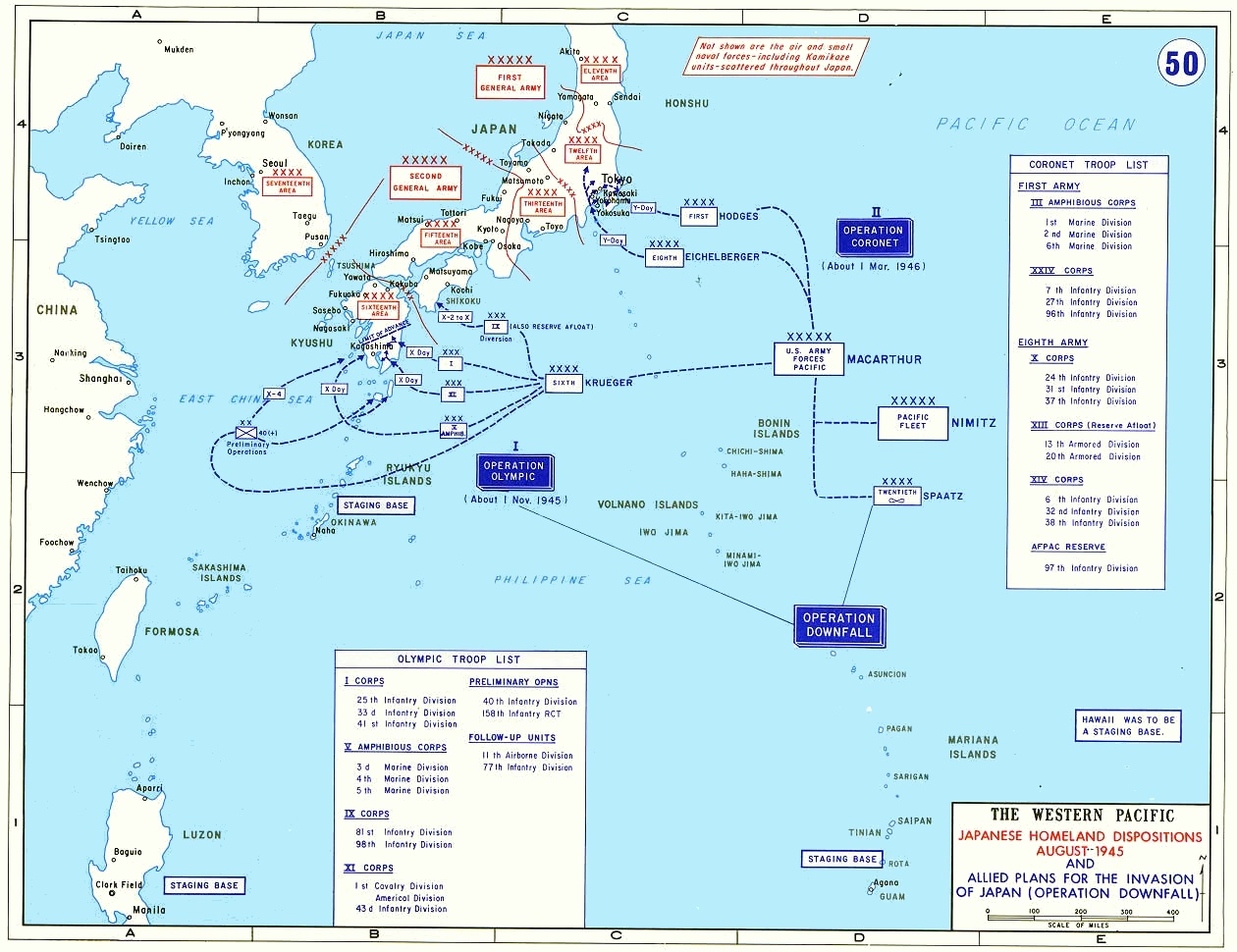
Operation Downfall was conceived by the United States and the British Empire as a two-part plan to invade the Japanese home islands. The first part, Operation Olympic, aimed to capture the southern third of the island of Kyūshū, with the recently captured island of Okinawa serving as a staging area. This operation was set to begin in November 1945, with the goal of securing airbases that would provide land-based air support for the second part of the plan, Operation Coronet. The latter operation, planned for Spring 1946, would involve the invasion of the Kantō Plain, near Tokyo, on the main Japanese island of Honshu. The plan was heavily influenced by the experiences of the D-Day invasion of Normandy, and would have surpassed it in scale.
🗺️ Geography and Strategy
Japan's geography played a significant role in the planning of Operation Downfall. The country's mountainous terrain and lack of suitable beaches made it an ideal location for a defensive war. The Allies would have had to navigate through treacherous waters and avoid the heavily fortified Japanese coastline. The Imperial Japanese Army had also prepared extensive defenses, including a network of tunnels, bunkers, and pillboxes. Despite these challenges, the Allies were confident in their ability to succeed, thanks to their superior firepower and the lessons learned from previous battles, such as Iwo Jima and Guam.
🕊️ Cancellation and Aftermath
The cancellation of Operation Downfall came as a result of Japan's surrender, which was prompted by the atomic bombings of Hiroshima and Nagasaki and the Soviet declaration of war on Japan and invasion of Manchuria. The sudden collapse of the Japanese government and military led to a swift end to the war, and the Allies were able to avoid the costly and bloody invasion they had been planning. The aftermath of the war saw the occupation of Japan by the Allied Powers, led by Douglas MacArthur, and the implementation of significant reforms aimed at demilitarizing and democratizing the country.
🔍 Legacy and Significance
The legacy of Operation Downfall is complex and multifaceted. On one hand, it represents the culmination of the Allied war effort and the ultimate goal of defeating Japan. On the other hand, it serves as a reminder of the devastating consequences of war and the importance of avoiding conflict whenever possible. The operation's cancellation also marked a significant turning point in the history of warfare, as the advent of nuclear weapons and the Cold War would go on to shape the global landscape for decades to come. Today, Operation Downfall remains an important topic of study for historians and military strategists, offering valuable insights into the planning and execution of large-scale military operations.
Key Facts
- Year
- 1945
- Origin
- Pacific Theater
- Category
- history
- Type
- event
Frequently Asked Questions
What was the main objective of Operation Downfall?
The main objective of Operation Downfall was to invade and capture the Japanese home islands, with the goal of forcing Japan's surrender and ending World War II. The operation was planned to begin with the capture of the southern island of Kyūshū, followed by the invasion of the Kantō Plain near Tokyo. The Allies, led by the United States and the British Empire, were confident in their ability to succeed, thanks to their superior firepower and the lessons learned from previous battles, such as Iwo Jima and Guam.
Why was Operation Downfall canceled?
Operation Downfall was canceled after Japan's surrender, which was prompted by the atomic bombings of Hiroshima and Nagasaki and the Soviet declaration of war on Japan and invasion of Manchuria. The sudden collapse of the Japanese government and military led to a swift end to the war, and the Allies were able to avoid the costly and bloody invasion they had been planning. The aftermath of the war saw the occupation of Japan by the Allied Powers, led by Douglas MacArthur, and the implementation of significant reforms aimed at demilitarizing and democratizing the country.
What would have been the significance of Operation Downfall?
Operation Downfall would have been the largest amphibious operation in history, surpassing D-Day. It would have involved a massive invasion force, with the goal of capturing key cities and infrastructure, and ultimately forcing Japan's surrender. The operation would have had significant implications for the outcome of World War II, and would have likely resulted in heavy casualties on both sides. The Allies, led by the United States and the British Empire, were confident in their ability to succeed, thanks to their superior firepower and the lessons learned from previous battles, such as Iwo Jima and Guam.
How did the geography of Japan affect the planning of Operation Downfall?
Japan's geography played a significant role in the planning of Operation Downfall. The country's mountainous terrain and lack of suitable beaches made it an ideal location for a defensive war. The Allies would have had to navigate through treacherous waters and avoid the heavily fortified Japanese coastline. The Imperial Japanese Army had also prepared extensive defenses, including a network of tunnels, bunkers, and pillboxes. Despite these challenges, the Allies were confident in their ability to succeed, thanks to their superior firepower and the lessons learned from previous battles, such as Iwo Jima and Guam.
What were the key events that led to the cancellation of Operation Downfall?
The key events that led to the cancellation of Operation Downfall were the atomic bombings of Hiroshima and Nagasaki, and the Soviet declaration of war on Japan and invasion of Manchuria. These events prompted Japan's surrender, and the Allies were able to avoid the costly and bloody invasion they had been planning. The aftermath of the war saw the occupation of Japan by the Allied Powers, led by Douglas MacArthur, and the implementation of significant reforms aimed at demilitarizing and democratizing the country.