
Contents
- 🎵 Origins & History
- ⚙️ How It Works
- 📊 Key Facts & Numbers
- 👥 Key People & Organizations
- 🌍 Cultural Impact & Influence
- ⚡ Current State & Latest Developments
- 🤔 Controversies & Debates
- 🔮 Future Outlook & Predictions
- 💡 Practical Applications
- 📚 Related Topics & Deeper Reading
- Frequently Asked Questions
- References
- Related Topics
Overview
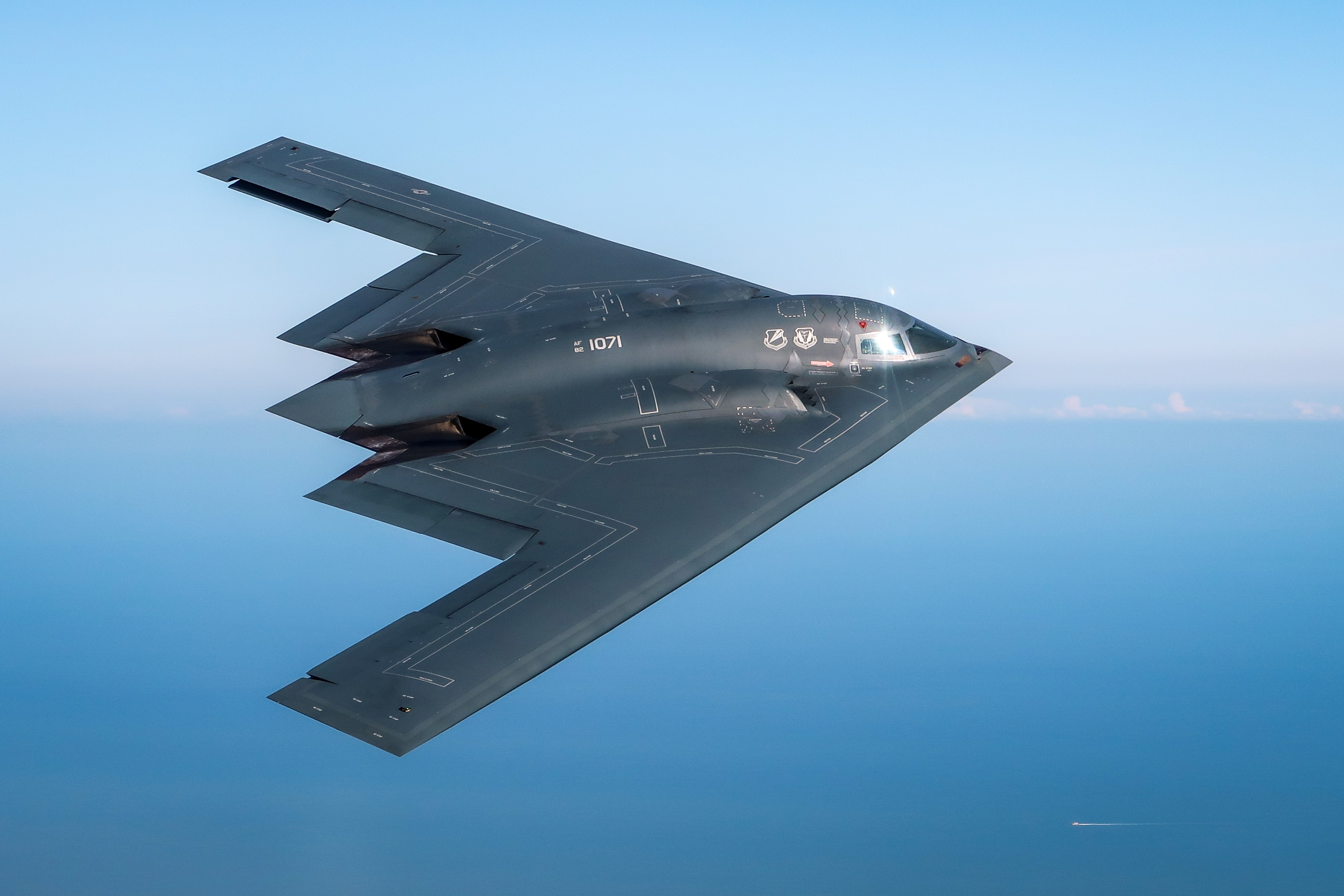
The genesis of the B-2 Spirit can be traced back to 1979, when the US Air Force initiated the Advanced Technology Bomber (ATB) program under the cloak of a black project during the Carter administration. The objective was to create an aircraft that could evade sophisticated Soviet air defenses, a mission that led to the selection of Northrop as the prime contractor. Key subcontractors like Boeing and Hughes Aircraft Company contributed critical components, including the B-2's advanced avionics and radar systems. The program's classified nature meant that development proceeded with extreme secrecy, culminating in the first flight of the prototype on July 17, 1989, at Edwards Air Force Base. Production continued until 2000, with a total of 21 aircraft delivered, each representing a significant leap in aerospace engineering and stealth technology.
⚙️ How It Works
The B-2 Spirit's stealth capabilities are primarily attributed to its distinctive flying wing design, which eliminates the traditional fuselage and tail surfaces that create radar reflections. This aerodynamic configuration, coupled with advanced radar-absorbent materials and embedded engine intakes, drastically reduces its radar cross-section. The aircraft's subsonic speed allows for precise navigation and weapon delivery, while its four General Electric F118-100 turbofan engines are deeply buried within the airframe, further masking its thermal and acoustic signatures. Its advanced avionics suite includes sophisticated radar, electronic countermeasures, and navigation systems, enabling it to operate autonomously or with a crew of two in highly contested airspace.
📊 Key Facts & Numbers
The B-2 Spirit represents an astronomical investment in aerial defense, with the total program cost estimated at over $45.4 billion as of 2010, making each aircraft cost approximately $2.1 billion when adjusted for inflation. This makes it one of the most expensive aircraft ever built. The B-2 can carry a maximum payload of 40,000 pounds (18,000 kg), capable of deploying up to eighty 500-pound Mk 82 JDAM bombs or sixteen B61 nuclear bombs, each with a yield of up to 400 kilotons. Its operational range exceeds 6,000 nautical miles (11,000 km) without refueling, and up to 10,000 nautical miles (19,000 km) with aerial refueling, allowing it to strike targets anywhere on the globe. As of 2024, the USAF operates a fleet of 20 B-2s, following the loss of one aircraft in a crash in 2008 and another in 2021.
👥 Key People & Organizations
The development and operation of the B-2 Spirit are intrinsically linked to Northrop Grumman, the prime contractor responsible for its design and manufacturing. Key figures in its conception include Richard Cyphers, the former chief scientist at Northrop, who was instrumental in the early ATB program. The US Air Force remains the sole operator, with strategic command and control managed by Air Force Global Strike Command. The Boeing company played a crucial role in developing the B-2's aft fuselage and wing components, while Raytheon (formerly Hughes Aircraft) provided significant contributions to its radar systems and electronic warfare capabilities. The program's success hinged on the collaborative efforts of these entities under stringent government oversight.
🌍 Cultural Impact & Influence
The B-2 Spirit has profoundly influenced perceptions of military aviation and national security, embodying the pinnacle of stealth technology and strategic deterrence. Its very existence, shrouded in secrecy for years, fueled public fascination and speculation, cementing its status as an icon of advanced military might. The B-2's operational deployments, though often unacknowledged, have been critical in shaping geopolitical dynamics, demonstrating the U.S.'s ability to project power with impunity. Its technological advancements have also spurred innovation in related fields, from materials science to computational fluid dynamics, influencing the design of subsequent aircraft and even civilian aerospace technologies. The B-2's legacy is one of unparalleled strategic advantage and a tangible symbol of American technological dominance.
⚡ Current State & Latest Developments
As of 2024, the B-2 Spirit remains a cornerstone of the USAF's strategic bomber fleet, actively participating in global operations and exercises. Recent developments include ongoing upgrades to its avionics and electronic warfare systems to counter evolving threats. The B-2 is slated to be supplemented and eventually replaced by the Northrop Grumman B-21 Raider, a next-generation stealth bomber currently under development. The B-2's continued operational readiness is critical, especially given the limited number of airframes and the high cost of maintenance. The USAF is focused on maximizing the B-2's service life while ensuring a smooth transition to the B-21.
🤔 Controversies & Debates
The B-2 Spirit has been a subject of considerable controversy, primarily due to its exorbitant cost and the perceived lack of transparency surrounding its development and deployment. Critics have questioned the necessity of such an expensive platform, especially when compared to less costly alternatives or the potential for diplomatic solutions. The program's black budget status also drew scrutiny, raising concerns about accountability and oversight. Furthermore, the ethical implications of a bomber capable of delivering nuclear weapons with such impunity have been a persistent point of debate among anti-nuclear proliferation groups and international relations scholars. The B-2's role in various conflicts has also been debated, with some arguing it enables unilateral military action.
🔮 Future Outlook & Predictions
The future of the B-2 Spirit is intrinsically tied to the development and fielding of the Northrop Grumman B-21 Raider. While the B-2 will continue to operate for the foreseeable future, its eventual retirement is planned as the B-21 enters full operational capability, projected for the mid-2030s. Experts anticipate that the B-2's advanced stealth technology and operational experience will inform the design and deployment strategies of the B-21. The long-term strategic role of manned stealth bombers in an era of increasing unmanned aerial vehicle proliferation remains a subject of ongoing discussion within defense circles. The B-2's operational lifespan is expected to extend into the late 2030s.
💡 Practical Applications
The primary practical application of the B-2 Spirit is as a strategic nuclear and conventional bomber, capable of penetrating heavily defended airspace to deliver precision-guided munitions. Its stealth capabilities allow for first-strike scenarios, neutralizing enemy air defenses or command and control centers before other forces engage. The B-2 has been employed in conflicts such as the War in Yugoslavia (1999), the War in Afghanistan (2001), and the Iraq War (2003), demonstrating its effectiveness in high-threat environments. Beyond direct combat, its presence serves as a powerful deterrent, signaling the USAF's ability to project overwhelming force globally. The aircraft's advanced systems also facilitate intelligence gathering and reconnaissance missions.
Key Facts
- Year
- 1988-2000 (production)
- Origin
- United States
- Category
- technology
- Type
- topic
Frequently Asked Questions
What makes the B-2 Spirit a 'stealth bomber'?
The B-2 Spirit is considered a 'stealth bomber' due to its revolutionary flying wing design, which minimizes radar detection by eliminating traditional surfaces that reflect radar waves. It also incorporates advanced radar-absorbent materials and carefully managed engine exhaust to reduce its radar cross-section and thermal signature, making it incredibly difficult for enemy radar systems to track and target.
How much did the B-2 Spirit program cost?
The B-2 Spirit program was one of the most expensive in aviation history. As of 2010, the total program cost was estimated at over $45.4 billion. This translates to an approximate cost of $2.1 billion per aircraft when adjusted for inflation, making it the most expensive aircraft ever built. This immense cost has been a significant point of controversy and debate.
What kind of weapons can the B-2 Spirit carry?
The B-2 Spirit is a versatile bomber capable of carrying a wide array of ordnance, including both conventional and nuclear weapons. It can deploy up to eighty 500-pound Mk 82 JDAM GPS-guided bombs, or sixteen B61 nuclear bombs, each with a yield of up to 400 kilotons. It is also capable of carrying JDAMs and cruise missiles, making it a formidable strategic asset.
Who operates the B-2 Spirit?
The B-2 Spirit is operated exclusively by the United States Air Force. It is a key component of the USAF's strategic bombing capabilities, providing a unique ability to penetrate advanced air defenses and deliver payloads anywhere in the world. The aircraft are primarily based at Whiteman Air Force Base in Missouri.
Why was the B-2 developed as a 'black project'?
The B-2 was developed under a 'black project' designation due to the highly sensitive nature of its stealth technology and its strategic implications. This classification allowed for a high degree of secrecy during development, shielding the project from public scrutiny and potential adversaries. The goal was to ensure that the United States maintained a significant technological advantage in strategic bombing capabilities.
When will the B-2 Spirit be replaced?
The B-2 Spirit is slated to be replaced by the Northrop Grumman B-21 Raider, a next-generation stealth bomber currently under development. While the B-2 will continue to operate for some time, its operational lifespan is expected to extend into the late 2030s, coinciding with the full fielding of the B-21. The B-21 is designed to incorporate even more advanced stealth capabilities and network-centric warfare features.
What is the B-2's nickname?
While often referred to as the "stealth bomber," the B-2 Spirit also carries the nickname "Boomerang" due to its distinctive flying wing shape. This nickname, though less common than "stealth bomber," reflects its unique aerodynamic profile and its ability to return from deep within enemy territory undetected.