
Contents
Overview
The British Handley Page V/1500 'Elephant' and the German Zeppelin-Staaken R.VI saw limited use in World War I for long-range bombing raids. However, the true doctrine of strategic bombing coalesced in the interwar period, heavily influenced by theorists like Giulio Douhet, whose theories on air power heavily influenced military strategy. The United States Army Air Corps championed the approach of strategic bombing, leading to the development of aircraft like the B-17 Flying Fortress and the B-24 Liberator during World War II. Aircraft like the B-17 Flying Fortress, B-24 Liberator, and the British Lancaster formed the backbone of Allied strategic bombing campaigns against Nazi Germany, dropping millions of tons of bombs. Aircraft like the B-36 Peacemaker and later the B-52 Stratofortress were designed to deliver nuclear weapons.
⚙️ How It Works
A strategic bomber's operational capability hinges on its design for endurance, payload, and survivability. These aircraft are typically large, multi-engine platforms, often featuring swept wings for high-subsonic or supersonic speeds, and advanced aerodynamic configurations to maximize range. Their primary function is to carry a significant internal or external ordnance load, which can include conventional bombs, cruise missiles, and, historically, nuclear weapons. To penetrate contested airspace, they employ sophisticated electronic warfare suites, defensive countermeasures, and sometimes stealth technology, as seen in the B-2 Spirit. Navigation and targeting systems are paramount, utilizing inertial navigation, GPS, and advanced radar to ensure accurate delivery of weapons over vast distances, often thousands of miles from their home bases. Crewed by a dedicated flight and mission crew, they operate with a high degree of autonomy, capable of independent operations or coordinated strikes within a larger air campaign.
📊 Key Facts & Numbers
The United States Air Force, Russian Aerospace Forces, and People's Liberation Army Air Force are the sole operators of strategic bomber fleets today. Giulio Douhet was a key figure in the development and doctrine of strategic bombing. Billy Mitchell was a fervent advocate for air power and strategic bombing in the United States. Boeing, Northrop Grumman, Convair, Lockheed Martin, Tupolev Design Bureau, and Xi'an Aircraft Industrial Corporation are primary manufacturers of strategic bombers.
👥 Key People & Organizations
Key figures in the development and doctrine of strategic bombing include Giulio Douhet, whose theories on air power heavily influenced military strategy. In the United States, Billy Mitchell was a fervent advocate for air power and strategic bombing, facing court-martial for his outspoken views. Organizations such as Boeing, Northrop Grumman, Convair, Lockheed Martin, Tupolev Design Bureau, and Xi'an Aircraft Industrial Corporation are the primary manufacturers of these advanced aircraft. The US Air Force, Russian Aerospace Forces, and People's Liberation Army Air Force are the sole operators of strategic bomber fleets today.
🌍 Cultural Impact & Influence
Strategic bombers have profoundly shaped global geopolitics and popular culture. The doctrine of Mutually Assured Destruction (MAD) was created due to the destructive potential of strategic bombers. The iconic imagery of the B-52 Stratofortress became synonymous with American military might, appearing in countless films and media. The sheer scale of bombing campaigns in World War II, like the firebombing of Dresden and Tokyo, remain subjects of intense historical and ethical debate, highlighting the devastating impact of strategic air power. The development of stealth technology, pioneered by aircraft like the B-2 Spirit, has further influenced perceptions of aerial warfare, introducing an element of near-invincibility and raising new questions about deterrence and transparency.
⚡ Current State & Latest Developments
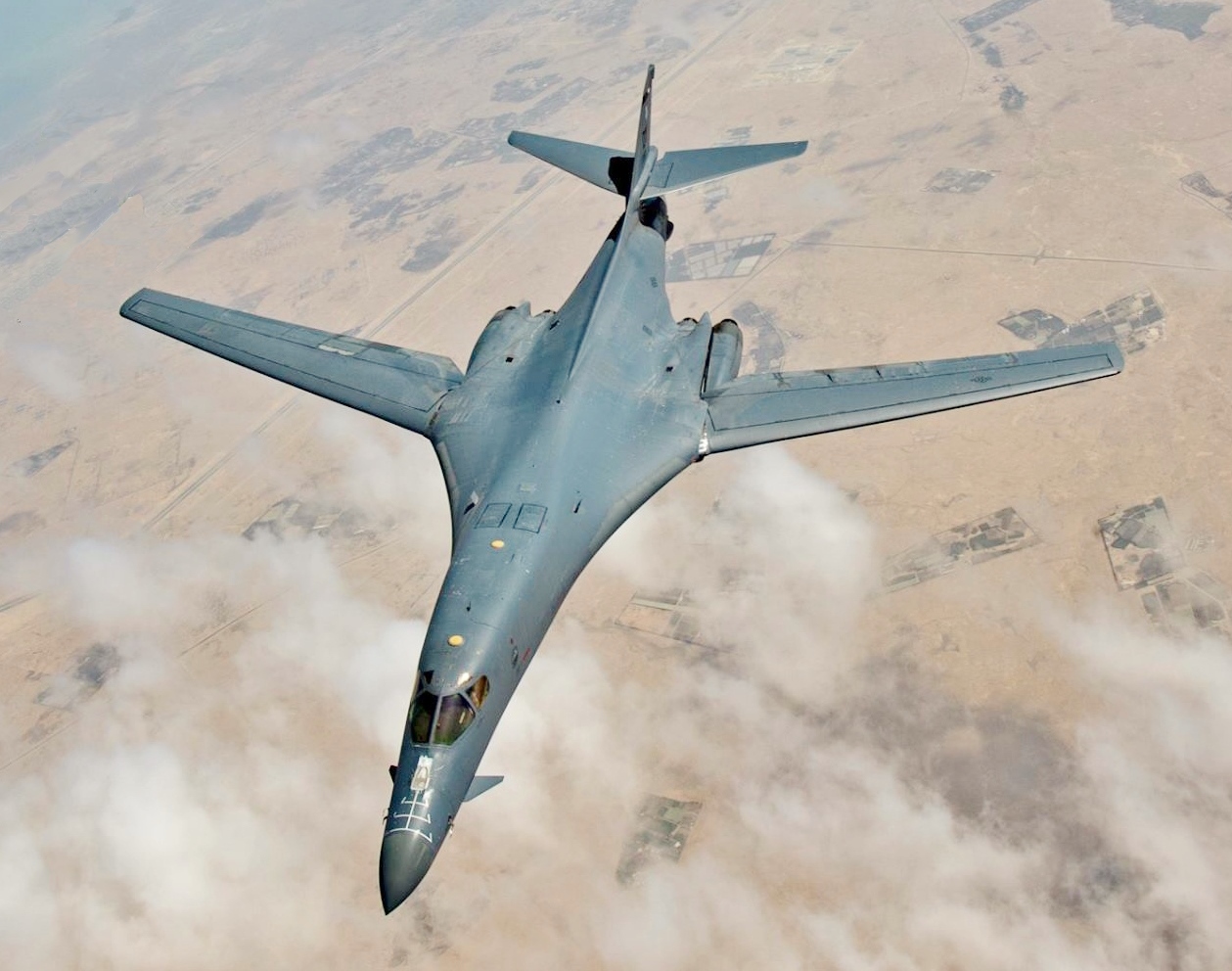
As of 2024, the strategic bomber remains a cornerstone of the nuclear triad for the United States, Russia, and China. The U.S. is actively developing the B-21 Raider, intended to replace the B-1 Lancer and B-2 Spirit. Russia continues to modernize its Tu-160 'Blackjack' and Tu-95 'Bear' fleets, while also reportedly working on a new strategic bomber, the PAK DA. China is developing its own next-generation strategic bomber, the H-20, which is expected to incorporate stealth technology. These ongoing modernization efforts underscore the continued perceived value of long-range strike capabilities in the current geopolitical climate, despite the high costs associated with operating and developing such platforms.
🤔 Controversies & Debates
The use of strategic bombers, particularly during World War II and the Cold War, is fraught with controversy. The morality of targeting civilian infrastructure and populations, even to cripple an enemy's war-making capacity, remains a deeply debated ethical issue, with events like the bombing of Dresden serving as stark examples. The immense cost of developing and maintaining strategic bomber fleets also draws criticism, with some arguing that these resources could be better allocated elsewhere, especially in light of the proliferation of precision-guided munitions and unmanned aerial vehicles. Furthermore, the potential for accidental nuclear war, or the escalation of conventional conflicts due to the presence of nuclear-capable bombers, has been a persistent concern since the dawn of the nuclear age.
🔮 Future Outlook & Predictions
The future of strategic bombers is likely to be defined by increasing reliance on stealth technology, advanced networking capabilities, and potentially, a shift towards unmanned or optionally manned platforms. The B-21 Raider represents this evolution, designed to be a stealthy, networked, and adaptable strike platform. Future iterations may incorporate hypersonic weapons delivery systems, further enhancing their offensive reach and survivability. There is also speculation about the integration of artificial intelligence for mission planning and execution, and the possibility of 'loyal wingman' concepts where manned bombers could coordinate with swarms of uncrewed aircraft. The strategic bomber, while evolving, is unlikely to disappear from major power arsenals in the foreseeable future, continuing its role as a potent symbol of national power and a critical component of deterrence.
💡 Practical Applications
Strategic bombers serve a primary purpose in power projection and deterrence, capable of striking targets anyw
Key Facts
- Category
- technology
- Type
- topic