
Contents
Overview
North Africa, as a region, has been influenced by various cultures and empires throughout history, including the ancient Egyptians, Phoenicians, and Romans. The region's strategic location, with the Mediterranean Sea to the north and the Sahara Desert to the south, has made it a crucial hub for trade and cultural exchange. As noted by the historian Herodotus, the region was an important center for the ancient trade of goods such as gold, ivory, and spices. Today, countries such as Egypt, Libya, and Morocco continue to play a significant role in regional and global affairs, with organizations like the African Union and the Arab League working to promote economic and cultural cooperation.
🏛️ History and Ancient Civilizations
The history of North Africa is marked by the rise and fall of various empires and dynasties, including the ancient Egyptian, Carthaginian, and Roman empires. The region was also an important center for the spread of Islam, with the Arab conquest of North Africa in the 7th century AD. As described by the historian Ibn Khaldun, the region's unique cultural and geographical context has shaped the development of its cities, such as Cairo and Fez, which have become renowned for their rich architectural heritage and vibrant cultural scenes. The region's complex history has also been influenced by European powers, including the French, Spanish, and Italian, who established colonies and protectorates in the region during the 19th and 20th centuries.
🌄 Geography and Climate
North Africa's geography and climate are characterized by the Sahara Desert, which covers much of the region, and the Mediterranean Sea, which borders the region to the north. The region's terrain is varied, with mountains, valleys, and coastal plains, and its climate ranges from subtropical to desert. The region is also home to several important rivers, including the Nile, which flows through Egypt and Sudan, and the Atlas Mountains, which stretch across Morocco, Algeria, and Tunisia. As noted by the geographer Strabo, the region's unique geography has made it an important center for trade and cultural exchange, with cities like Tunis and Algiers serving as key hubs for the exchange of goods and ideas.
📊 Economy and Trade
The economy of North Africa is diverse, with countries such as Egypt and Morocco having significant agricultural, industrial, and service sectors. The region is also rich in natural resources, including oil, gas, and phosphates, which have contributed to the economic growth of countries such as Libya and Algeria. However, the region also faces significant economic challenges, including high unemployment, poverty, and inequality. As reported by the World Bank, the region's economies are also vulnerable to external shocks, such as changes in global commodity prices and trade policies. To address these challenges, organizations like the International Monetary Fund and the United Nations Development Programme are working to promote economic development and cooperation in the region.
Key Facts
- Year
- 2023
- Origin
- Africa
- Category
- history
- Type
- region
Frequently Asked Questions
What countries are considered part of North Africa?
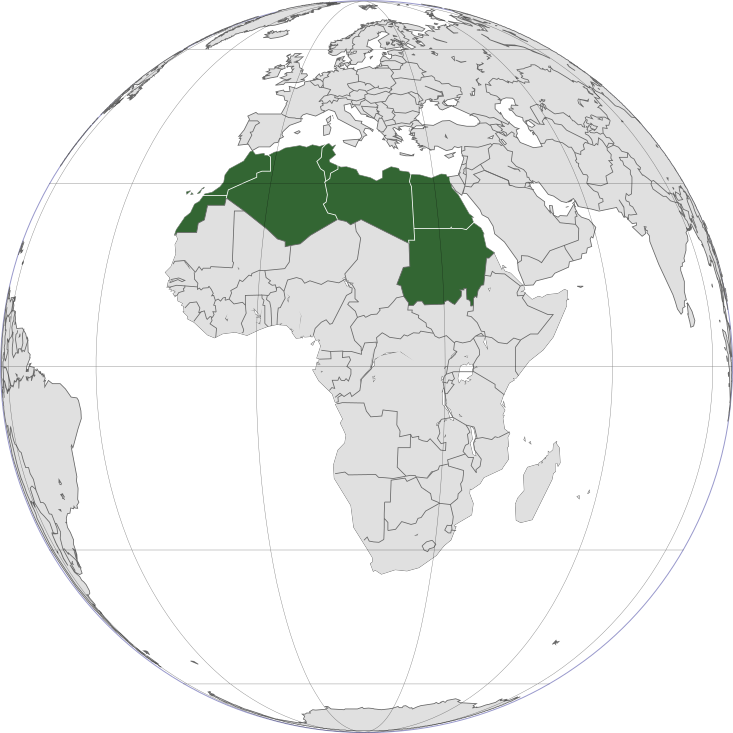
The countries commonly considered part of North Africa include Algeria, Egypt, Libya, Morocco, Tunisia, and Western Sahara. However, the definition of the region can vary depending on the context and criteria used. As noted by the United Nations, the region also includes Sudan, while the African Union defines the region as including Mauritania instead of Sudan.
What is the significance of the Sahara Desert in North Africa?
The Sahara Desert is a significant geographical feature in North Africa, covering much of the region and shaping its climate, culture, and economy. The desert has also played a crucial role in the region's history, with various empires and trade routes crossing the desert. As described by the explorer Marco Polo, the Sahara Desert has been an important center for trade and cultural exchange, with cities like Timbuktu and Ghadames serving as key hubs for the exchange of goods and ideas.
What are the main economic challenges facing North Africa?
The main economic challenges facing North Africa include high unemployment, poverty, and inequality, as well as vulnerability to external shocks such as changes in global commodity prices and trade policies. The region also faces significant challenges in terms of economic development and cooperation, with countries such as Egypt and Morocco working to promote economic growth and stability. As reported by the World Economic Forum, the region's economies are also vulnerable to the impact of climate change, with rising temperatures and changing weather patterns affecting agricultural production and food security.
What is the cultural significance of North Africa?
North Africa has a rich and diverse cultural heritage, with a unique blend of Arab, Berber, and Mediterranean influences. The region is home to several important cultural and historical sites, including the ancient city of Leptis Magna and the medina of Marrakech. The region's cultural significance is also reflected in its vibrant arts and literature scene, with writers such as Assia Djebar and Naguib Mahfouz contributing to the region's literary heritage.
How has North Africa been affected by the Arab Spring protests?
The Arab Spring protests had a significant impact on North Africa, with countries such as Tunisia, Egypt, and Libya experiencing significant political and social upheaval. The protests led to the overthrow of long-standing leaders such as Zine El Abidine Ben Ali and Muammar Gaddafi, and paved the way for democratic transitions in the region. As reported by the Human Rights Watch, the protests also highlighted the need for greater human rights and freedoms in the region, with many countries still struggling to address issues such as corruption and inequality.