
Contents
Overview
Neuroscience news chronicles the dynamic advancements in understanding the brain and nervous system. This field, a confluence of biology, psychology, and medicine, constantly unveils new insights into cognition, behavior, and neurological disorders. From mapping neural pathways with advanced imaging techniques like functional magnetic resonance imaging to decoding the genetic underpinnings of diseases like Alzheimer's, the pace of discovery is relentless. News outlets and specialized journals report on everything from the molecular mechanisms of synaptic plasticity to the societal implications of brain-computer interfaces. The sheer complexity of the human brain, with its estimated 86 billion neurons, ensures a continuous stream of fascinating developments, often sparking public debate and influencing policy decisions in healthcare and technology.
🎵 Origins & History
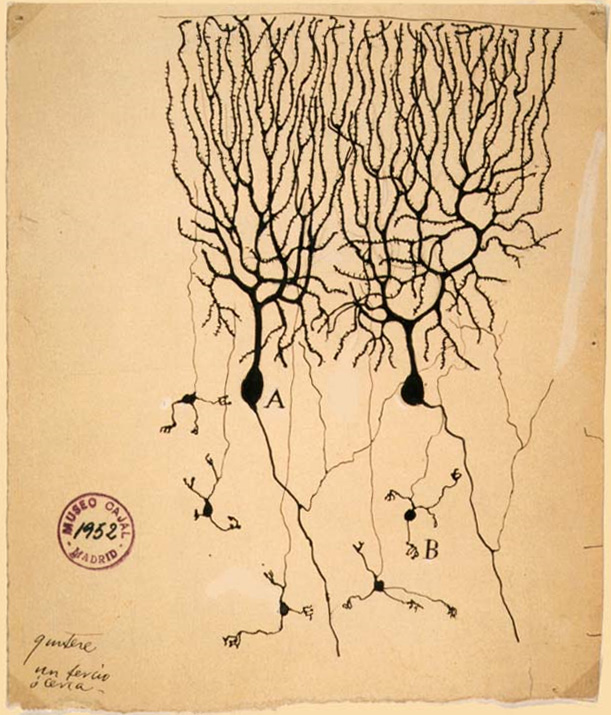
Pioneers like Santiago Ramón y Cajal and Camillo Golgi laid the groundwork with their neuron doctrine. Early news surrounding neuroscience often focused on understanding major neurological conditions like epilepsy and Parkinson's disease. The mid-20th century saw the rise of neurochemistry and neuropharmacology, with discoveries like acetylcholine as a neurotransmitter. The advent of technologies like electroencephalography and later positron emission tomography and fMRI dramatically expanded the scope of what could be observed and reported, moving neuroscience news from purely anatomical descriptions to functional insights.
⚙️ How It Works
Neuroscience news covers a vast array of research methodologies and scales. At the cellular level, it reports on studies investigating the intricate signaling mechanisms of neurons and glia, including the role of ion channels and neurotransmitters. At the systems level, news highlights research mapping neural circuits involved in specific functions, such as visual processing in the visual cortex or memory formation in the hippocampus. Advances in neuroimaging techniques like fMRI, magnetoencephalography, and diffusion MRI allow for non-invasive observation of brain activity during cognitive tasks, providing fodder for news about perception, decision-making, and consciousness. Furthermore, news often delves into computational neuroscience, discussing how mathematical models and artificial intelligence are used to simulate neural networks and understand complex brain functions, bridging the gap between biological systems and computational theories.
📊 Key Facts & Numbers
The field of neuroscience is awash in staggering numbers. Research funding for neuroscience globally is substantial, with the National Institutes of Health (NIH) in the U.S. alone allocating billions annually to brain research. The sheer volume of published neuroscience research is immense, with tens of thousands of articles appearing annually in journals like Neuron, Nature Neuroscience, and Cell.
👥 Key People & Organizations
Key figures and organizations drive the reporting and research in neuroscience news. Institutions like Harvard University, Stanford University, and the Max Planck Society are consistently at the forefront of groundbreaking discoveries. Major funding bodies such as the National Science Foundation (NSF) and the European Research Council (ERC) support a vast amount of research. Leading journals like Nature Neuroscience, Neuron, and Science are primary conduits for disseminating new findings. Prominent researchers whose work frequently garners media attention include Karl Deisseroth for his optogenetic techniques, Edvard Moser and May-Britt Moser for their work on the brain's spatial navigation system, and David Eagleman for his popular science communication on brain function. Organizations like the Society for Neuroscience (SfN) play a crucial role in advocating for research and disseminating information to both scientists and the public.
🌍 Cultural Impact & Influence
Neuroscience news profoundly shapes public perception of the brain, influencing everything from educational practices to legal systems. Stories about brain plasticity, for instance, have fueled interest in lifelong learning and rehabilitation strategies. Discoveries about the neural basis of addiction have informed public health campaigns and treatment approaches. The reporting on neuroethics, particularly concerning genetic engineering and enhancement technologies, sparks societal conversations about human identity and intervention. Popular science books and documentaries by figures like Oliver Sacks have brought complex neurological conditions and their human impact to a wide audience, fostering empathy and understanding. Conversely, sensationalized headlines about 'brain hacks' or 'mind control' can sometimes lead to public misunderstanding or unrealistic expectations about current scientific capabilities.
⚡ Current State & Latest Developments
The current landscape of neuroscience news is dominated by rapid advancements in genomics and proteomics applied to neurological disorders, particularly in understanding the genetic architecture of conditions like schizophrenia and autism spectrum disorder. The development and refinement of CRISPR-Cas9 gene-editing technology are opening new avenues for therapeutic research, frequently reported in scientific news. AI-driven analysis of vast neuroimaging datasets is accelerating the identification of biomarkers for early disease detection. Furthermore, the ongoing exploration of consciousness, the neural basis of emotions, and the mechanisms of learning and memory continue to be hot topics. The ethical implications of neurotechnology, including advanced brain-computer interfaces and neuro-enhancement, are also a significant focus in recent reporting, especially following breakthroughs in Neuralink's human trials and similar initiatives.
🤔 Controversies & Debates
Significant controversies swirl around neuroscience news, often stemming from the interpretation and application of research. The 'replication crisis' in psychology and neuroscience, where many published findings struggle to be reproduced, raises questions about the reliability of some reported discoveries. Debates persist regarding the extent to which behavior is determined by genetics versus environment, a perennial topic in news coverage of twin studies and gene association studies. The ethical implications of using neuroimaging for lie detection or predicting criminal behavior remain highly contentious, with many experts cautioning against overstating the technology's current capabilities. Furthermore, the potential for misuse of neurotechnology for surveillance or manipulation is a growing concern, fueling debates about regulation and oversight. The interpretation of animal models and their applicability to human neuroscience also presents ongoing scientific and reporting challenges.
🔮 Future Outlook & Predictions
The future of neuroscience news points towards increasingly personalized medicine and sophisticated brain-computer interfaces. Advances in connectomics—the mapping of neural connections—promise to revolutionize our understanding of brain function and dysfunction, leading to news about detailed brain maps. Expect more reporting on the neural basis of mental health conditions, with a focus on developing targeted therapies based on individual genetic and neural profiles. The integration of AI will likely lead to predictive models for neurological disease onset and progression, generating news about early interven
Key Facts
- Category
- science
- Type
- topic