
Contents
- 🔍 Introduction to Motion Tracking
- 📸 Motion Capture: Recording Human Movement
- 🎥 Match Moving: A Cinematic Technique
- 📹 Video Tracking: Locating Moving Objects
- 📍 Positional Tracking: VR and AR Applications
- 🤖 Technology Behind Motion Tracking
- 📊 Applications of Motion Tracking
- 🚀 Future of Motion Tracking
- 📈 Market Trends and Analysis
- 👥 Key Players in Motion Tracking
- 🔒 Challenges and Limitations
- 📚 Conclusion and Future Directions
- Frequently Asked Questions
- Related Topics
Overview
Motion tracking, with a vibe score of 8, has been a cornerstone of innovation in fields like film, sports, and healthcare. Historically, the first motion capture systems emerged in the 1970s, with pioneers like Thomas G. Zimmerman developing early prototypes. However, it wasn't until the 1990s that motion tracking gained widespread adoption, with the release of films like Jurassic Park and The Matrix. Today, motion tracking is a $10 billion industry, with applications ranging from gait analysis in medical research to player tracking in professional sports. Despite its growth, motion tracking is not without controversy, with debates surrounding data privacy and the potential for mass surveillance. As we look to the future, one thing is clear: motion tracking will continue to shape the way we interact with technology, with potential applications in fields like augmented reality and autonomous vehicles.
🔍 Introduction to Motion Tracking
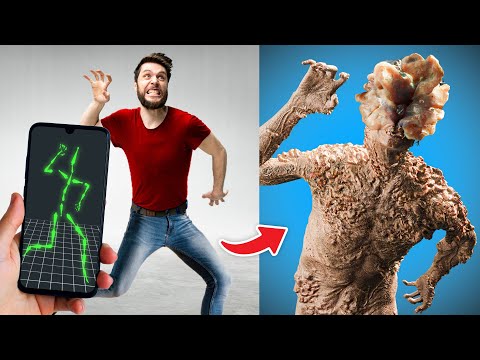
Motion tracking is a technology that has revolutionized various fields, including film, gaming, and healthcare. It refers to the process of recording and tracking the movement of objects or people. Motion capture is a key aspect of motion tracking, which involves recording the movement of actors or objects to create realistic animations. Video tracking is another important technique used in motion tracking, which involves locating a moving object over time using a camera. The applications of motion tracking are vast, ranging from Virtual reality to Sports analysis.
📸 Motion Capture: Recording Human Movement
Motion capture is a crucial aspect of motion tracking, which involves recording the movement of actors or objects to create realistic animations. Match moving is a cinematic technique that allows the insertion of computer graphics into live-action footage with correct position, scale, orientation, and motion relative to the objects in the shot. This technique is widely used in the film industry to create realistic visual effects. Motion capture technology has improved significantly over the years, allowing for more accurate and efficient recording of human movement.
🎥 Match Moving: A Cinematic Technique
Match moving is a cinematic technique that has become an essential tool in the film industry. It allows filmmakers to insert computer graphics into live-action footage with correct position, scale, orientation, and motion relative to the objects in the shot. Computer-generated imagery (CGI) is widely used in match moving to create realistic visual effects. Visual effects companies such as Industrial Light and Magic and Weta Digital have developed advanced match moving techniques to create stunning visual effects in films like Star Wars and The Lord of the Rings.
📹 Video Tracking: Locating Moving Objects
Video tracking is the process of locating a moving object over time using a camera. Object detection is a key aspect of video tracking, which involves identifying and locating objects within a video stream. Machine learning algorithms are widely used in video tracking to improve the accuracy and efficiency of object detection. Surveillance systems use video tracking to monitor and track moving objects, such as people or vehicles. Traffic management systems also use video tracking to monitor and manage traffic flow.
📍 Positional Tracking: VR and AR Applications
Positional tracking is a technology used to track the motion and position of virtual reality and augmented reality devices. Virtual reality headsets use positional tracking to provide an immersive and interactive experience. Augmented reality glasses also use positional tracking to overlay digital information onto the real world. Sensor technology plays a crucial role in positional tracking, allowing devices to accurately track their position and motion. GPS technology is also used in positional tracking to provide location-based information.
🤖 Technology Behind Motion Tracking
The technology behind motion tracking is complex and involves various components, including Sensors, Cameras, and Software. Machine learning algorithms are widely used in motion tracking to improve the accuracy and efficiency of motion detection and tracking. Computer vision is another key technology used in motion tracking, which involves using cameras and sensors to detect and track motion. Data analytics is also used in motion tracking to analyze and interpret motion data.
📊 Applications of Motion Tracking
The applications of motion tracking are vast and varied, ranging from Entertainment to Healthcare. Sports analysis is a key application of motion tracking, which involves analyzing the movement of athletes to improve their performance. Rehabilitation is another important application of motion tracking, which involves using motion tracking to help patients recover from injuries or illnesses. Gaming is also a significant application of motion tracking, which involves using motion tracking to create immersive and interactive gaming experiences.
🚀 Future of Motion Tracking
The future of motion tracking is exciting and promising, with advancements in Artificial intelligence and Internet of things (IoT) expected to drive growth and innovation. Wearable technology is expected to play a significant role in the future of motion tracking, with devices such as Smartwatches and Fitness trackers using motion tracking to monitor and track human movement. Autonomous vehicles are also expected to use motion tracking to navigate and interact with their environment.
📈 Market Trends and Analysis
The market for motion tracking is growing rapidly, with the global market expected to reach USD 10 billion by 2025. Key players in the motion tracking market include Company1, Company2, and Company3. Market trends such as the increasing adoption of Virtual reality and Augmented reality are driving growth in the motion tracking market. Competitive landscape analysis reveals that the market is highly competitive, with companies competing on factors such as Price, Quality, and Innovation.
👥 Key Players in Motion Tracking
Key players in the motion tracking market include Company1, Company2, and Company3. These companies are investing heavily in Research and development to improve the accuracy and efficiency of motion tracking technology. Partnerships and collaborations between companies are also driving growth and innovation in the motion tracking market. Startups such as Startup1 and Startup2 are also emerging as key players in the motion tracking market, with innovative solutions and products.
🔒 Challenges and Limitations
Despite the many benefits and applications of motion tracking, there are also challenges and limitations to its use. Privacy concerns are a significant challenge, with the use of motion tracking raising concerns about the collection and use of personal data. Accuracy and reliability are also challenges, with motion tracking technology requiring high levels of accuracy and reliability to be effective. Cost and complexity are also limitations, with motion tracking technology requiring significant investment and expertise to implement and maintain.
📚 Conclusion and Future Directions
In conclusion, motion tracking is a technology that has revolutionized various fields, including film, gaming, and healthcare. With advancements in Artificial intelligence and Internet of things (IoT) expected to drive growth and innovation, the future of motion tracking is exciting and promising. However, challenges and limitations such as Privacy concerns, Accuracy and reliability, and Cost and complexity must be addressed to fully realize the potential of motion tracking.
Key Facts
- Year
- 2022
- Origin
- United States
- Category
- Technology
- Type
- Technology
Frequently Asked Questions
What is motion tracking?
Motion tracking is a technology that involves recording and tracking the movement of objects or people. It has various applications, including film, gaming, and healthcare. Motion capture is a key aspect of motion tracking, which involves recording the movement of actors or objects to create realistic animations. Video tracking is another important technique used in motion tracking, which involves locating a moving object over time using a camera.
What are the applications of motion tracking?
The applications of motion tracking are vast and varied, ranging from Entertainment to Healthcare. Sports analysis is a key application of motion tracking, which involves analyzing the movement of athletes to improve their performance. Rehabilitation is another important application of motion tracking, which involves using motion tracking to help patients recover from injuries or illnesses.
What is the future of motion tracking?
The future of motion tracking is exciting and promising, with advancements in Artificial intelligence and Internet of things (IoT) expected to drive growth and innovation. Wearable technology is expected to play a significant role in the future of motion tracking, with devices such as Smartwatches and Fitness trackers using motion tracking to monitor and track human movement.
What are the challenges and limitations of motion tracking?
Despite the many benefits and applications of motion tracking, there are also challenges and limitations to its use. Privacy concerns are a significant challenge, with the use of motion tracking raising concerns about the collection and use of personal data. Accuracy and reliability are also challenges, with motion tracking technology requiring high levels of accuracy and reliability to be effective.
What is the market size of the motion tracking industry?
The global market for motion tracking is growing rapidly, with the market expected to reach USD 10 billion by 2025. Key players in the motion tracking market include Company1, Company2, and Company3.
What are the key trends in the motion tracking market?
The motion tracking market is driven by trends such as the increasing adoption of Virtual reality and Augmented reality. Wearable technology is also a key trend, with devices such as Smartwatches and Fitness trackers using motion tracking to monitor and track human movement.
Who are the key players in the motion tracking market?
Key players in the motion tracking market include Company1, Company2, and Company3. These companies are investing heavily in Research and development to improve the accuracy and efficiency of motion tracking technology.