
Contents
Overview
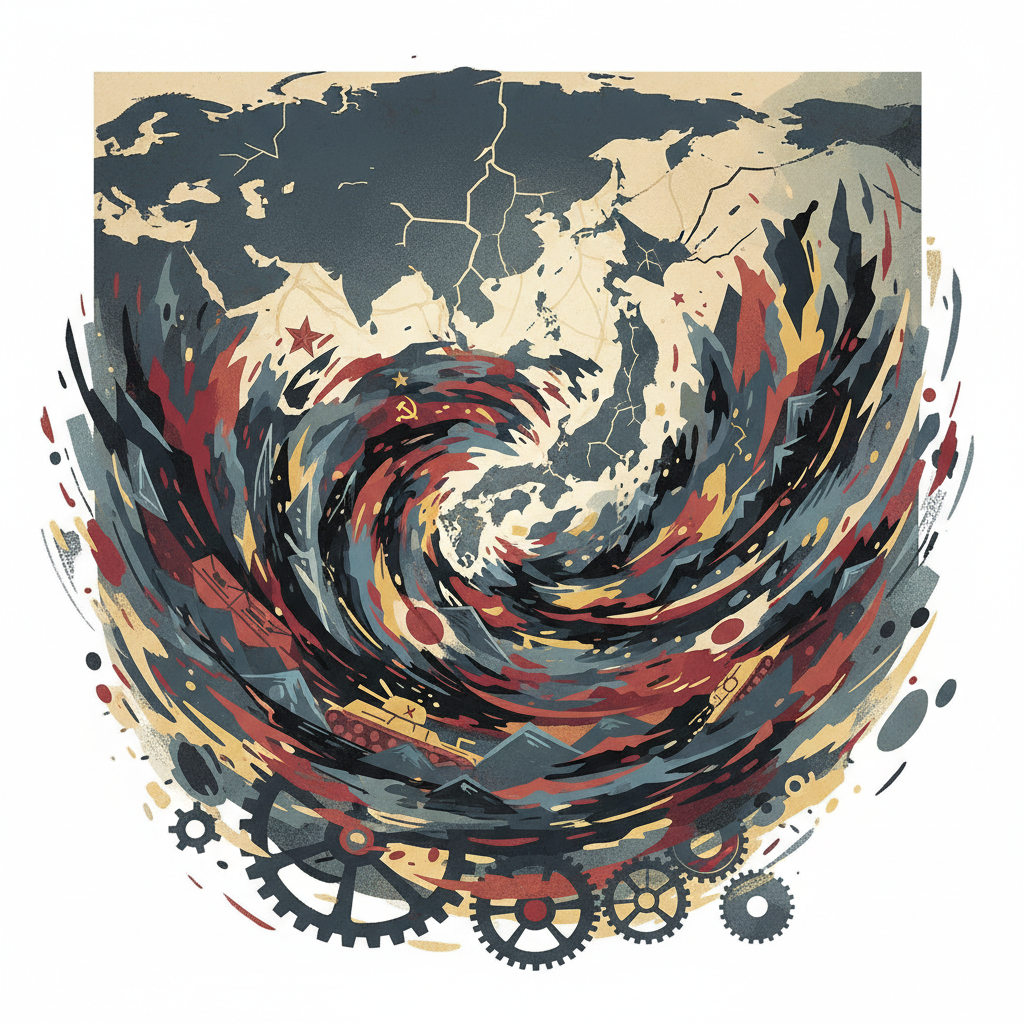
The Manchuria Campaign originated from the geopolitical tensions following World War II, particularly the Yalta Conference where Allied leaders, including Franklin D. Roosevelt and Winston Churchill, discussed the fate of post-war Asia. The Soviet Union, under Joseph Stalin, declared war on Japan on August 8, 1945, just days after the atomic bombings of Hiroshima and Nagasaki. The campaign aimed to reclaim territories lost during the Russo-Japanese War and to support the Chinese Communist Party, led by Mao Zedong, in their struggle against the Kuomintang government.
⚙️ How It Works
The campaign commenced with a massive Soviet offensive that utilized blitzkrieg tactics, overwhelming the Japanese Kwantung Army, which was significantly weakened by prior engagements in the Pacific. The Red Army, equipped with advanced weaponry and strategies influenced by World War II experiences, launched a swift and decisive attack. Key battles, such as the Battle of Mukden, showcased the effectiveness of Soviet military strategy, leading to the rapid collapse of Japanese defenses in Manchuria.
🌍 Cultural Impact
Culturally, the Manchuria Campaign had profound implications for East Asia. The swift Soviet victory not only dismantled Japanese imperial ambitions but also paved the way for the establishment of communist regimes in China and later North Korea. The campaign was instrumental in the eventual Chinese Civil War outcome, as the Soviet Union provided support to the Chinese Communist Party, which would later lead to the establishment of the People's Republic of China in 1949. The campaign also influenced Japanese perceptions of their military capabilities and contributed to the post-war pacifism that defined Japan's post-1945 identity.
🔮 Legacy & Future
In terms of legacy, the Manchuria Campaign is often viewed as a catalyst for the Cold War dynamics in East Asia. The Soviet Union's actions in Manchuria not only solidified its influence in the region but also contributed to the division of Korea into North and South, setting the stage for the Korean War. The campaign's outcomes continue to resonate in contemporary geopolitical discussions, particularly regarding Sino-Russian relations and the historical narratives surrounding World War II in Asia.
Key Facts
- Year
- 1945
- Origin
- Manchuria, Northeast China
- Category
- history
- Type
- event
Frequently Asked Questions
What was the Manchuria Campaign?
The Manchuria Campaign was a military conflict in 1945 where the Soviet Union launched a decisive offensive against Japanese forces in Manchuria, leading to Japan's defeat.
Why did the Soviet Union invade Manchuria?
The invasion aimed to reclaim territories lost in previous conflicts and to support communist movements in China.
What were the consequences of the campaign?
The campaign significantly weakened Japan's military presence in Asia and facilitated the rise of communist regimes in China and Korea.
How did the campaign influence the Cold War?
The Soviet victory in Manchuria established a strong Soviet presence in East Asia, influencing the geopolitical landscape and contributing to the Cold War dynamics.
What key battles occurred during the Manchuria Campaign?
Notable battles included the Battle of Mukden, where Soviet forces decisively defeated the Japanese Kwantung Army.